01
Needle-valve service depth
We rebuild Slayer needle valves on-site. Most shops in LA will only swap the assembly, which costs the customer 2-3x more.
Slayer Espresso V3, Steam EP, Steam LP, and Single Group across Los Angeles, Orange County, Inland Empire, San Diego and Ventura — a technician services it in place.
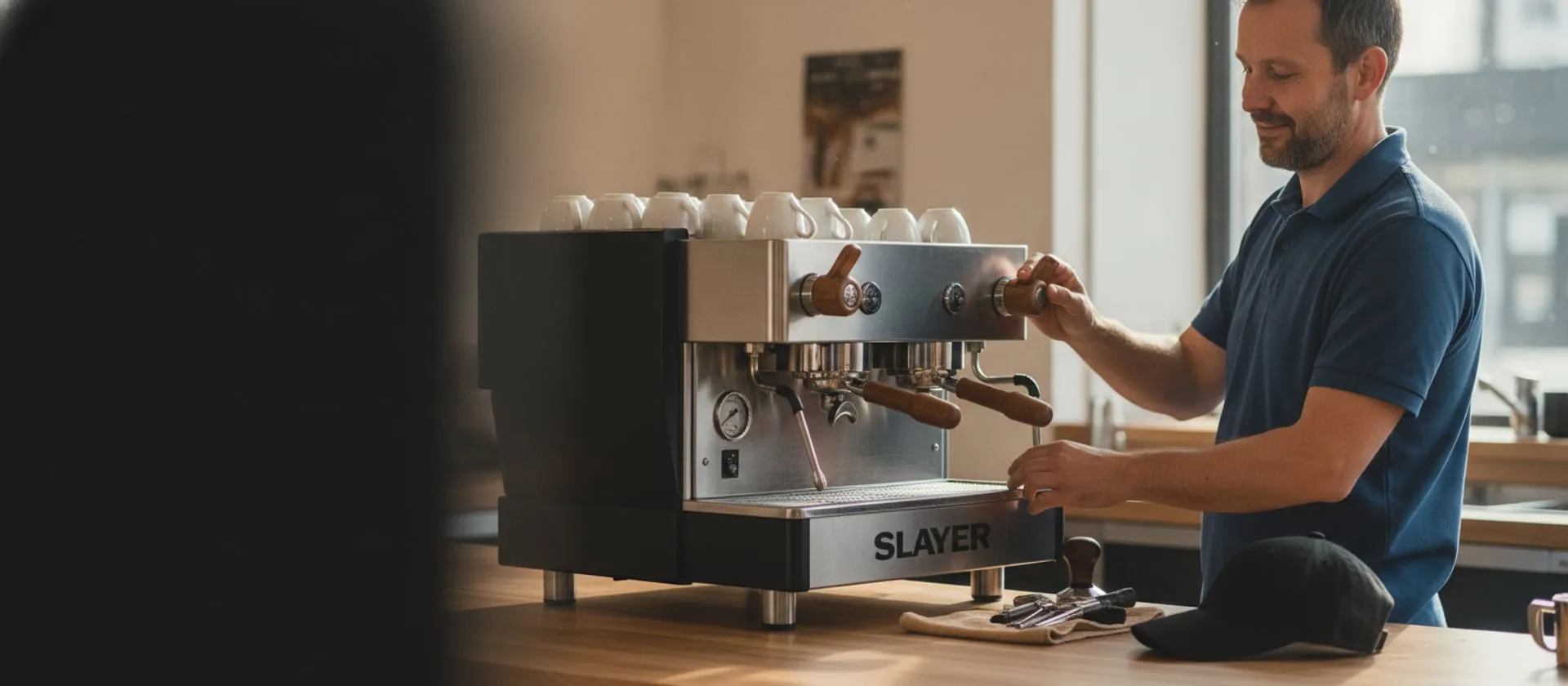
We rebuild Slayer needle valves on-site. Most shops in LA will only swap the assembly, which costs the customer 2-3x more.
Plastic-inlet, gear-pump, original-solenoid V3 units from 2010-2019. We service them and stock the rebuild parts. Slayer’s factory will service them but turnaround is 2-4 weeks; ours is same week.
Common o-ring kits, V3 group seals, steam tip cleaning gear, PID sensors, steam-valve rebuild kits. Most calls close in one visit.
If your baristas are not actively using the paddle stages, we will tell you. A Steam EP costs less and runs the same coffee.
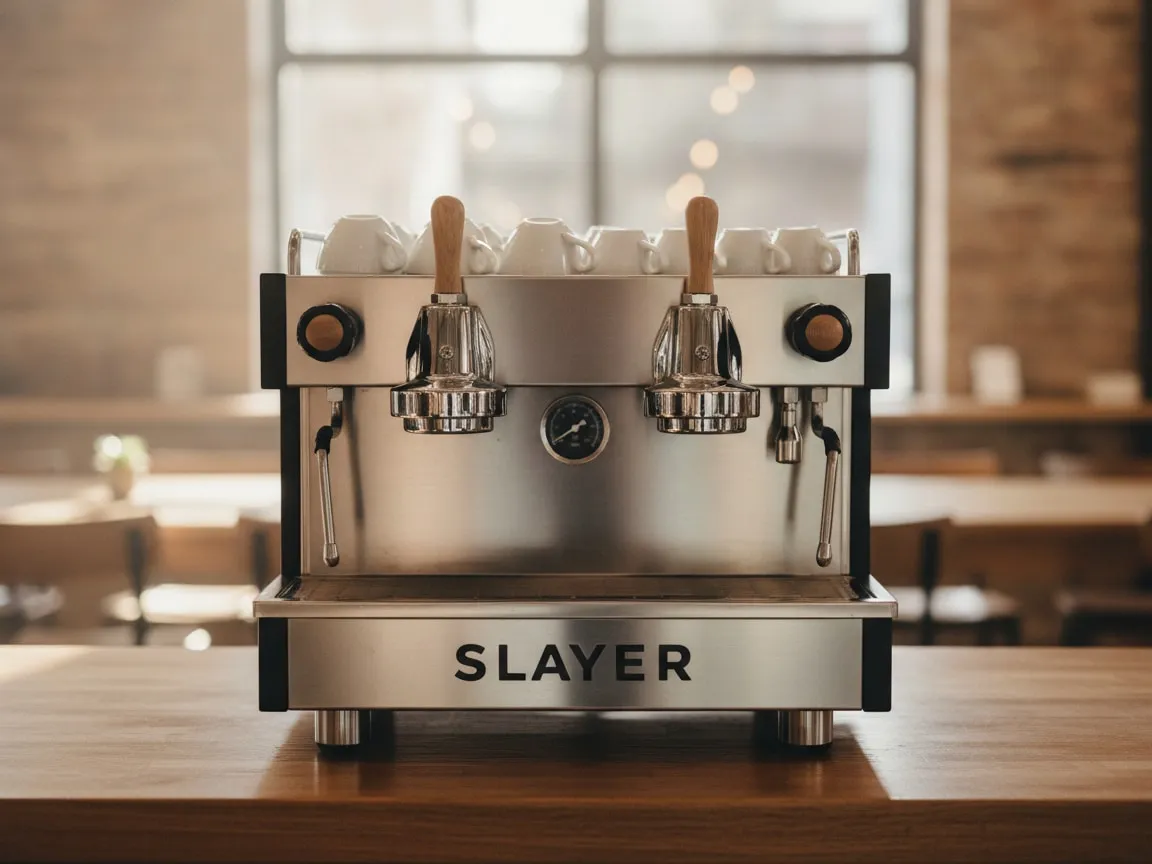
Slayer is the machine that put pressure profiling on the map. The needle-valve flow control is gorgeous when it is dialed in and a maintenance commitment when it is not. We service all four current platforms across SoCal cafes, plus the pre-2020 builds that most shops will not touch.
Slayer’s flagship. Three-stage paddle group, patented needle-valve pre-brew, individual brew tanks per group with preheat coil. Post-2020 builds use rotary pump (was gear pump).
Volumetric-only. The workhorse for cafes that want Slayer build quality without manual paddle workflow. Same V3 group head; no pre-brew flow profiling.
Variable pressure with manual paddle, plus volumetric "record-and-replay." Bridge between EP simplicity and V3 control.
Dual-tank single-group with full V3 needle valve. Low- to mid-volume cafe or serious home setup. Direct plumb only on most builds.
Single-group volumetric variant. Less common in LA than the Espresso Single Group.
Plastic water inlet, gear pump, original solenoids prone to o-ring bulge leaks. We rebuild these — most shops refuse them.
Mineral deposit on the needle restricts the pre-brew flow. If your TDS is above 150ppm and you do not have a softener, expect this within 18 months. Symptom: pre-brew stage runs short or skips entirely.
Original solenoid o-rings bulge and seep. Slayer fixed this with forged-body solenoids in the 2020 refresh; older units are rebuildable but the part is a known wear item.
Either a needle-valve obstruction (above) or a paddle micro-switch fault. We diagnose with a flow-meter on bench; cost depends on which.
Almost always a PID sensor fault or a corroded SSR. The brew tank itself rarely fails. Restart-and-recalibrate first; if drift persists past 30 minutes, sensor or board.
Cool-touch steam tip clogs are the #1 cause across all Slayer models. Second is a worn solenoid. Third is mineral restriction in the steam line. We diagnose in this order.
New rotary pump runs quieter than the old gear pump but throws a distinct vane-wear sound at 3-4 years if water is hard. Replace before it seizes.
From the one-group floor, with the needle valve and its pre-brew stage adding bench time that a volumetric machine simply does not need.
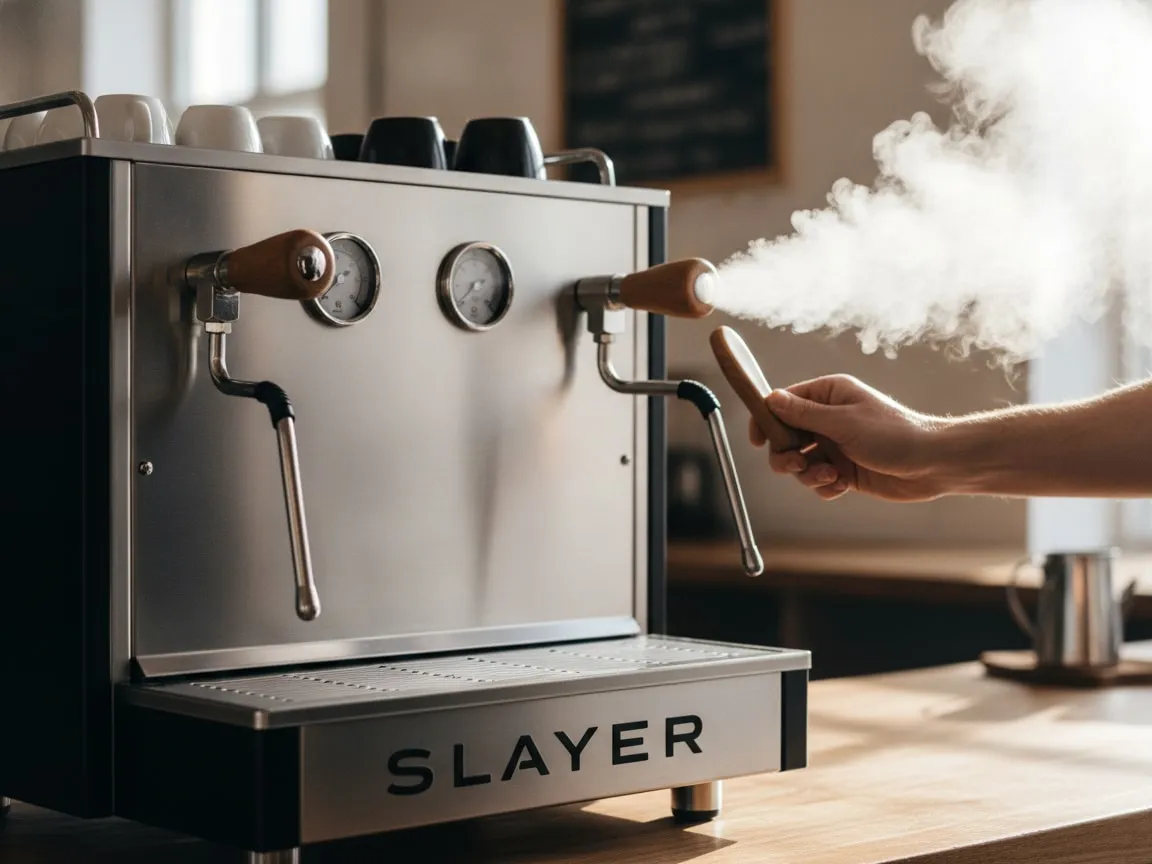
Slayer units mostly live on cafe bars and hospitality counters, so the dispatch pattern follows the commercial corridors: Slayer repair in Orange County, Slayer repair in San Diego, Slayer repair in Inland Empire, Slayer repair in Ventura County, Slayer repair in Los Angeles, Slayer repair in DTLA, Slayer repair in Santa Monica, Slayer repair in Hollywood, Slayer repair in Silver Lake and Slayer repair in Pasadena. Same technician, same rates everywhere on the grid — 25 cities across six counties, same-day when the schedule allows.
6-year-old Slayer V3 2-group at a roastery cafe in DTLA, intermittent pre-brew failure on group 1. Diagnosed needle valve clogged with calcium plus a worn paddle micro-switch (intermittent contact). Rebuilt the valve, replaced the switch, dialed in pre-brew at 3.5 ml/s. Total: 2.75 hours, $420 parts and labor, machine back to full service before the afternoon rush.
Slayer is not a better machine than La Marzocco. It is a different machine for a different bar program. If your baristas cannot articulate why they need pressure profiling, you do not need a Slayer. We have helped two LA cafes downgrade from V3 to Linea PB in the past year and both reported faster service and happier baristas.
Usually yes, if the fix costs under half a replacement and the machine has years left. The arithmetic we run by machine class, and when to buy new instead.
Six to eight years for an entry machine, twenty-plus for a prosumer one. The build, the water it drank and whether anyone serviced it set the number.
Every figure on this page is ours to stand behind — who we are and what we're licensed for.
Tell us your Slayer model and what's wrong. We'll respond within the hour with a diagnostic estimate and ETA.
Three fields. We call or text back — Mon–Sat · 7am–9pm, Emergency · 24/7. Urgent? Call (424) 352-8838.