Water Filtration for Espresso.
Water filtration consultation, installation, and cartridge service for espresso machines and coffee brewers across Southern California.
Water quality is the single biggest variable affecting espresso machine service life and cup quality — more than machine brand, more than barista skill, more than bean choice. We consult, install, and service water filtration to the Specialty Coffee Association brewing standard across SoCal.
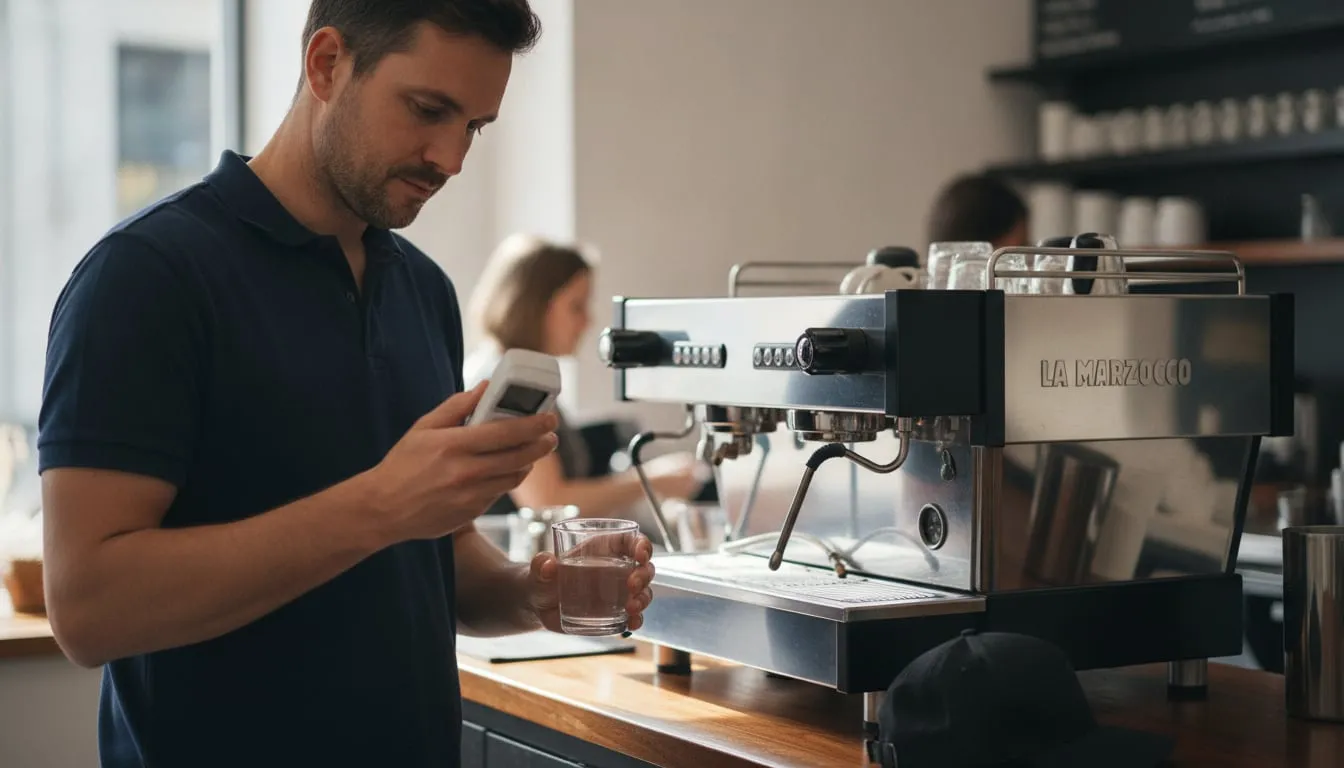
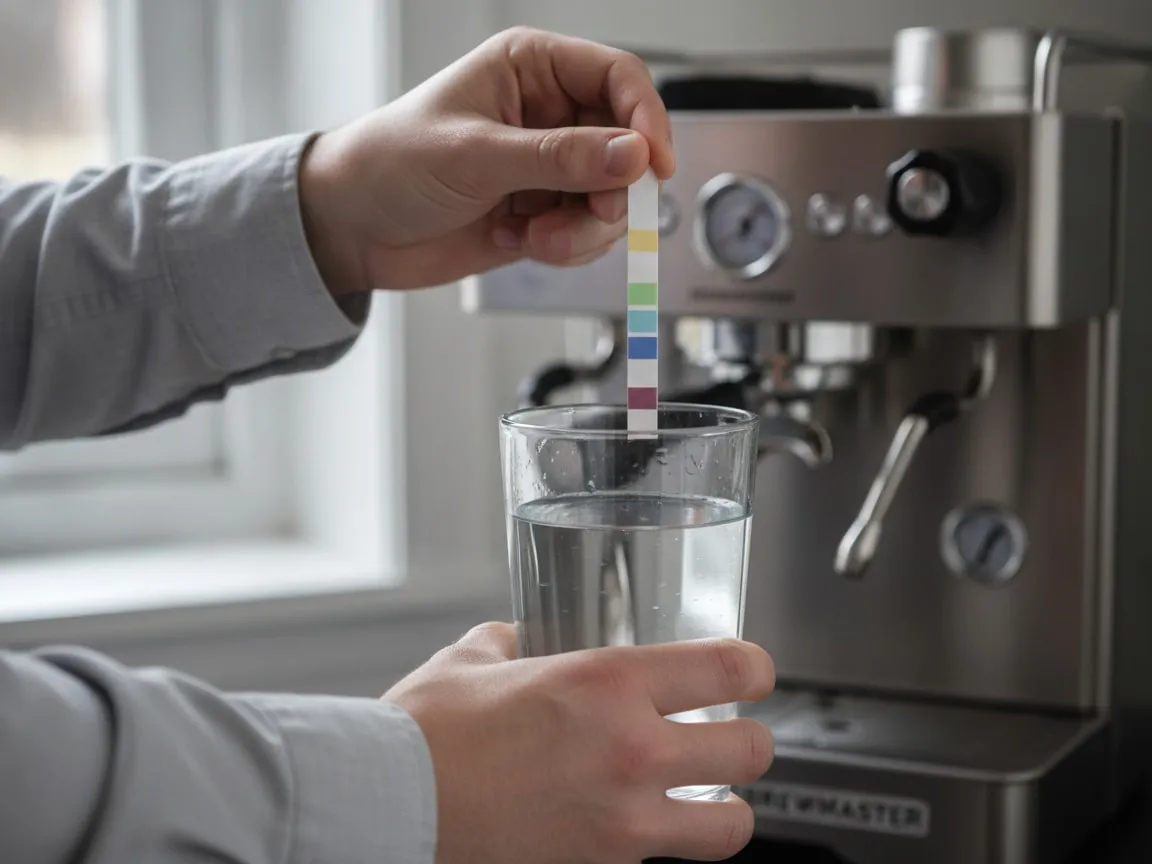
Why water matters more than most people think
The SCA brewing standard specifies: 50-175 ppm Total Dissolved Solids (TDS), 17-85 ppm calcium hardness, 40-75 ppm alkalinity, pH 6.5-7.5. Most LA tap water sits well outside these ranges — typically 250-450 ppm TDS, 80-180 ppm calcium hardness, 90-140 ppm alkalinity. Untreated, this destroys espresso machines and produces flat-tasting espresso.
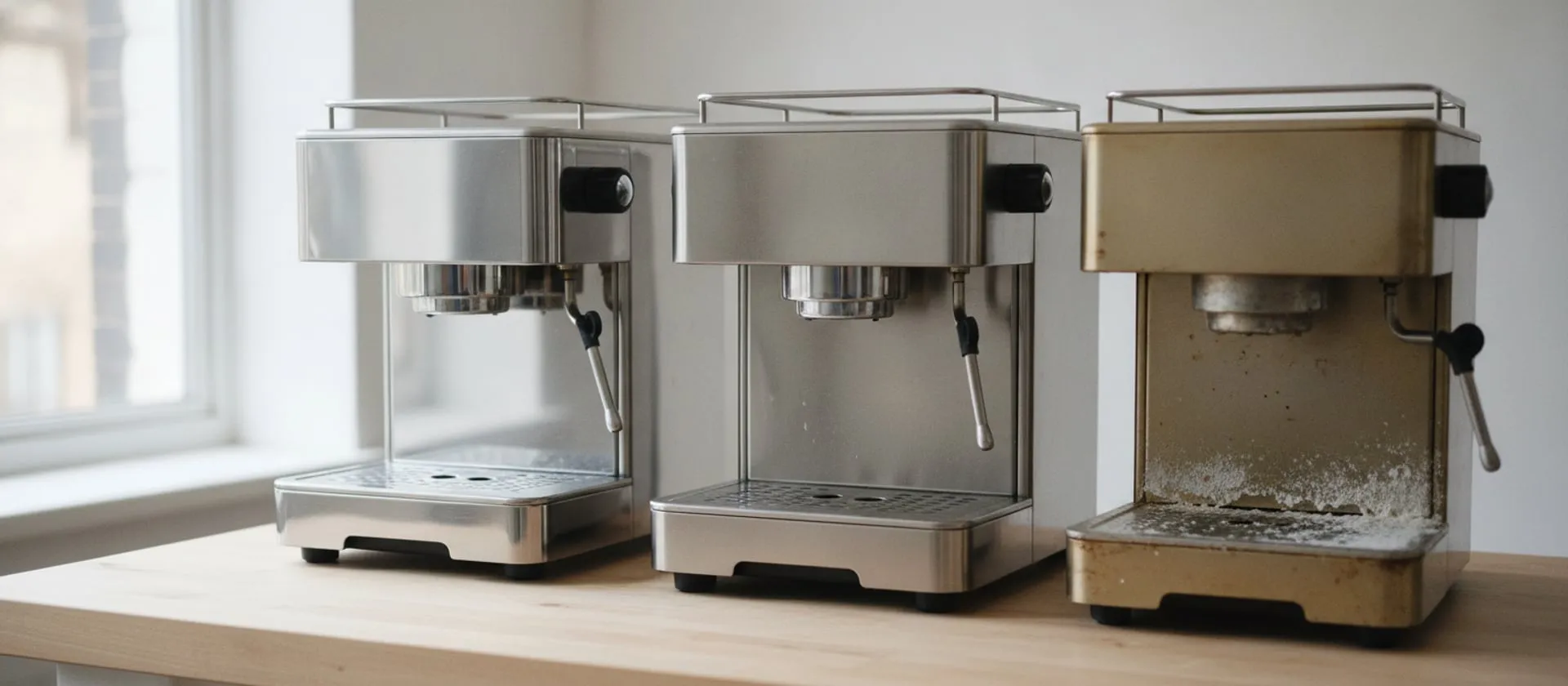
The service-life difference is dramatic. A La Marzocco Linea PB on properly filtered water typically runs 12-15 years before major component replacement. The same machine on untreated LA tap water sees the same component failures at 5-7 years. The acquisition cost difference between proper filtration and untreated water is $400-$800 over a 5-year period; the machine cost difference is $15K+. The math is obvious.
LA neighborhood water profiles
Water quality varies meaningfully across LA neighborhoods. Rough generalizations from our service history:
- Coastal hard-water zones (Long Beach, Santa Monica, Venice, Manhattan Beach): TDS 350-500 ppm, calcium hardness 120-180 ppm. Need aggressive filtration plus softening. - DTLA / Hollywood / Silver Lake / Echo Park: TDS 250-350 ppm, calcium hardness 80-120 ppm. Standard cartridge filtration sufficient. - Beverly Hills / West Hollywood / Brentwood: TDS 200-300 ppm, calcium hardness 60-100 ppm. Light filtration sufficient. - Pasadena / San Gabriel Valley: TDS 280-380 ppm, calcium hardness 100-140 ppm. Standard filtration plus quarterly cartridge replacement. - Orange County (Anaheim, Irvine, Newport): TDS 300-450 ppm, calcium hardness 100-160 ppm. Standard filtration; cartridge replacement intervals shorter. - Inland Empire (Riverside, San Bernardino): TDS 400-550 ppm, calcium hardness 130-200 ppm. Need multi-stage filtration plus softening.
We water-test the install site at every commissioning visit. The neighborhood profiles are starting points; specific buildings can vary 30-40% from the area average.
Filtration cartridge selection
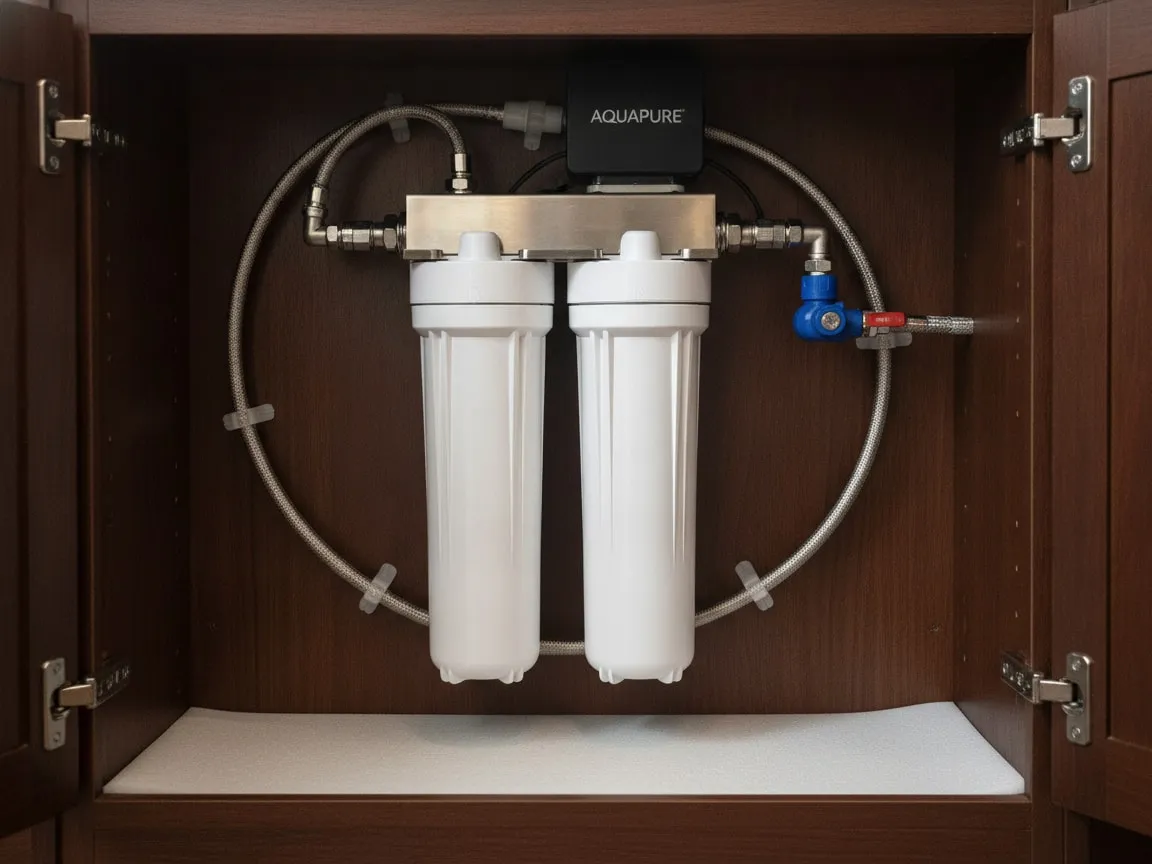
For most commercial cafes and offices, we install Everpure 7CB5 or 7CB6 cartridge systems. These are the industry standard for commercial coffee equipment — NSF-certified, predictable cartridge intervals, broad parts pipeline.
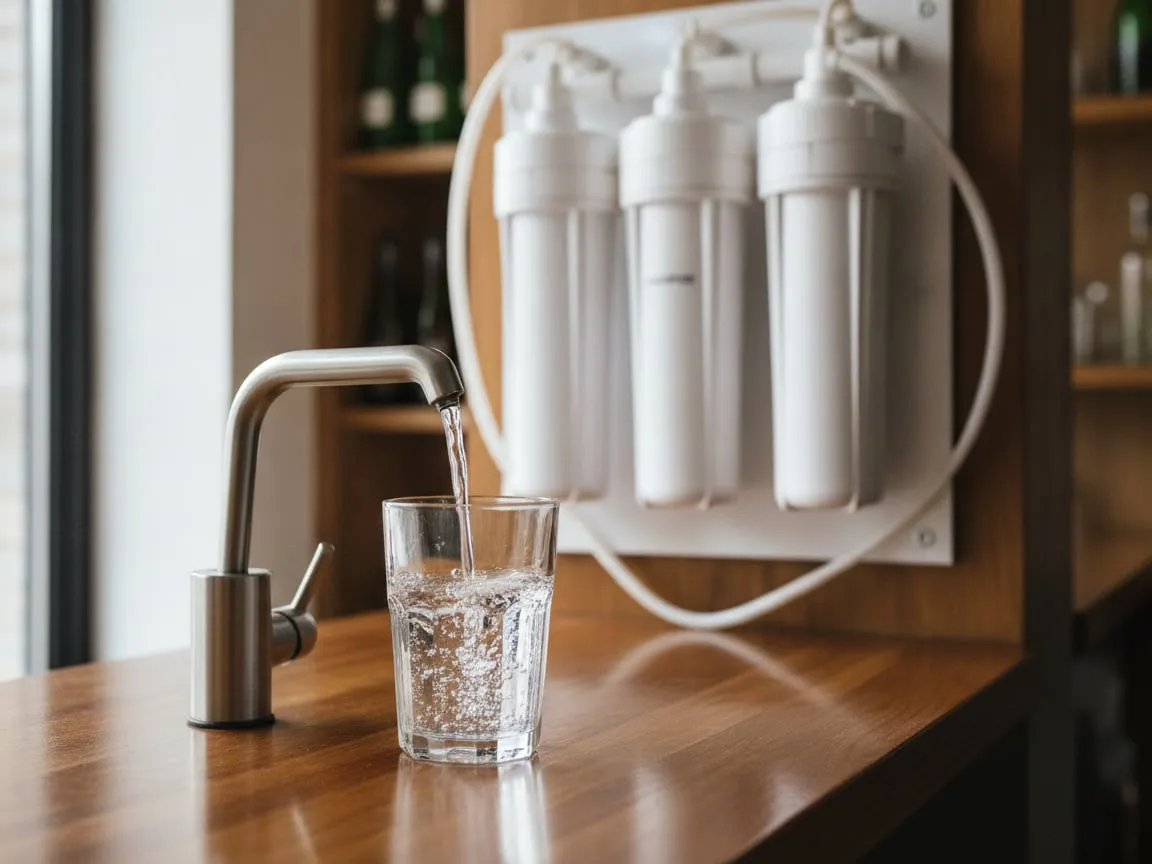
For specialty cafes serving lighter roasts where cup mineralization matters, we add a remineralization stage (BWT bestmax or equivalent) downstream of the filter. This adds $200-$400 to the install cost but produces measurably better cup quality on lighter roasts.
For super-hard-water zones (Inland Empire, parts of coastal LA), we add a water softener upstream of the cartridge filter. Softening protects the machine; the cartridge filter protects the cup quality. Both are needed in those zones.
Cartridge replacement intervals
Everpure 7CB5 cartridges are rated for 9,000 gallons or 12 months, whichever comes first. In hard-water LA neighborhoods, cartridges typically need replacement at 8-10 months despite the 12-month rating — the gallon rating is the binding constraint, not the time rating.
We track cartridge installation dates per machine and dispatch replacement before performance degrades. Skipped cartridge replacement is the #1 cause of premature machine descaling intervals — the filter stops protecting the boiler, scale builds up, the machine descales harder and more often.
Water testing and consultation
Standalone water testing is $145 — we come to your site, test TDS, calcium hardness, alkalinity, pH at multiple fixtures (machine inlet, hand sink, prep area), and provide a written report with filtration recommendations. The report is useful for machine purchase decisions, lease negotiations (some landlords allocate water costs by area), and insurance documentation.
The testing visit is credited toward filtration installation when we proceed. Standalone testing is also useful to verify your existing filtration is working — we have caught several installations where the cartridge was past its rating but had not been replaced.
Filtration as part of PM contracts
PM contracts include cartridge replacement scheduling and tracking. We track each machine’s install date and gallon throughput; cartridge replacements happen on schedule without the operator needing to remember. This single discipline catches more service-quality drift than any other operator-side maintenance task.
Outside of contracts, we offer cartridge replacement as a standalone service: $145 visit + cartridge cost ($85-$220 depending on cartridge type). For multi-cartridge installations (filter + remineralization + softener), the visit batches all replacements.
Pricing
straight up.
Standalone water testing $145. Filtration install $400-$1,400 depending on stages required. Cartridge replacement $145 visit + $85-$220 cartridge. PM contracts include scheduled cartridge tracking.
Frequently asked.
Q-01 Do I really need water filtration on my espresso machine?
Q-02 What filter should I use?
Q-03 How often does the filter need replacing?
Q-04 How much does cartridge replacement cost?
Q-05 Can you test our water before we buy a machine?
Q-06 What about home use — do I need filtration on my home espresso machine?
Recent representative water consultation: new specialty cafe in Long Beach, owner had purchased a La Marzocco Linea PB and was working with a contractor on the build-out. Site survey identified Long Beach hard-water profile (TDS measured at 412 ppm, calcium hardness at 168 ppm) plus the cafe’s plan to serve light-roasted single origins. Recommended a 3-stage system: water softener upstream (protects the machine), Everpure 7CB5 cartridge filter (primary filtration), BWT bestmax remineralization downstream (cup quality on light roasts). Total filtration install cost $980 added to the cafe’s build-out budget. Two years in, the machine is running at factory spec, descaling intervals match the dry-spec target (annual rather than every 6-8 months), and the head barista reports measurable cup-quality consistency on the light-roast program.
Water filtration is the most under-discussed variable in commercial espresso. Customers will spend $20K on a machine and refuse to spend $800 on the filtration that doubles its service life. We have given up trying to fight this with marketing language and just tell customers honestly: untreated LA tap water destroys espresso machines on a predictable timeline. The $800 filtration is the difference between an 8-year machine and a 15-year machine. Do the math.
Worth reading before you call.
- How Long Does an Espresso Machine Last?
Six to eight years for an entry machine, twenty-plus for a prosumer one. The build, the water it drank and whether anyone serviced it set the number.
- Is It Worth Repairing an Espresso Machine?
Usually yes, if the fix costs under half a replacement and the machine has years left. The arithmetic we run by machine class, and when to buy new instead.
- R-01 Specialty Coffee Association — water for brewing standard Accessed May 2026
- R-02 NSF International — NSF/ANSI 42 and 53 water filtration certification Accessed May 2026
- R-03 Everpure — commercial foodservice cartridge specifications Accessed May 2026
- R-04 BWT — water optimization for specialty coffee Accessed May 2026
- R-05 CA Department of Water Resources — LA-area water quality data Accessed May 2026
Every figure on this page is ours to stand behind — who we are and what we're licensed for.
Need water filtration for espresso?
Dispatch in hours.
Tell us your machine, your model, and what's wrong. We'll respond within the hour with a diagnostic estimate and ETA.
Emergency · 24/7
25 cities · same-day