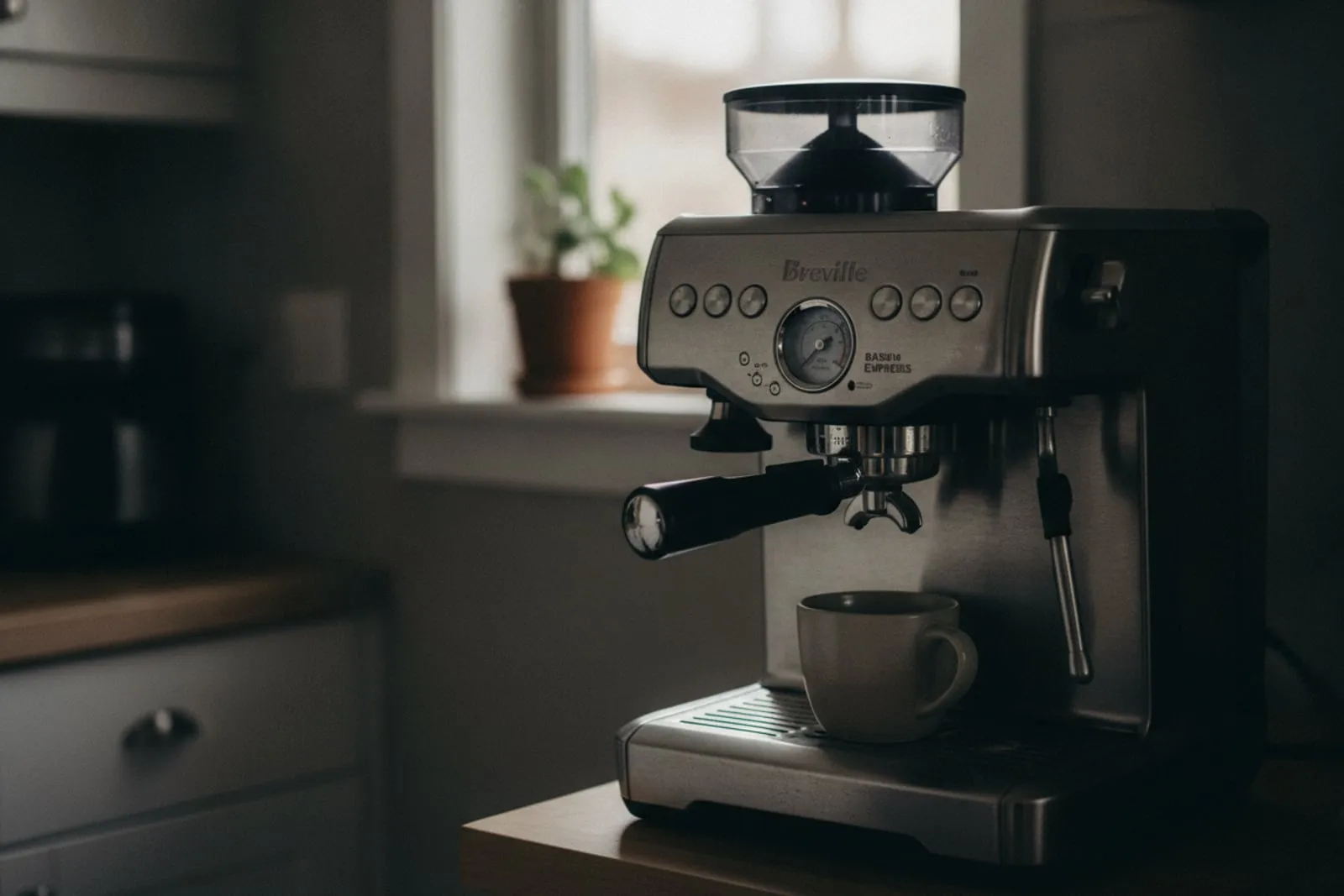
Breville Repair Out of Warranty
Breville's own route is mail-in replacement, and most LA shops decline the brand outright. Here is what actually fails, what it costs, and when to stop.
Yes, and by two different routes depending on whether the machine is still covered. Inside warranty you go to Breville, which in the United States generally means shipping the machine and receiving a replacement rather than a repair. Outside warranty you need an independent bench, and in Los Angeles that is a short list.
We are not a Breville-authorized service center and we do not claim to be. What we are is a shop that takes the brand when most of the others won’t.
Why most shops decline the brand
Parts margin, mainly. Breville sits at a price point where the parts are inexpensive, which sounds good until you are the shop buying them. A repair that takes the same bench hours as a prosumer job returns a fraction of the parts revenue, so a lot of independents quietly stop quoting the brand.
The second reason is the mail-in habit. Because Breville’s own route swaps machines rather than fixing them, a whole generation of owners has been told the machine is disposable, and shops absorbed the same idea. It is not true of the mechanical faults, which are most of them.
We take the work because access matters more to us than margin per job. A customer with a five-year-old machine and a stuck pump should not be told to throw it away.
What actually fails
The Breville platform is a single-boiler or dual-boiler thermoblock design with a vibration pump, an over-pressure valve and a small number of solenoids. It fails in predictable places.
The over-pressure valve drifts out of adjustment and the shot goes thin or gushes. The pump stops reaching pressure, usually somewhere past year four. A solenoid sticks and the group stops releasing. The thermal fuse trips and the machine goes dead with no warning. Scale builds in the thermoblock and flow drops off before anything fails outright.
Published ranges on our own brand page, which are the same figures we quote on the phone: pump not reaching pressure $185-$340, steam wand producing no pressure $145-$210, heating element fault $240-$520, grinder not dispensing $150-$320, touchscreen unresponsive on Oracle and Touch models $145-$420, and a stuck descaling cycle $185-$280.
A full flat-rate service on this class is $249 when the machine is working and wants maintenance rather than repair.
The thermoblock is the line
Everything above is worth doing on a machine under about six years old. The thermoblock is where that stops.
On most Breville models the thermoblock is bonded into the heating assembly rather than bolted to it. Replacing it is not a part swap, it is a replacement of the machine’s entire heating side, and the cost lands close enough to a new machine that the decision makes itself. On a machine past six or seven years we will tell you to buy new.
That is also why descaling on this platform matters more than owners expect. Scale in a thermoblock has nowhere to go and no easy way out, so a machine that never gets descaled in hard LA water reaches that terminal fault years early.
Which model you have changes the answer
The platform splits into three groups and they age differently.
The single-boiler machines — Bambino, Infuser, the smaller Barista models — are the simplest and the cheapest to keep alive. One thermoblock, one pump, a handful of solenoids. Faults are usually singular and the repair is usually obvious.
The Barista Express and Barista Pro sit in the middle. They add a built-in grinder, which adds the grinder faults: burrs rounding off past year six, the dosing chute packing, the motor struggling. None of that is exotic and all of it is bench work, but it means a machine of this class has two independent things that can age out rather than one.
The Oracle and Oracle Touch are the top of the range and the most electronics per machine. When they fail mechanically they behave like the rest of the family. When they fail electronically, the answer depends entirely on whether the part is still made for that model year, which is the same wall every consumer platform hits eventually.
What the diagnostic usually finds
Owners describe symptoms. Machines have causes, and they do not map one to one.
The commonest example is “it stopped making crema”, which owners read as the machine wearing out. It is almost always the OPV drifting, the basket being wrong for the dose, or the grind drifting coarse as the burrs age. Three different fixes, one description.
The second is “it leaks”. Water under a machine can be the group seal, the tank valve, the drip tray sensor, or a hose that has hardened at a barb. Only one of those is urgent and only one of them is expensive, so guessing on the phone helps nobody.
That is why the machine goes on the bench with a pressure rig before anybody quotes a number. A shop that tells you the price before seeing the machine is either padding for the unknown or about to change the price later.
How we handle it
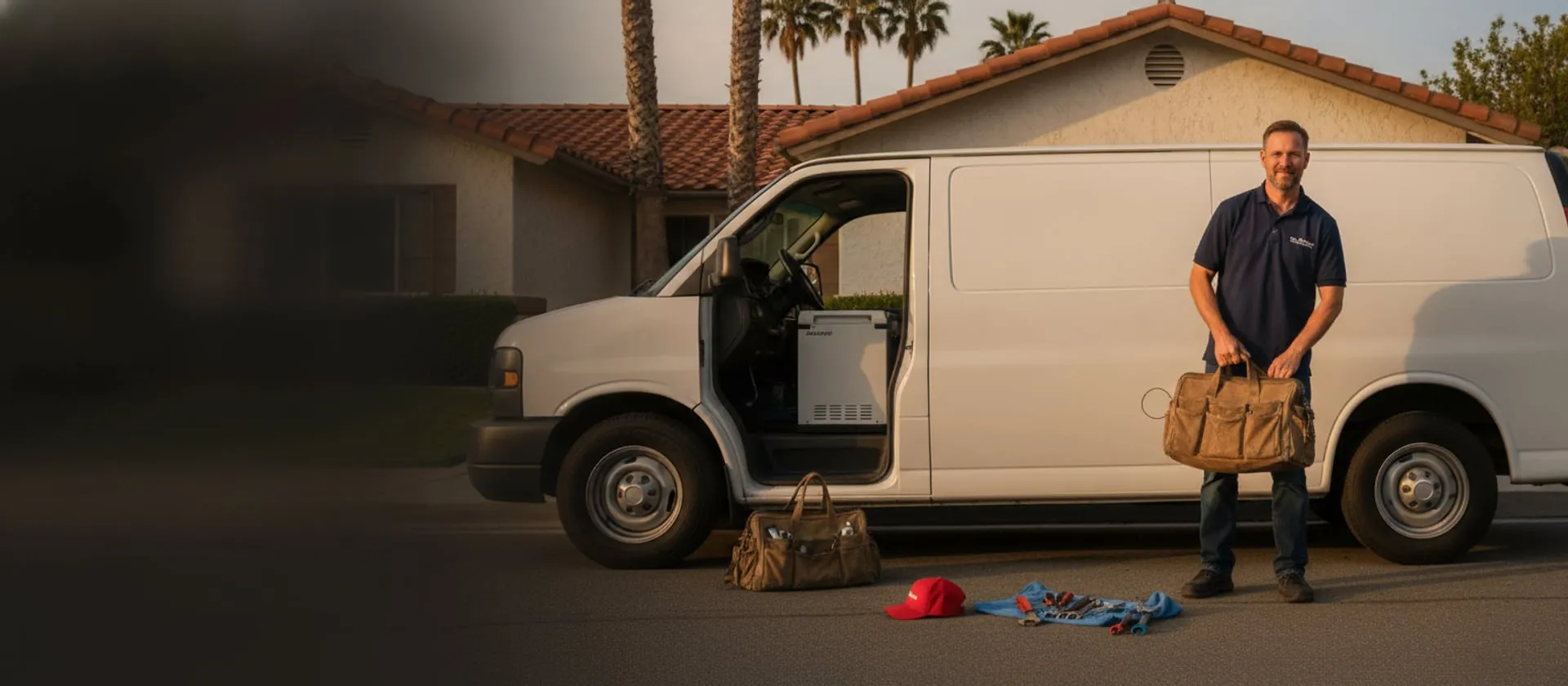
The machine travels. Breville machines sit on a counter, so a courier takes it, the work happens at a bench with parts and a pressure rig to hand, and it is delivered back when it is finished. No drop-off, no waiting in a shop.
$145 diagnostic — includes pickup from your address and return delivery. It is credited in full toward the repair when you approve the estimate. That transport is not a courtesy, it is part of what a diagnosis fee has to cover. And under §2722 the written estimate comes first, with no charge in excess of it permitted without your prior consent.
If the answer is that the machine is not worth fixing, you get that in writing too, and you owe the diagnostic and nothing else.
Representative job · composite of recent work. A Highland Park customer had a Barista Express at year five pulling thin shots and had already been told by two shops that nobody works on Breville. On the bench it was the over-pressure valve out of adjustment plus a scaled thermoblock restricting flow. Both routine. The machine went back the same week and the conversation that mattered was about the water, because on that address the scale was going to come straight back without filtration.
When we tell you not to bother
A thermoblock failure past year six or seven, as above.
A machine that has been running on unfiltered hard water for a decade with several faults at once. Fixing one of four things on a machine at the end of its life is spending money to find the next fault.
Anything where liquid has reached the wiring. We see this after a tank is overfilled or a seal lets go unnoticed, and once the loom has been wet the machine is not something we will warrant.
The short version
| Symptom | Likely cause | Typical range | Fix or replace |
|---|---|---|---|
| Thin or gushing shots | OPV drifted out of adjustment | $185-$340 | Fix |
| No steam pressure | Scale in the tip, or a worn solenoid | $145-$210 | Fix |
| Machine dead, no lights | Thermal fuse, or the element | $240-$520 | Fix under 6 years |
| Grinder runs, nothing comes out | Burrs or the dosing chute | $150-$320 | Fix |
| Touchscreen unresponsive | Display, ribbon, or the board behind it | $145-$420 | Depends on board availability |
| Descale cycle will not complete | Scale load, or the flow path is blocked | $185-$280 | Fix |
| Slow flow, weak heat, older machine | Thermoblock scaled or failed | Assembly-level | Replace past year 6-7 |
If the machine is still in warranty, use Breville. If it is not, the mechanical faults on this platform are ordinary work and the flat-rate service is published before you call. Everything on this page is the same information as our Breville page, with the prices coming from the same table, and across Los Angeles the water is usually half the story.