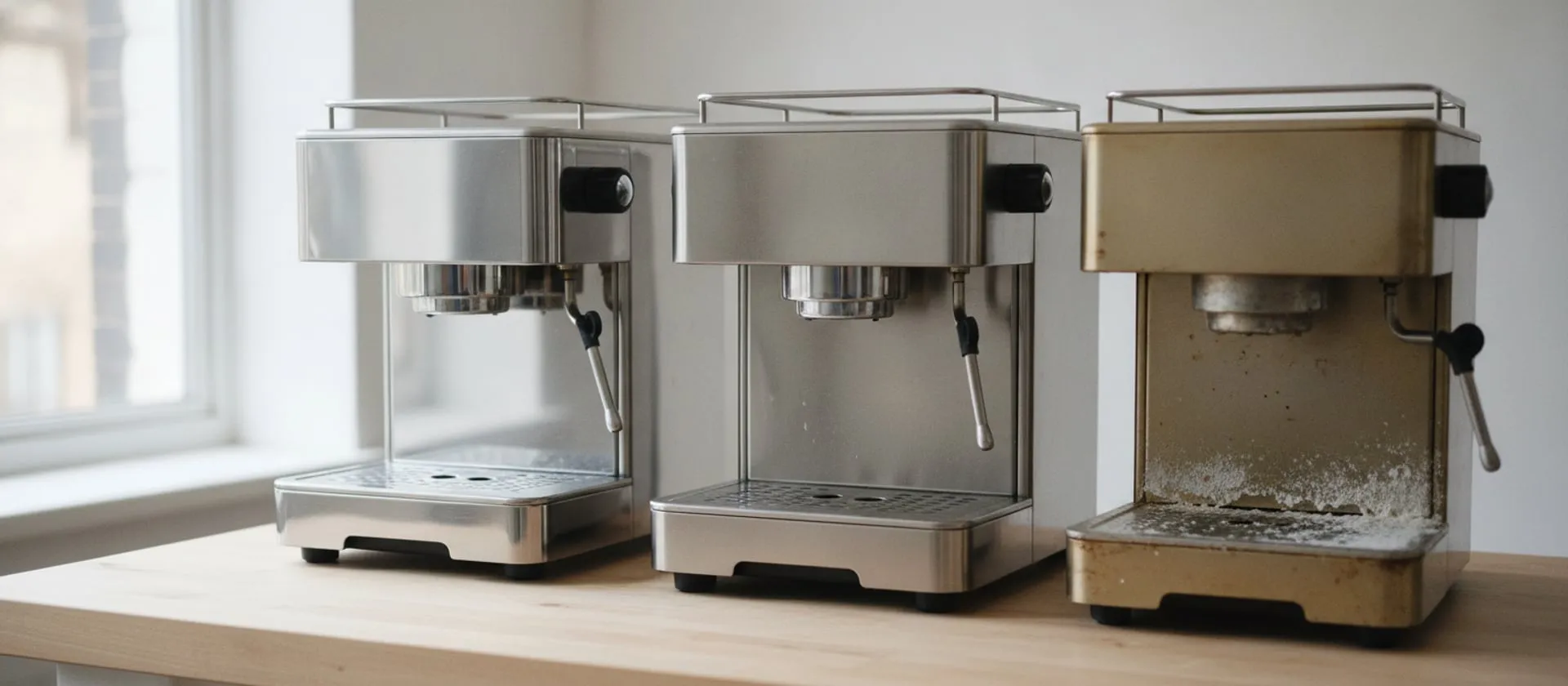
How Long Does an Espresso Machine Last?
Six to eight years for an entry machine, twenty-plus for a prosumer one. The build, the water it drank and whether anyone serviced it set the number.
Somewhere between six years and thirty, and the spread is not luck. An entry machine is finished at six to eight, a super-automatic at eight to ten, a Jura at ten to twelve, a Breville at six to eight, an E61 prosumer machine at fifteen to twenty-five, and a home-commercial machine outlives the kitchen it sits in.
What moves a machine inside its band is water and service, in that order. Two identical machines bought the same week, one in a hard-water part of the city with no filter and no descaling, one filtered and serviced annually, will be five years apart by the time the first one dies.
What actually fails, and when
Machines don’t wear out all at once. One part goes first, and which part it is tells you whether the machine has a future.
Seals and gaskets are consumables. They flatten under heat cycling and get replaced, on every class, forever. Pumps are the next tier up: a vibration pump is a four-to-eight year part and a rotary pump is a fifteen-year part. Heating elements and boilers are the tier that decides the machine’s fate, because on a boiler machine they unbolt and on a thermoblock machine they don’t.
Electronics are the wildcard. A board that fails in year three gets replaced without drama. The same board failing in year ten on a discontinued model is the end, not because it broke but because nobody makes it any more.
By machine class
Entry machines
Six to eight years. The ULKA vibration pump usually goes first, somewhere past year four, followed by the three-way solenoid. Both are cheap and worth doing. A service on this class runs $159, and two of them across the machine’s life is normal spending.
The end comes when the boiler and element go together, which on hard water is often the same visit.
Super-automatics
Eight to ten years. Brew unit seals are first, at three to five years, and they come round again every three or four. Grinder burrs follow past year six. The drainage tract silts up quietly the whole time.
Service is $219 standard, $319 premium. Machines in this class die of electronics, not mechanics.
Jura
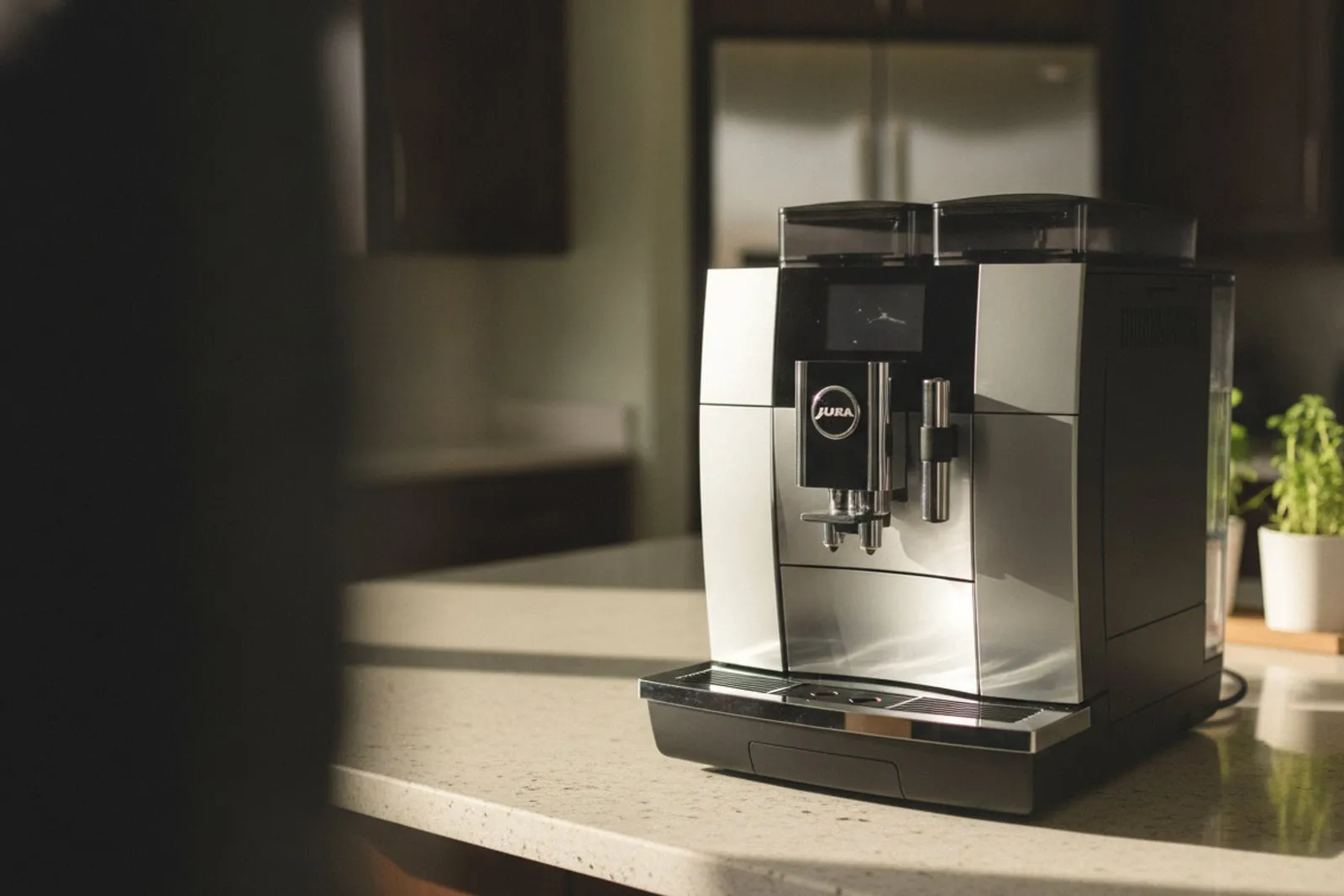
Ten to twelve, and further with attention. The brew unit is the wear item and it is designed to be rebuilt, which is exactly why these machines outlast most of the super-automatic field. Compact models service at $329, premium and office machines at $499.
We have Juras on the books past fifteen years still earning their keep in offices.
Breville
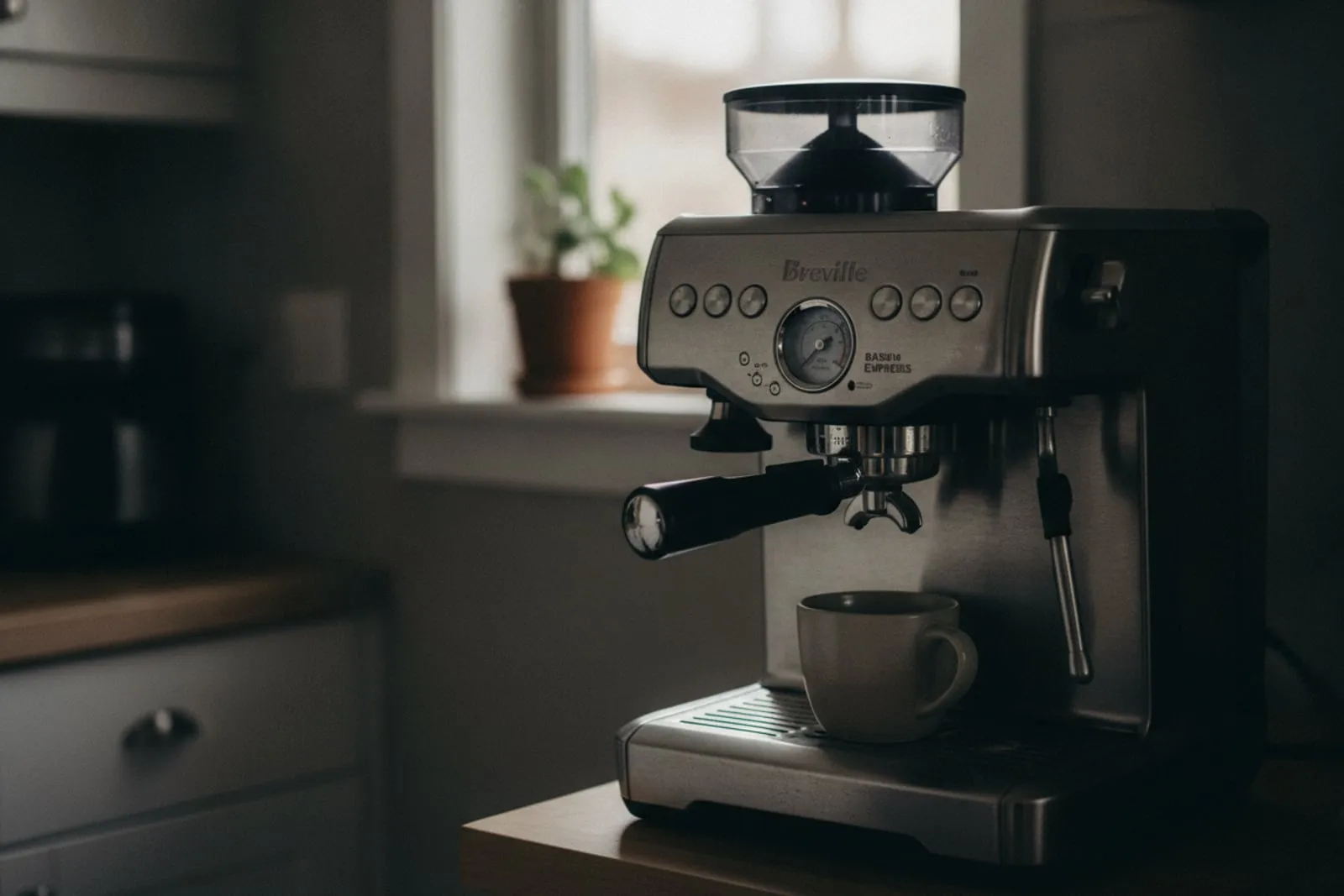
Six to eight. The OPV drifts, solenoids stick, the thermal fuse trips. All fixable, and service runs $249. The ceiling is the thermoblock: on most models it is bonded into the heating assembly, so when it goes the economic machine goes with it.
E61 prosumer
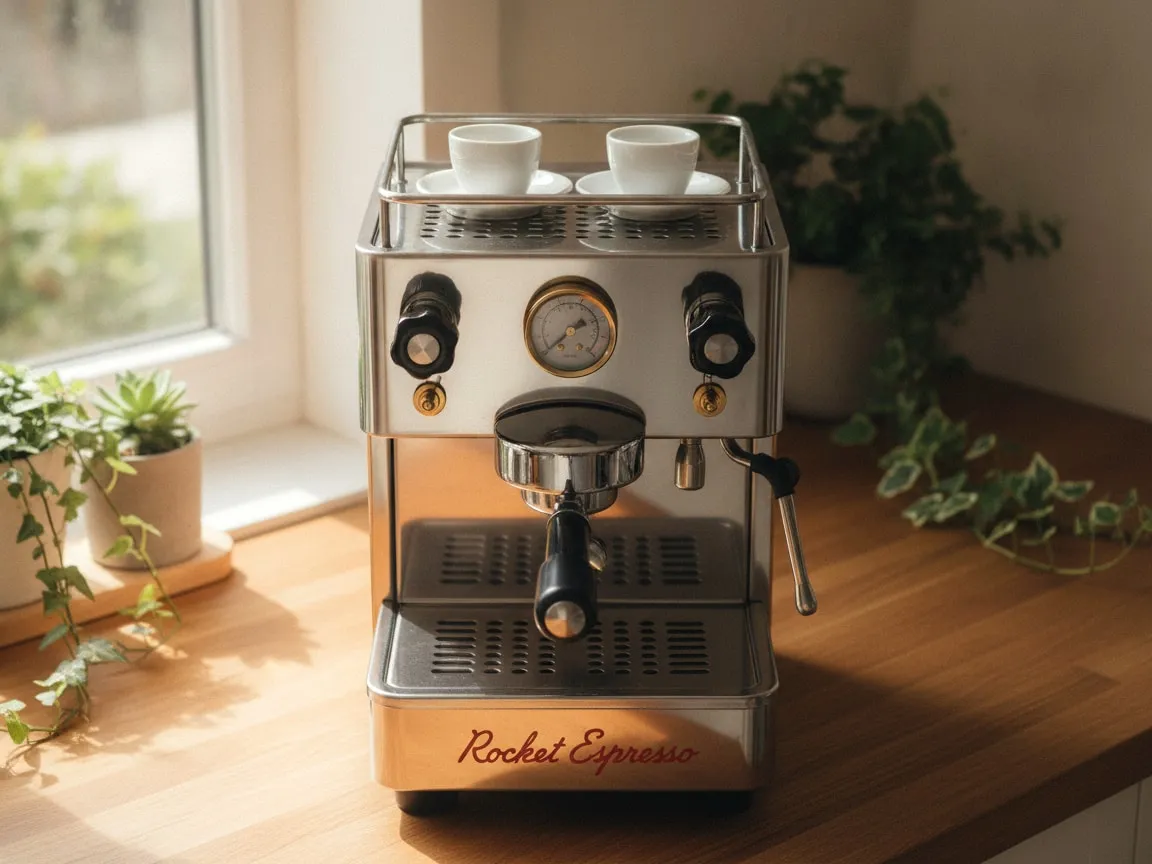
Fifteen to twenty-five, and the number is really about the owner rather than the machine. The E61 group is a design from the early sixties that the entire industry still supports. Boilers are brass or steel and unbolt. Pumps are catalogue items. Service is $429 and it buys years, not months.
A twenty-year-old machine with fresh seals pulls the same shot it did new. That is not sentiment, it is what the group is.
Home-commercial
Effectively unlimited. These are cafe machines running at domestic duty, so the parts that would wear out in three years in a busy bar take fifteen at home. On-site service is $449. We have never advised anyone to replace one.
Water is the variable nobody controls for
Hardness across LA County runs 60 to 180 ppm depending on where you are. That range is the difference between descaling once a year and once every three, and over a decade it is the difference between a machine that dies at eight and the same machine at fourteen.
The pattern is geographic and it is consistent. The Westside and the coastal strip run harder. Central LA and Pasadena sit mid-range. The west valleys run softer. A machine three miles inland of another can be on a completely different maintenance schedule, which is why we test at commissioning rather than assuming a city-wide number.
Filtration is the cheapest intervention available. A cartridge on a schedule costs a fraction of one descale, and it moves a machine from the hard end of that range to the soft end permanently.
What service actually buys you
Roughly double, on every class where the machine is mechanically rebuildable.
That sounds like a sales line, so here is the mechanism. Descaling removes the deposit before it insulates the element and before it narrows the flow path. Seal replacement stops the pressure loss that makes a pump work harder and fail sooner. Cleaning the drainage tract stops the silting that eventually blocks it. Each is small and each prevents a larger failure downstream.
The machines that die young in this city are almost never badly built. They are unfiltered and unserviced, and by the time somebody calls, two or three of those small preventable failures have already happened.
Representative job · composite of recent work. A Santa Monica household called about a nine-year-old prosumer machine that had stopped reaching temperature. The element was insulated in scale thick enough to see, the level probe was crusted, and the group seals had never been changed. All three were serviceable and the machine went back working. The honest part of that conversation was the next one: on the same water and the same neglect it would be back within two years, so it went onto an annual schedule instead. It is still running.
When it stops being worth it
The machine becomes unrepairable when the failed part no longer exists. That is the whole rule, and it lands almost exclusively on electronics.
We turn down capsule machines, because they are sealed units built to be replaced. We turn down drip brewers below the price where the diagnostic makes sense. We turn down older super-automatics with dead mainboards where the part is unobtainable or costs most of a new machine, because fitting a used board to a worn chassis is a repair we could not stand behind.
Everything else has a path. A boiler machine with a bad element is a parts job. A fifteen-year-old E61 machine with a tired pump is an afternoon.
The short version
| Class | Typical life | First thing to fail | What extends it |
|---|---|---|---|
| Entry | 6-8 years | Vibration pump, three-way solenoid | Filtration, annual descale |
| Super-automatic | 8-10 years | Brew unit seals at 3-5 years | Cleaning cycles, seal service |
| Jura | 10-12+ years | Brew unit | Brew unit rebuild on schedule |
| Breville | 6-8 years | OPV drift, solenoid, thermal fuse | Descaling before the thermoblock scales |
| E61 prosumer | 15-25 years | Group gaskets, then the pump | Seals on schedule, filtered water |
| Home-commercial | Indefinite | Same as a cafe machine, slower | Any scheduled service at all |
The diagnostic is $145 if you want the real answer for your machine rather than the class average, and it comes with the written estimate. Under §2736 the guarantee terms on any repair have to be stated in writing, and where they are not stated the default is 30 days on labor and 90 days on parts.
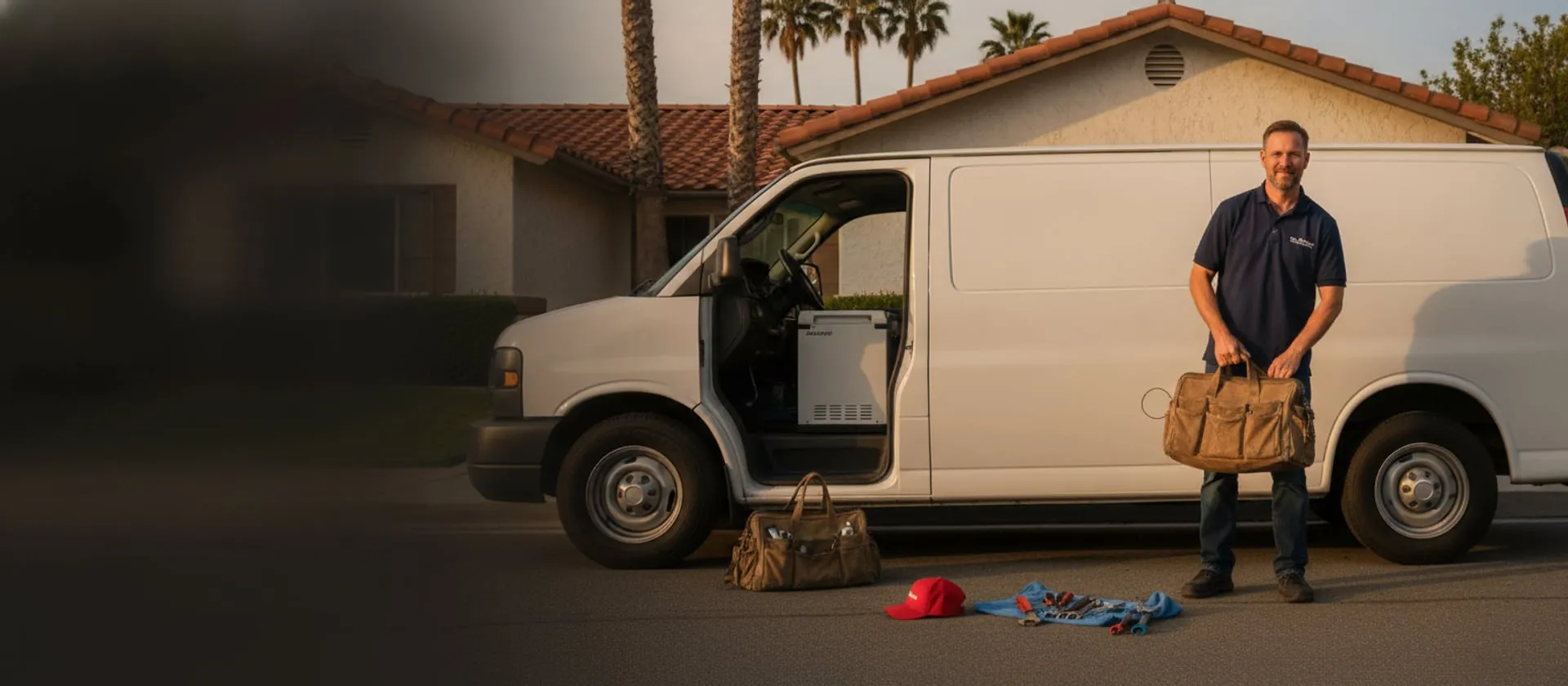
If the machine can travel, we collect it and return it. If it is plumbed in, a technician comes to it. Either way, servicing on a schedule is what turns the low number in that table into the high one, and in Los Angeles it matters more than it would almost anywhere else.