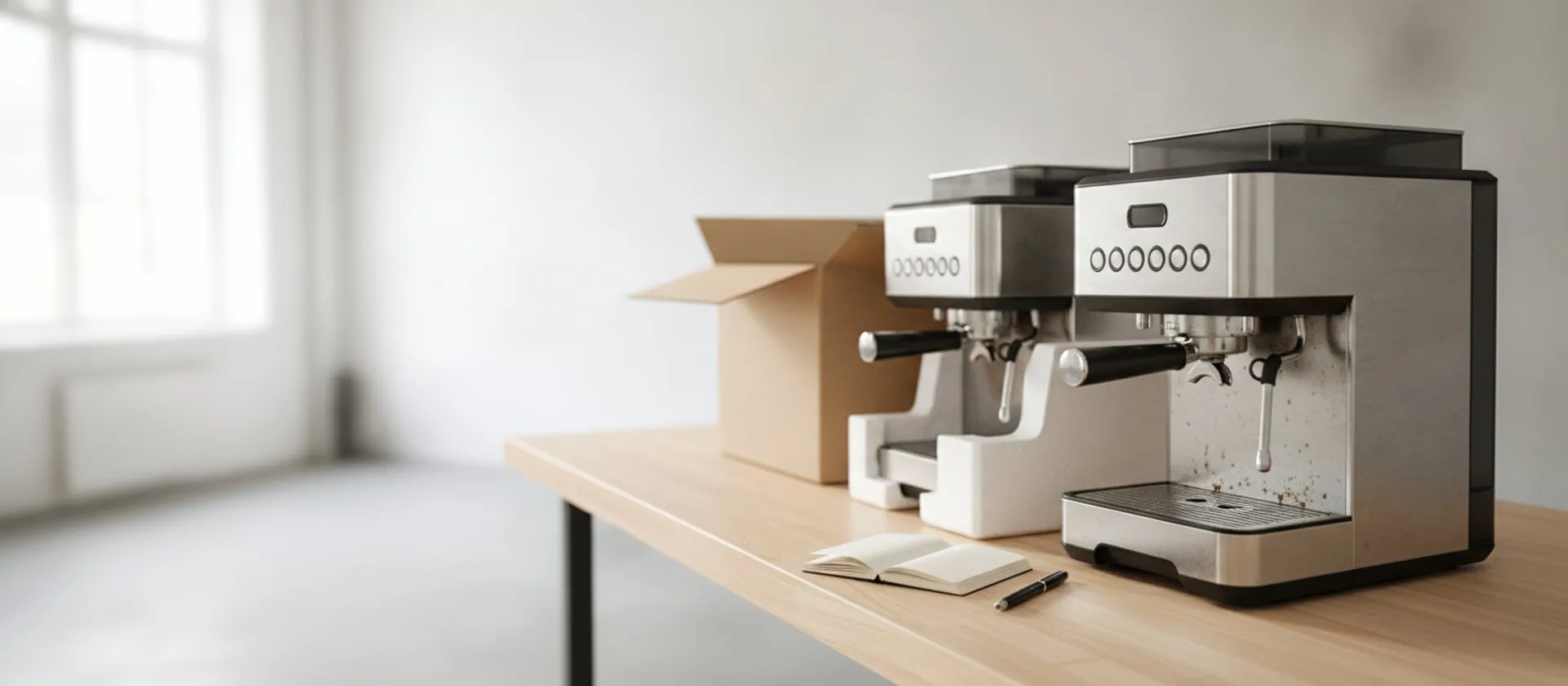
Is It Worth Repairing an Espresso Machine?
Usually yes, if the fix costs under half a replacement and the machine has years left. The arithmetic we run by machine class, and when to buy new instead.
Most of the time, yes. Repair the machine when the fix costs less than about half of what the replacement would, and when the machine is young enough that the next failure isn’t already due.
That second half is the one people skip. A cheap repair on a machine with one foot in the grave is money spent twice, and an expensive repair on a machine built to run for twenty years is usually still the right call. The age bands that matter: entry machines are done at around six to eight years, super-automatics at eight to ten, Jura at ten to twelve and Breville at six to eight depending on the water they ran on, E61 prosumer machines at fifteen-plus, and home-commercial machines effectively never, because every part on them is a part you can buy.
The math we actually run
Three numbers decide it. What the repair costs, what an equivalent machine costs today, and how much life the machine has left after the repair.
We don’t quote the second number. It’s not ours to publish and it moves every quarter, so you check it while we’re on the phone. What we do give you is the first number in writing, with the third one stated plainly next to it: what we found, what it costs to put right, and what else on that machine is close enough to failing that you should know about it before you spend.
The rule of thumb holds up well. Under half the replacement cost, repair. Over three quarters, replace. In between, the age band decides, and that’s where the written estimate earns its keep, because it tells you which other parts are near the end.
The other thing that decides it is what the machine is made of. A boiler you can unbolt and a pump you can swap is a machine worth keeping. A sealed thermoblock with the element bonded into it is a machine with a fixed lifespan, and no amount of good intentions changes that.
By machine class
Entry machines — Gaggia Classic, Rancilio Silvia, Bambino
What fails: the ULKA vibration pump loses pressure somewhere past year four, the three-way solenoid sticks, the boiler element scales up in hard-water neighborhoods.
A full service on this class runs $159. That is the number to hold against the machine. When it’s the pump or the solenoid, repair without thinking about it. When the element and the boiler have both gone on a machine past its sixth birthday, we’ll tell you to stop. Two major parts plus labor on a machine at the bottom of the market is the clearest replace case there is.
Super-automatics — DeLonghi, Saeco, Philips
What fails: brew unit seals at three to five years, the grinder burrs somewhere past year six, and the drainage tract silting up because nobody runs the cleaning cycle as often as the manual says.
Standard service is $219, premium models $319. Brew unit work is worth doing twice on the same machine. The third time, on a machine past eight years, you’re rebuilding around a mainboard and a pump that are both on the clock.
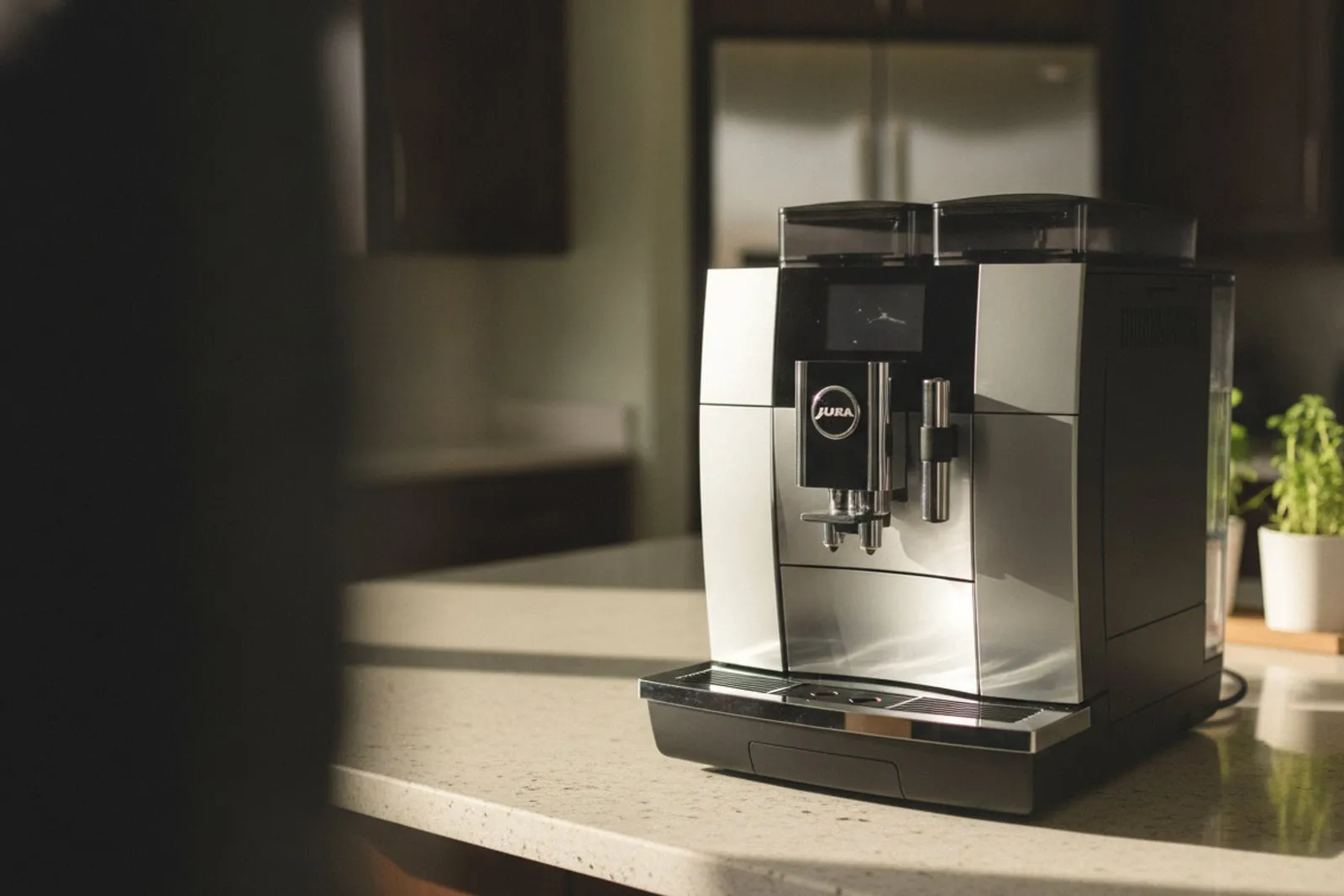
Jura
What fails: the brew unit, and after that the brew unit again. Drive gears strip, seals harden, the cylinder scales.
Compact models service at $329, the premium and office machines at $499. Jura is the class where repair wins most often, because the platform is built to be opened and the parts exist. A brew unit fault is not the end of a Jura, whatever the display says. We call it finished when the mainboard has gone on a machine that has already had its brew unit rebuilt twice.
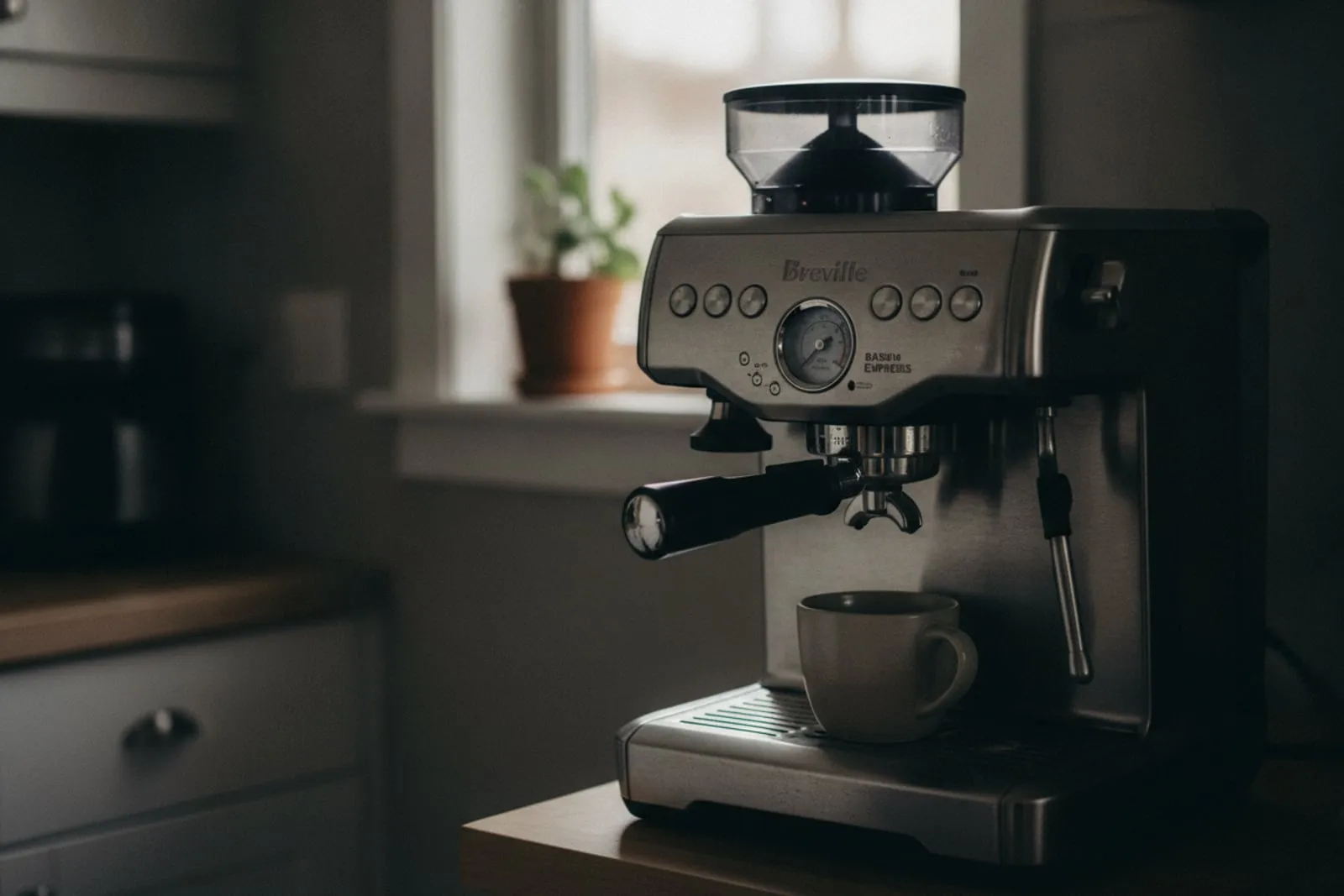
Breville
What fails: the OPV drifting out of adjustment, solenoids, the thermal fuse, and on the older models the thermoblock.
Service runs $249. Everything except the thermoblock is straightforward and worth doing. The thermoblock is the fork in the road: on most models it’s bonded into the assembly, so replacing it means replacing most of the machine’s heating side, and once such a machine is seven or so the arithmetic stops working. A stuck descaling cycle on this platform runs $185-$280, which is the cheapest line item we quote on a Breville and the one that prevents the expensive one.
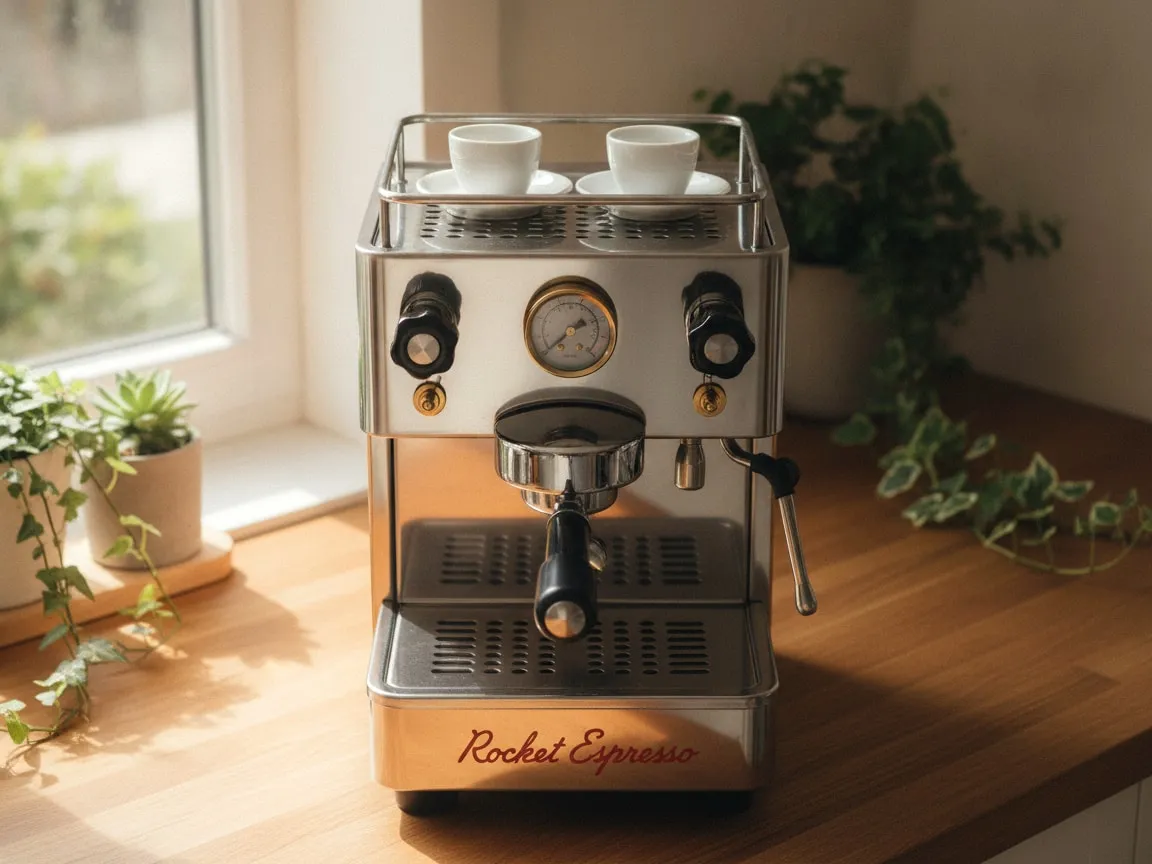
E61 prosumer — Rocket, Profitec, ECM, Lelit
What fails: group head gaskets on schedule, the rotary or vibration pump at high hours, the level probe scaling, the OPV needing reset.
Service is $429. This class is where we almost never advise replacement. The E61 group is a fifty-year-old design that the whole industry supports, the boiler is brass or steel and unbolts, and a fifteen-year-old machine with fresh seals performs like a new one. Spend the money.
Home-commercial — GS3, Linea Mini
What fails: the same things that fail on a cafe machine, on a longer timescale, because they’re doing a fraction of the duty.
On-site service is $449. Replacement is essentially never the answer here. These machines are rebuildable indefinitely, every part is a catalogue part, and the residual value stays high enough that even a large repair is recovered if you sell it.
When we tell you not to repair
We turn work down, and here is the whole list.
Capsule machines. They’re sealed units built to be replaced, not opened, and the labor costs more than the machine. Taking your money to hand back something worth less than the bill isn’t a service.
Drip brewers under $150. The diagnostic alone approaches what the machine cost, and there’s no honest way to make that work.
An entry machine that needs both the element and the boiler after year six, as above.
An older super-automatic with a failed mainboard. Boards on this class are frequently unobtainable or priced at most of a new machine, and fitting a used board to an eight-year- old chassis is a repair with a warranty we couldn’t stand behind.
Anything where the water damage has reached the wiring loom. We’ve seen machines come in after a burst inlet where the harness has been sitting wet for a week. That machine is scrap and we’ll say so on the first look.
Representative job · composite of recent work. A Silver Lake customer called about a seven-year-old super-automatic throwing a brew unit error. On the bench the brew unit needed seals and a drive gear, which is routine, but the pump was also drawing badly and the drainage tract had silted solid. Three separate jobs on a chassis that had reached the end of its design life. We put the numbers in the estimate, said we’d do it if they wanted but wouldn’t advise it, and they bought a new machine. We charged the diagnostic and nothing else. The next call from that address was a maintenance booking on the new one.
The diagnostic protects you either way
The diagnostic is $145. It buys a technician’s time on the machine, a written statement of what failed and what it costs, and, on a machine we collect, the transport in both directions.
It comes back to you the same way on both routes. The $145 diagnostic is credited in full toward the repair when you approve the estimate. Either way, what the diagnostic covers is published before you call, not quoted after we’ve seen the machine.
California writes both halves of that into the rules, which is the part that matters here. Under §2722 you get the written estimate first, and nothing above it can be charged without your prior consent. Under §2722.5 a diagnosis fee has to include the transportation and travel that went with the diagnosis, which is why collection and return are inside our number rather than added to it. If you decline the repair, you owe the diagnostic and nothing more, and the estimate is yours to take anywhere.
That’s why the decision doesn’t have to be made on the phone. You don’t have to guess whether a repair is worth it. You pay for the diagnosis, you read what it says, and then you decide.
The short version
| Class | Typical failure | What the service runs | When replacing wins |
|---|---|---|---|
| Entry | Pump, three-way solenoid, scaled element | $159 | Element and boiler both gone, past year six |
| Super-automatic | Brew unit seals, burrs, silted drainage | $219 / $319 | Mainboard failure past year eight |
| Jura | Brew unit seals, drive gear, scaled cylinder | $329 / $499 | Mainboard after a second brew unit rebuild |
| Breville | OPV drift, solenoid, thermal fuse, thermoblock | $249 | Thermoblock failure past year six |
| E61 prosumer | Group gaskets, pump, level probe | $429 | Almost never |
| Home-commercial | Same as a cafe machine, slower | $449 | Effectively never |
Scale moves a machine down this table faster than anything else, and here that is a local problem rather than a general one. Water in LA County and the counties around it tests anywhere from under 60 to over 300 ppm depending where you stand, which sets whether a machine wants descaling every year or every third. A machine on the hard end of that range with no filtration ages roughly twice as fast as the same machine three miles inland. Servicing on schedule is the cheapest thing on this page.
Countertop machines go by courier, both directions. Plumbed machines get a technician at the address. Either way the estimate comes first and the decision stays yours.