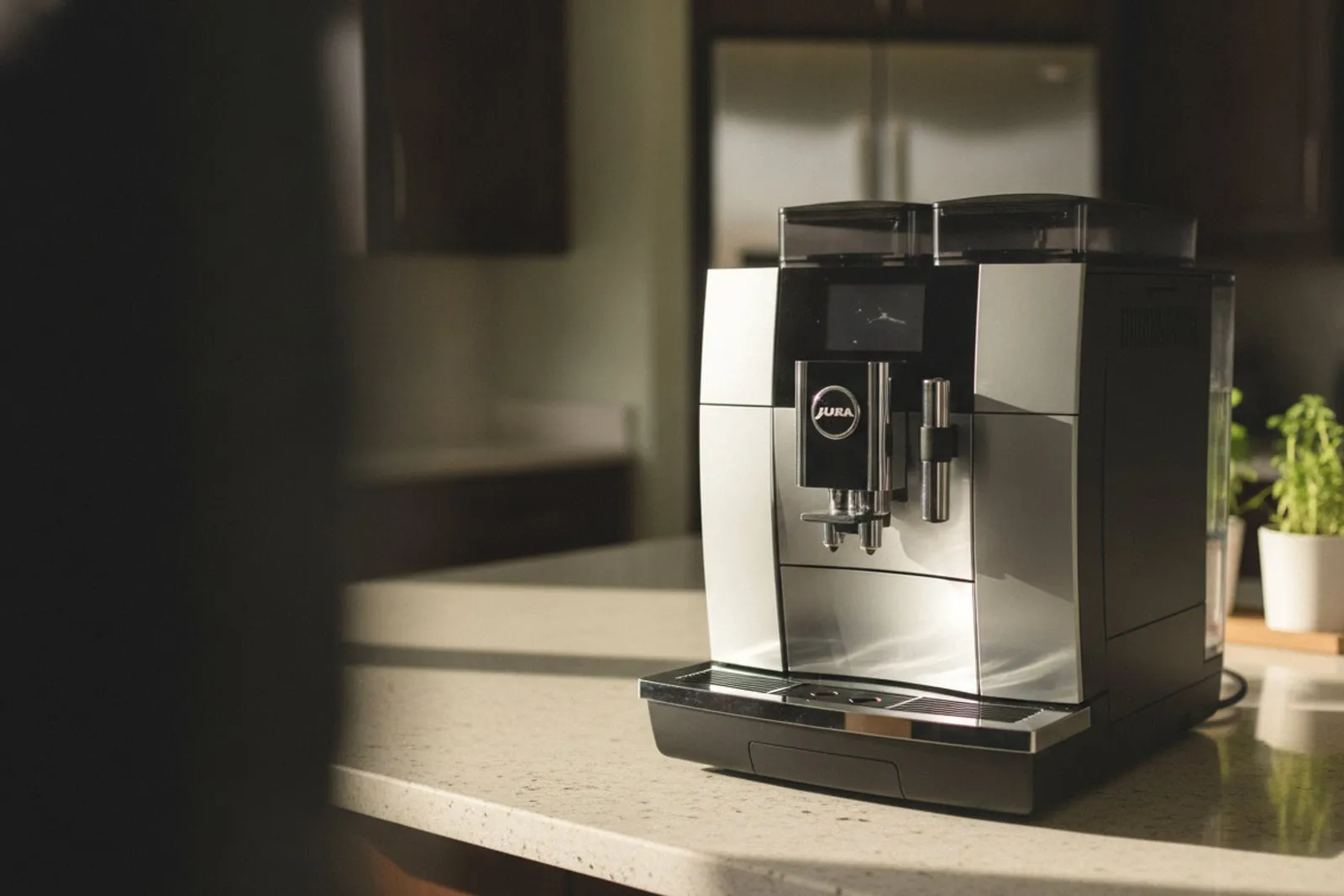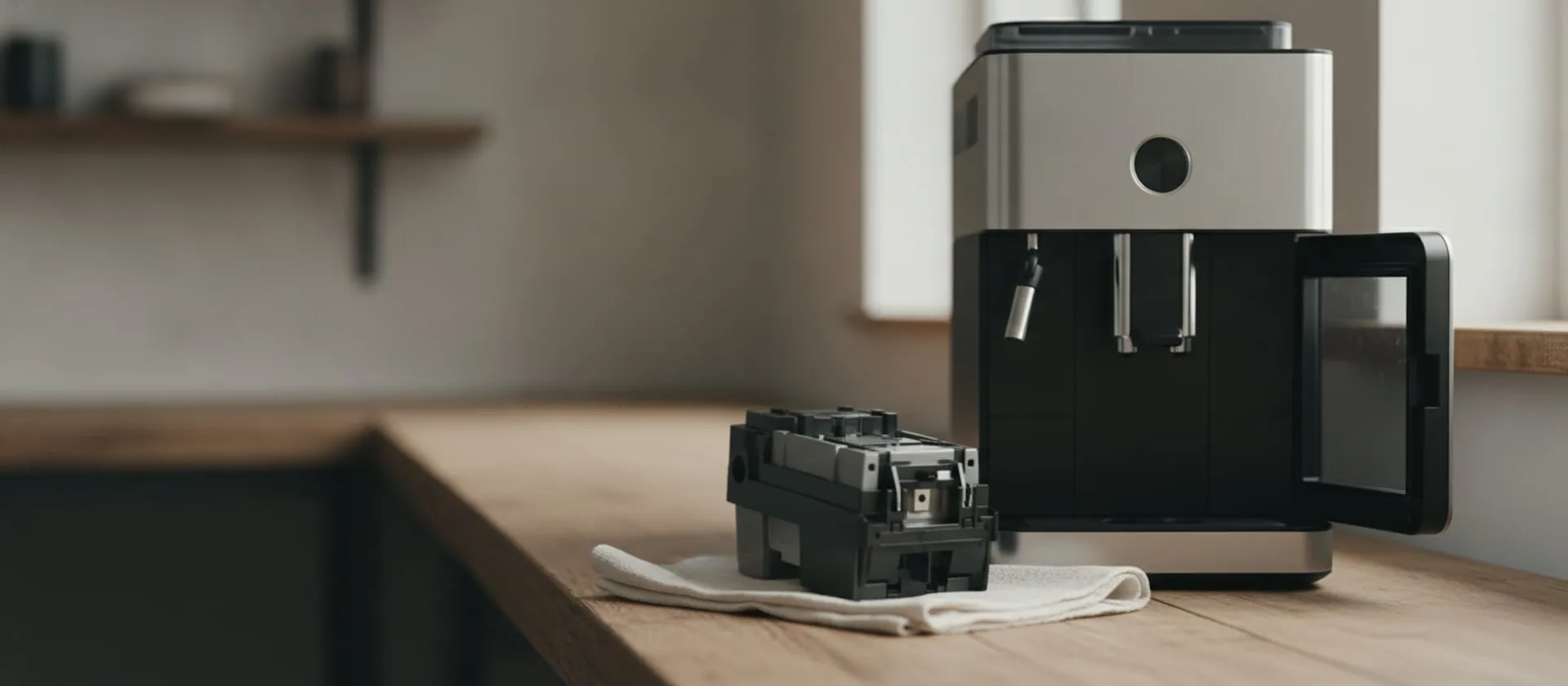
Jura Brew Unit Error — What It Means
A brew unit error is a sensor reporting the module is out of tolerance, not a dead machine. What causes it, what a rebuild involves, and when it is the end.
It means a position sensor did not see the brew unit finish its travel, and nine times out of ten the cause is mechanical wear inside a module that is designed to be rebuilt. It is the single most common call we get, on the brand we service most, and it is very rarely the end of the machine.
The error is a symptom with three usual causes: a worn drive gear, hardened seals, or scale in the cylinder stiffening the movement. All three are bench work on an assembly that comes out of the machine in one piece.
What the machine is actually telling you
The brew unit is a self-contained module that slides in and out of the chassis. Every cycle it travels, compresses the puck, brews, ejects and returns. A sensor watches that travel and raises the error when the module stalls or the position does not match what the controller expects.
So the code is not a diagnosis. It is the machine reporting that the mechanism is out of tolerance without saying why.
Three things put it out of tolerance. Drive gears wear and start to slip under load, which is the most common. Seals harden with heat and age until the travel binds. Scale builds inside the cylinder and does the same thing chemically that the hardened seals do mechanically.
There is a fourth, less common: coffee grounds packed into the drainage path behind the unit, which raises the resistance until the motor cannot complete the stroke. That one is maintenance rather than repair.
Why it is not a dead machine
Because Jura built the platform to be opened. The brew unit is a service item, the module comes out as a unit, and the parts inside it are available.
This is the thing that separates Jura from most of the super-automatic field. On a lot of competing machines the brewing mechanism is integrated into the chassis and a comparable fault is terminal. On a Jura it is a rebuild, and a rebuilt unit is not a patched unit, it is back to specification.
Published range on our own brand page for the most common Jura call: $280-$520. A full flat-rate service is $329 on compact models and $499 on the premium and office machines — that is the route for a healthy machine due for attention, rather than a broken one.
What a rebuild involves
The module comes out whole. It gets cleaned, the seals are replaced, the drive gear is inspected and replaced if it has started to round off, and the cylinder is descaled properly rather than by running a cycle through it. Then it goes back and the travel gets verified under load, which is the part a cleaning tablet cannot do.
What we do not do is open the module in front of you and hand back a bag of parts. It goes in as an assembly and comes out as an assembly.
While it is out, the machine is open enough to see the things that usually accompany a brew unit fault: the drainage tract, the pump, the grinder chute. If any of those are close to failing we put it in the estimate rather than letting you find out in three months.
Representative job · composite of recent work. A Pasadena office called about a six-year-old Z-series throwing a brew unit error every second cycle. On the bench the drive gear had rounded and the cylinder was scaled hard enough to feel resistance turning it by hand. Seals, gear, descale, verified travel. What we also found was a grinder starting to lose its edge, which we quoted separately and they declined for now — reasonably, because it was still in tolerance. That machine went back and is still on an annual schedule.
What the cleaning cycle does, and doesn’t
Jura machines run cleaning tablets through the brew path, and owners are often told that this is brew unit maintenance. It is not quite.
The tablet cycle removes coffee oils from the surfaces the water touches. That matters, because oil residue turns rancid, and that is what separates a machine tasting clean from one tasting stale. What it cannot do is address wear. A rounded drive gear, a hardened seal or a scaled cylinder are mechanical states, and no solution poured through the path changes any of them.
The practical consequence is that a diligent owner running every cycle on schedule can still get a brew unit error at year six, and nothing about that is a failure on their part. The cycles kept the machine clean. The mechanism still wore.
The milk system is a separate problem
Worth saying because the two get conflated. The milk circuit has its own cleaning product, its own schedule and its own failure mode, which is protein residue hardening in the lines and the frother.
We list it separately on the brand page for that reason: $220-$420. A neglected milk system produces weak froth, a sour smell and eventually a blocked line, and none of that is a brew unit fault even though it arrives at the same time on a machine nobody has serviced.
If your machine is throwing a brew unit error and the milk has been poor for a while, you have two jobs, not one. We would rather tell you that up front than fix one and have you call back in a month.
What it costs to keep one healthy
A brew unit rebuild every three to five years and a full service on the same rhythm is what keeps these machines running past a decade, and it is cheaper per year than most owners expect when they see a single repair bill in isolation.
The alternative pattern is the common one: nothing for eight years, then three faults at once, then a decision about whether the machine is worth it. By that point the arithmetic has usually already been decided by the neglect rather than by the machine.
When it really is the end
The mainboard. If the control board has failed on a machine that has already been through two brew unit rebuilds, the parts pipeline and the remaining life stop justifying each other, and the range on a board fault ($340-$620) is the widest on the brand for exactly that reason.
A cracked chassis or a cracked brew unit housing, which happens after a drop. Structural plastic on this platform is not a repair.
A machine past about twelve years with the pump gone as well. At that point you are rebuilding around parts that are all near the end of the same clock.
Outside those, we fix them. Fifteen-year-old machines of this brand are still on our books in offices, and every one of them has had its brew unit rebuilt at least once.
The short version
| Symptom | Cause | Fix | Typical range |
|---|---|---|---|
| Error every few cycles, clears on reset | Drive gear starting to slip | Gear and seals, verify travel | $280-$520 |
| Error with stiff or noisy travel | Hardened seals, scaled cylinder | Rebuild the module, descale properly | $280-$520 |
| Error plus weak or short volume | Pump pressure dropping alongside | Pump work with the rebuild | $240-$340 |
| Error plus grinding noise | Grounds packed in the drainage path | Clean the tract, service the grinder | $220-$380 |
| Error will not clear, screen faults too | Control board | Usually the end of the machine | $340-$620 |
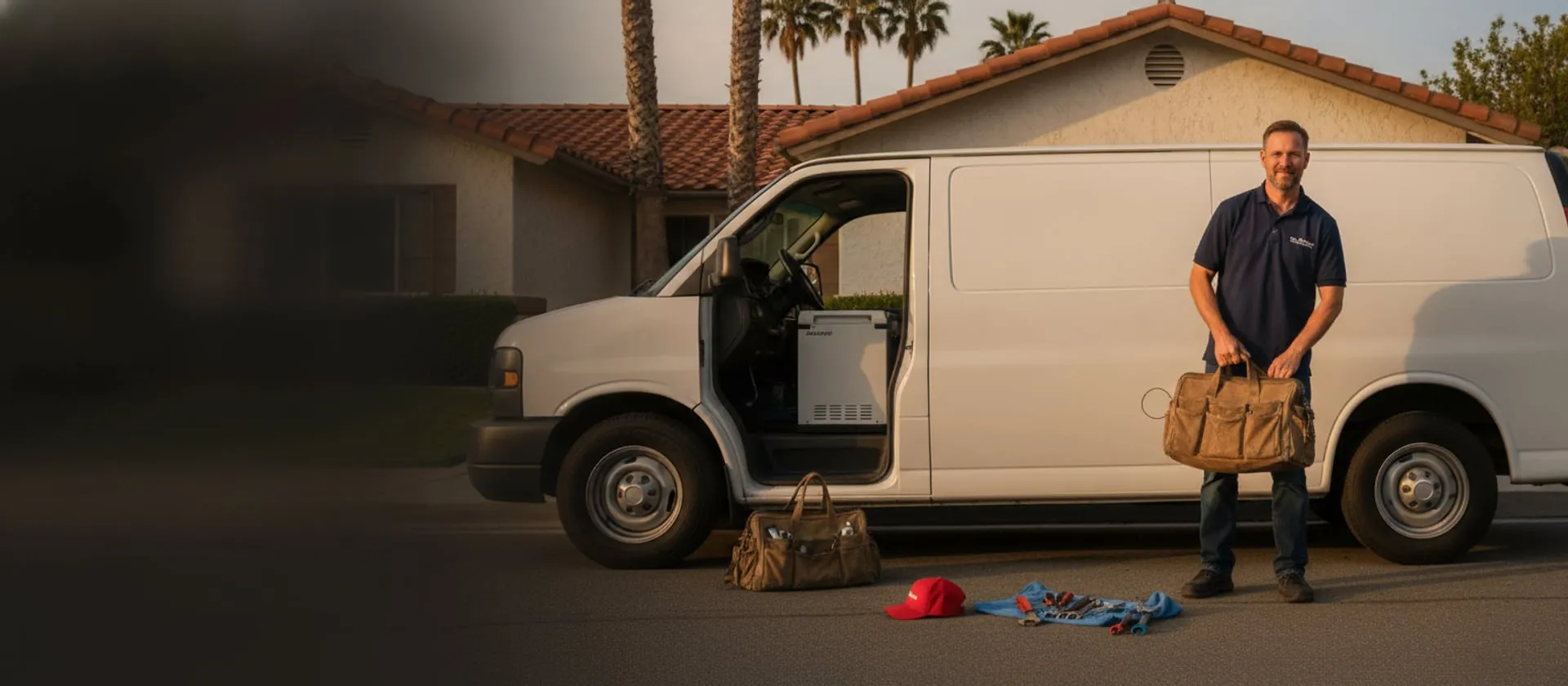
$145 diagnostic — includes pickup from your address and return delivery. It is credited in full toward the repair when you approve the estimate. Everything is quoted in writing first — §2722 sets that out, and sets out that no charge in excess of the estimate is permitted without your prior consent.
Scale starts most of this, and in Los Angeles it varies enough between addresses that a printed national interval is close to useless. Our Jura page covers the rest of the platform’s faults, the flat rates are public, and a courier handles both legs of the journey.