Drop-off, Mail-in, Courier or On-site Repair?
Four formats exist here: drop-off shop, manufacturer mail-in, courier collection, on-site visit. What each suits, and what to ask before handing over a machine.
Four formats exist in this city and each one suits a different machine. Drop-off shop, manufacturer mail-in, courier collection, and an on-site visit — and the right answer depends far more on what you own than on which shop you call.
What follows is the map, including the parts where our own model is the wrong choice. We are one of the four, not the answer to all of them.
Drop-off shop
You carry the machine somewhere, leave it, and collect it when it is done.
This is the oldest format and it still works. The bench has parts and tooling, the technician can put the machine on a rig, and there is no transport cost because you did the transport. For anyone who lives near a shop that takes their brand, it is efficient.
The friction is the driving. Los Angeles is a sixty-mile city and a countertop machine is an awkward thing to carry twice. The second issue is brand coverage: a lot of general appliance shops decline espresso equipment entirely, and a lot of espresso shops decline consumer brands.
Ask what happens if the machine needs a part they do not stock, and how long that adds.
Manufacturer mail-in
You ship the machine to the maker, or to their contracted depot.
Inside warranty this is usually the right call and often the only one that keeps the coverage intact. It is also the route where you are most likely to get a replacement machine rather than your machine repaired, which matters to some owners and not at all to others.
Outside warranty the arithmetic changes. Shipping a machine across the country twice costs real money, turnaround runs into weeks, and for older models the depot may no longer support the platform.
Ask whether they repair or replace, and what happens to your machine if they replace it.
Courier collection
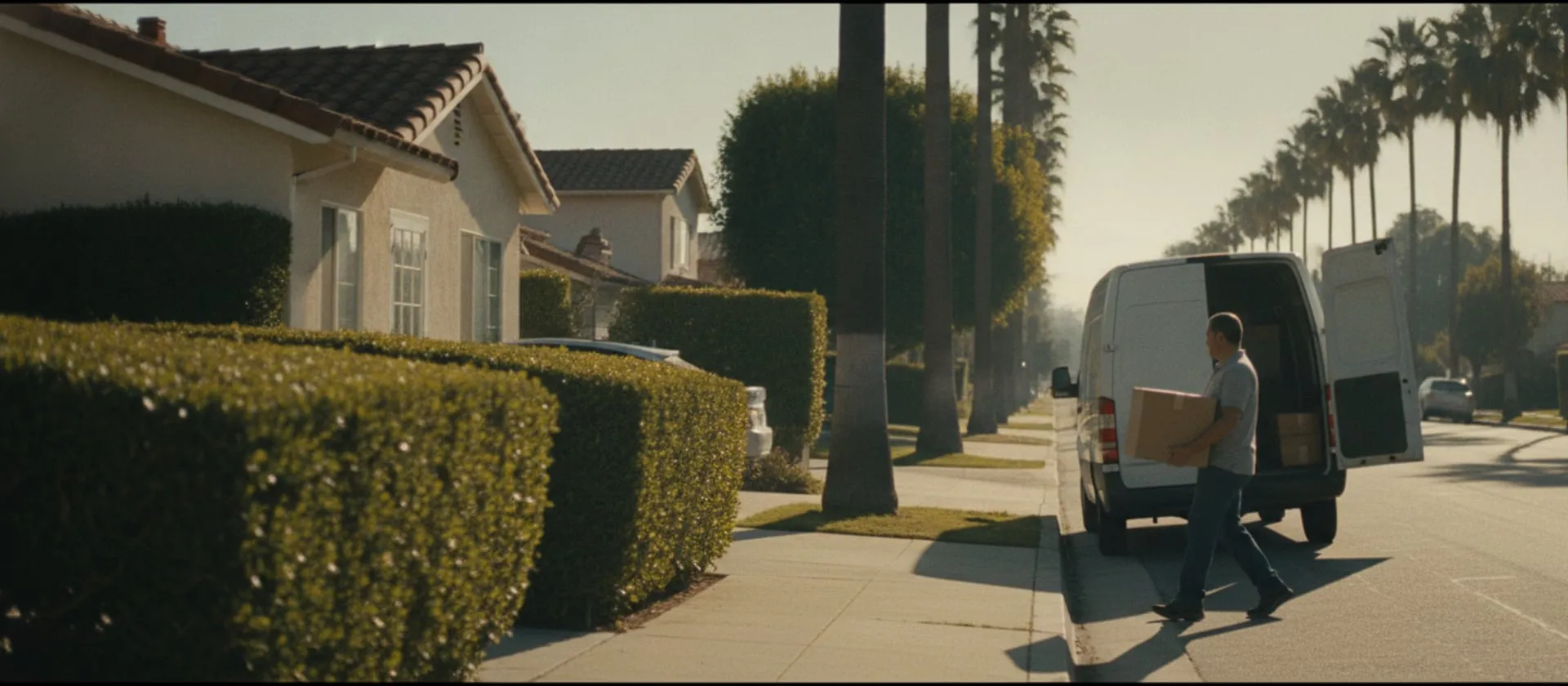
A courier picks the machine up from your address, it is repaired on a bench, and it comes back to your door.
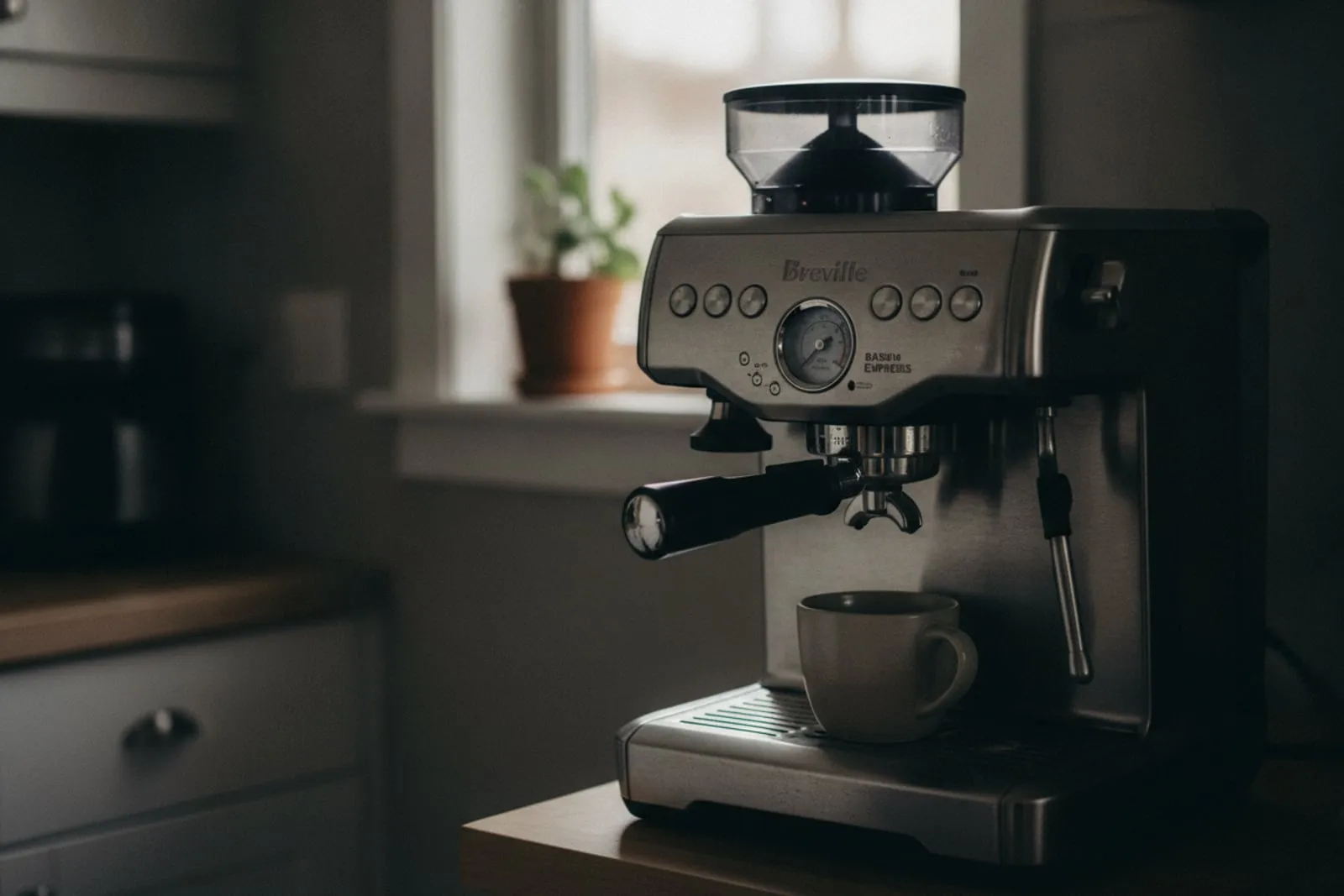
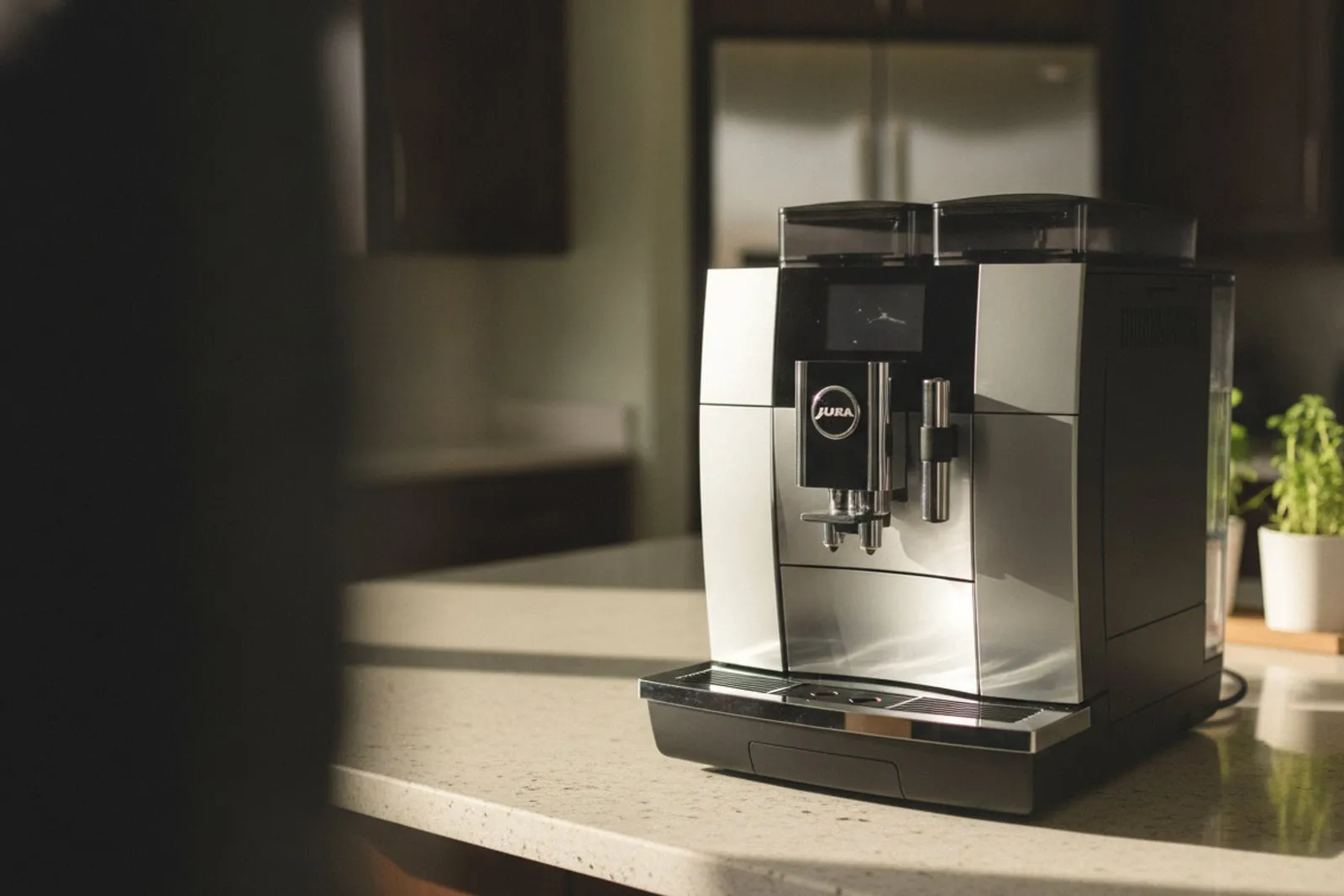
This is the format that suits countertop machines, which is most home espresso equipment: entry machines, super-automatics, Jura, Breville, E61 prosumer machines. The work happens somewhere with parts and a pressure rig, and you never drive anywhere.
It does not suit anything plumbed in, and it adds a day or two at each end compared with carrying the machine yourself.
This is our own default for machines that travel, so treat that paragraph as interested rather than neutral. The diagnostic is $145 and the collection and return sit inside it.
On-site visit
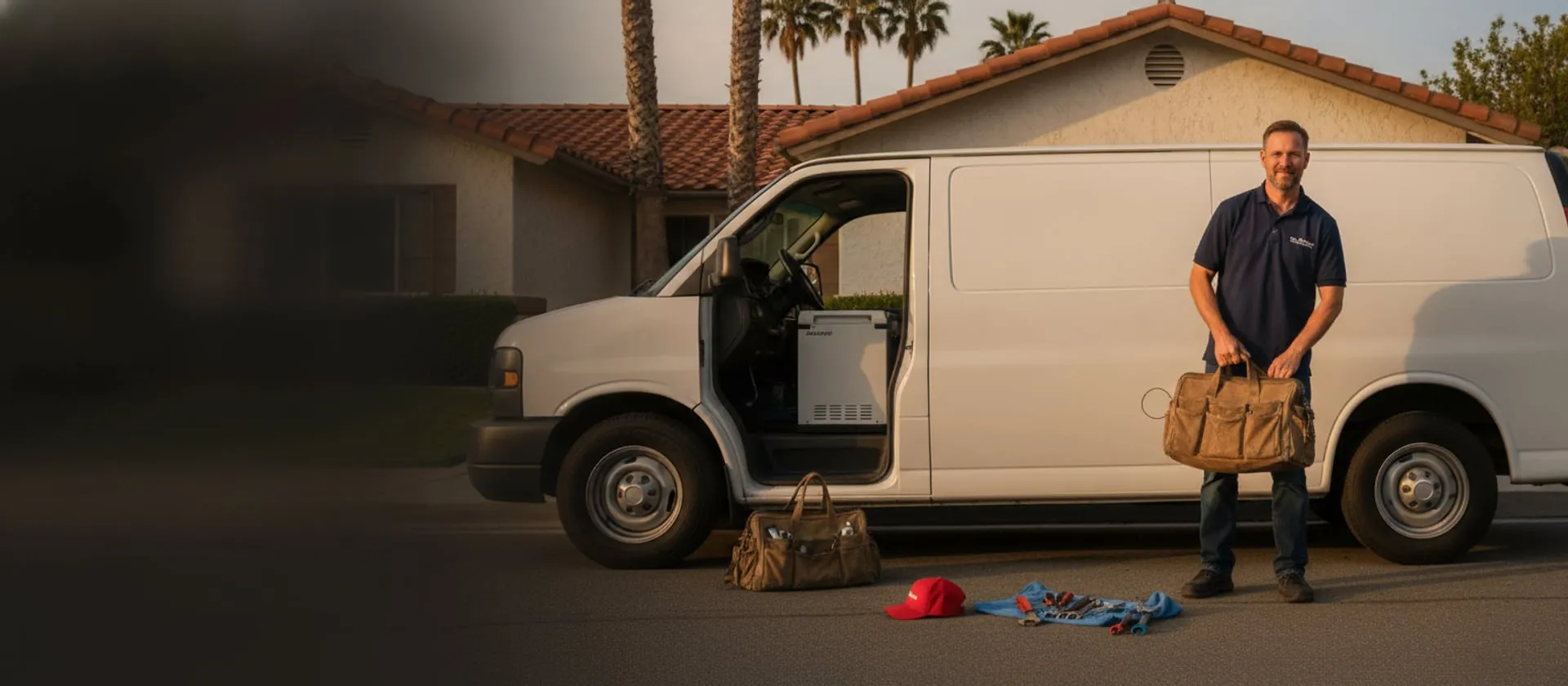
A technician comes to the machine.
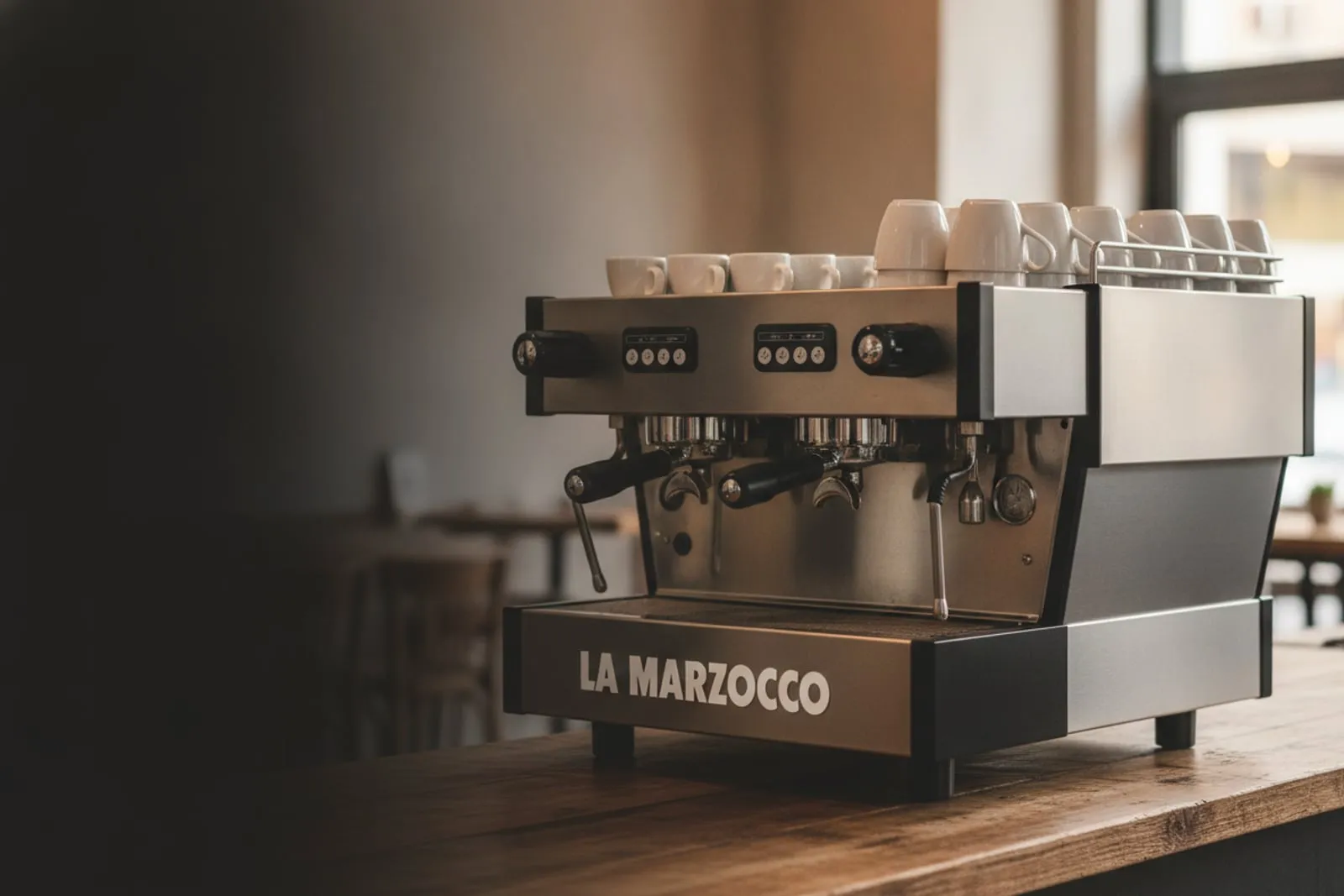
For anything plumbed to a water line, this is not a preference, it is the only option. Home-commercial machines, cafe machines, anything with a drain. The technician works where the machine stands and the machine never stops being available to you.
The trade is that a van cannot carry a full parts inventory, so an uncommon part means a second visit. For a cafe losing revenue every hour the machine is down, on-site still wins easily. For a countertop machine with a fault that needs a rig, a bench is genuinely better.
What to ask, whichever format you choose
Four questions, and they are the same four regardless of who you call.
Ask for the registration number, then run it through the BHGS license lookup yourself. A photograph of a certificate proves nothing; the record at bhgs.dca.ca.gov does, and checking it takes a minute.
Ask what the diagnostic includes and get it in writing. Under §2722 the written estimate is your entitlement, and no charge in excess of it is permitted without your prior consent. §2722.5 puts the transportation and travel costs of a diagnosis inside the diagnosis fee itself, so a separate collection charge added on top of one is worth a question.
Ask for the claim check when the machine leaves your hands. §2721 requires a receipt when an appliance is removed from a home or accepted for repair, and that document is what identifies your machine if anything goes wrong.
Ask what the guarantee is, in writing, and for how long on labor and on parts.
Representative job · composite of recent work. A Silver Lake customer had already driven a super-automatic to two shops before calling. The first declined the brand at the counter. The second took it, held it for three weeks, and returned it with the same fault and no written estimate at any point. By the time it reached a bench the third time the brew unit needed the same rebuild it had needed at the start. The repair was ordinary. What had cost them was six weeks and two round trips, none of which was about the machine.
Home machines and cafe machines are different markets
Worth separating, because the advice above changes depending on which one you are.
A home owner with a countertop machine is choosing on convenience and on whether anybody will touch the brand. The machine is not earning money, a few days without it is an inconvenience rather than a loss, and the sensible priority is a bench with the right parts rather than the fastest possible response.
A cafe is choosing on downtime, and the arithmetic is completely different. A bar pulling two hundred drinks a day is losing real revenue every hour the machine is dark, so the question is not what the repair costs but how quickly somebody can stand in front of it. That is why commercial accounts book service contracts with response windows and home owners almost never do.
The mistake we see in both directions is a home owner paying for an emergency response they did not need, and a cafe waiting three days for a courier because nobody told them on-site was an option.
What a fair diagnostic looks like
It has a number attached before anyone touches the machine, and the number does not change afterwards.
It ends in something written. Not a phone call saying it needs a pump, but a statement of what failed, what the repair costs, and what else the technician saw that you should know about. That last part is the one that separates a good diagnosis from a quick one, because a machine with a failing pump often has two other things approaching the same condition.
It tells you what happens if you say no. You should owe the diagnostic and nothing else, the machine should come back, and the written estimate should be yours to take to another shop if you want a second opinion.
Any shop that will not do those three things is telling you something useful about how the rest of the job will go.
Realistic timelines
An on-site visit in central LA is typically same day to next day for the visit itself, and the repair completes on that visit when the part is on the van.
A courier collection runs two to five working days end to end when the parts are common. Add a week when something has to come from manufacturer distribution.
A drop-off shop depends entirely on their queue, which is worth asking about directly rather than assuming.
Manufacturer mail-in is the slowest by a wide margin, commonly two to four weeks including shipping in both directions.
The short version
| Format | Best for | Typical turnaround | What to check |
|---|---|---|---|
| Drop-off shop | Owners near a shop that takes their brand | Depends on the queue — ask | Do they stock parts for your model |
| Manufacturer mail-in | Anything still in warranty | 2-4 weeks | Repair or replacement, and what happens to your machine |
| Courier collection | Countertop machines of any brand | 2-5 working days | Is transport inside the diagnostic fee |
| On-site visit | Anything plumbed in, and cafes | Same or next day | What happens if the part is not on the van |
If you are weighing whether the repair is worth doing at all, that is a different question and we wrote it up separately. If you already know you want the work done, our prices are published before you call, countertop machines travel to the bench and back, and plumbed machines get a technician on site. Zones, water and dispatch times by neighborhood are on the page for espresso machine repair in Los Angeles.