01
We say which machine you have before we quote
A CM and a CVA get different answers here. Plenty of shops quote one price for "a Miele" and renegotiate when they find the cabinet. That is not a quote, it is an opening bid.
Miele CM 5, CM 6 and CM 7 countertop machines and the built-in CVA coffee systems, across Los Angeles, Orange County, Inland Empire, San Diego and Ventura. Countertop machines are collected and returned.
A CM and a CVA get different answers here. Plenty of shops quote one price for "a Miele" and renegotiate when they find the cabinet. That is not a quote, it is an opening bid.
Warm water only, lubricant replaced where it has been washed away, cleaning and degreasing programmes run from the menu rather than improvised. It is a short list and most of the platform depends on it.
A CVA stays in its column unless the fault is behind the chassis. When it does have to come out and the cabinetry fights back, we would rather bring in the person who built the kitchen than take a chisel to someone’s veneer. We say so before starting.
A CM does not need anyone in your kitchen. It is collected, done on the bench where the light and the tools are, and brought back.
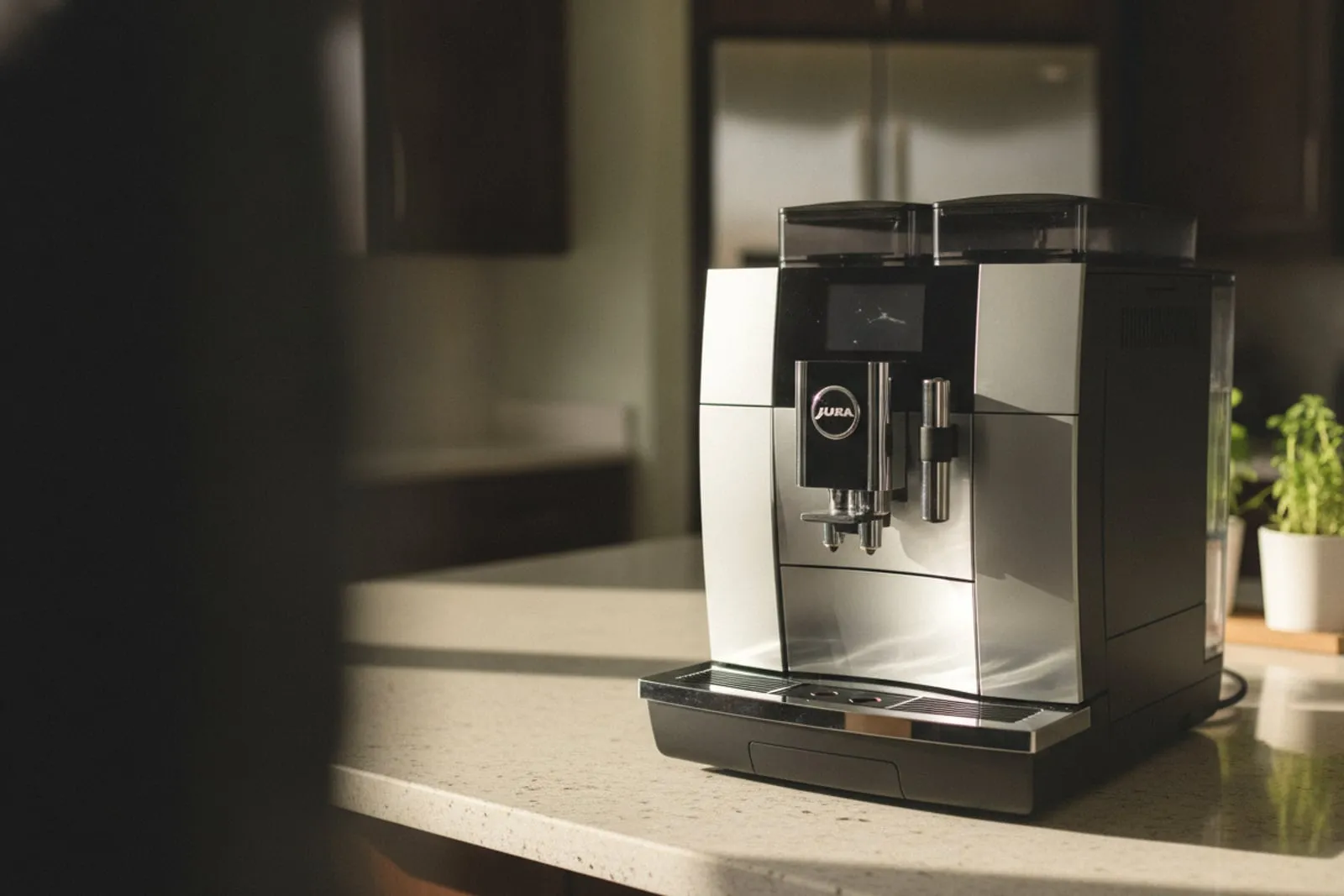
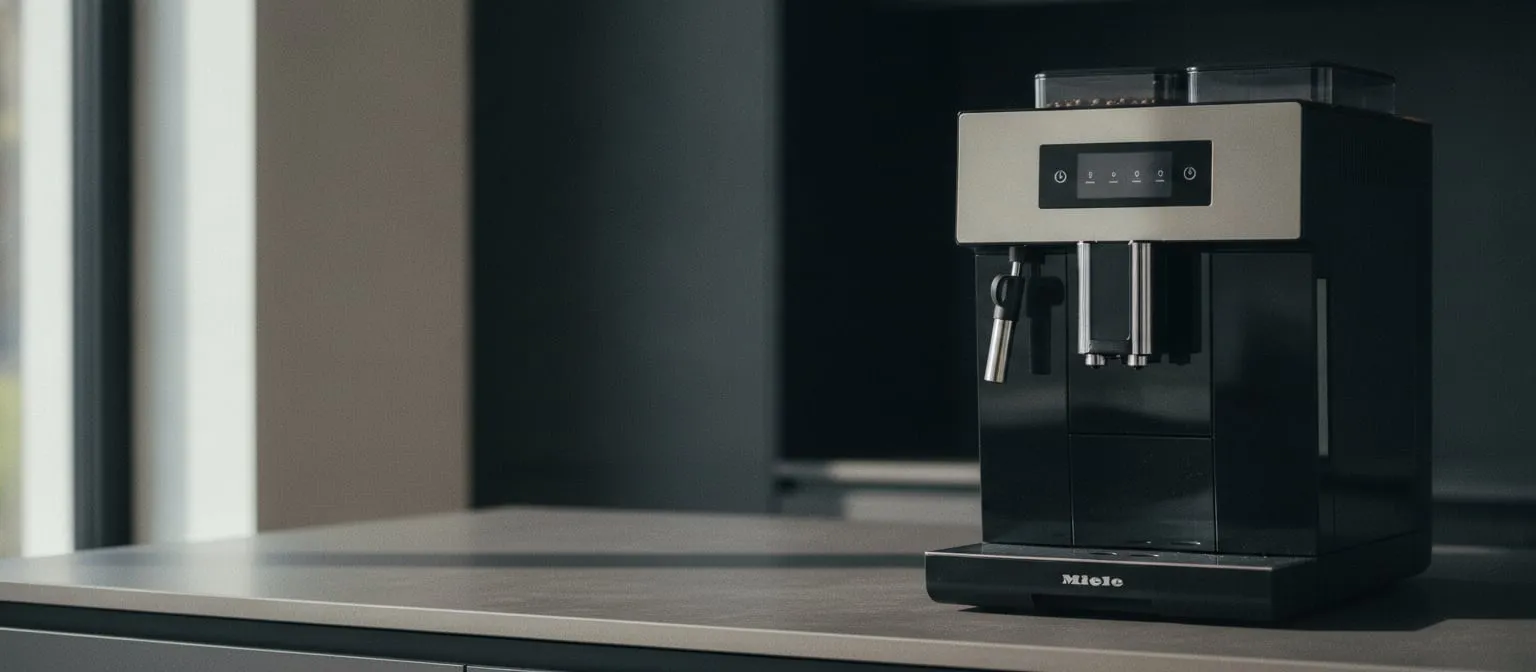
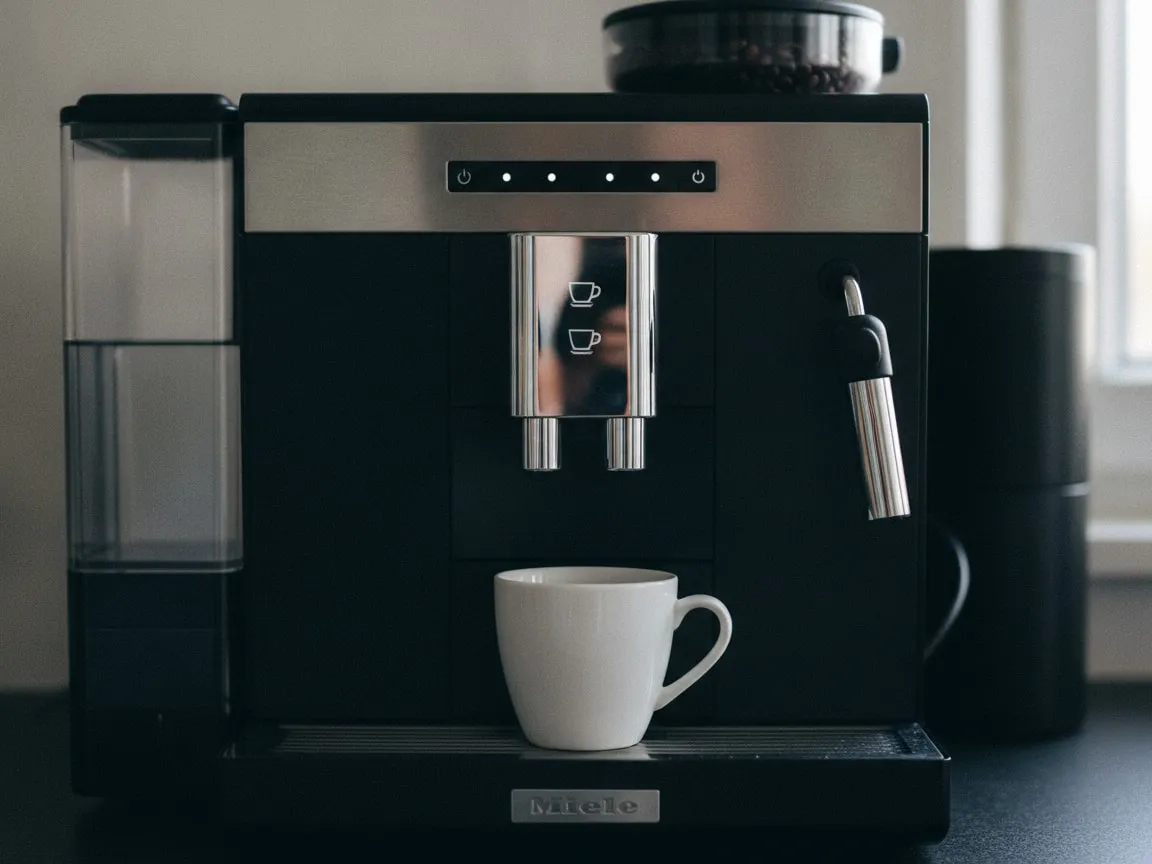
Miele builds a genuinely good bean-to-cup machine and puts it in two very different situations. A CM sits on a counter and comes to us like any other premium super-automatic. A CVA is built into cabinetry, wired in behind a trim kit, and is serviced where it stands, in your kitchen — which makes it a different job with a different answer, and we would rather say that up front than quote you a countertop price and discover the cabinet afterwards.
Top countertop machine. Multiple user profiles, integrated milk system, the fullest drinks menu Miele offers on a counter.
The mid countertop machine and the most common Miele we see in LA homes. Removable brew unit like the rest of the range.
Entry countertop. Simpler interface, same brew-unit architecture, same maintenance programmes.
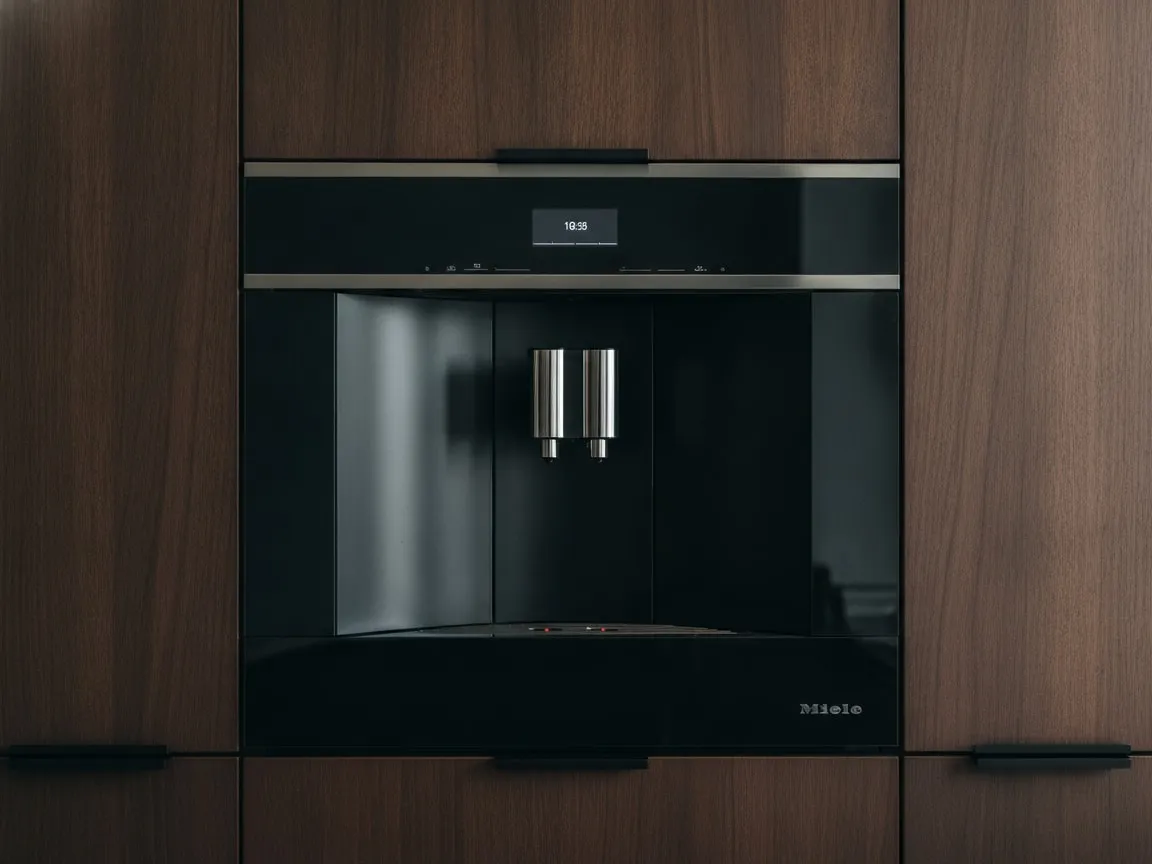
Built into a run of cabinetry with a trim kit, usually hardwired and often plumbed. Mechanically close to the CM machines. Most of it is reached through the front; the rest depends on how the unit was installed.
Older built-in generations still fitted in plenty of LA kitchens. Manuals and parts remain available; the cabinet work is the variable, not the machine.
The signature Miele fault and the one their own troubleshooting leads with. The brew unit has clogged — grounds compacted in the filters rather than a mechanical failure. Strip, clean the filters, refit.
Miele is explicit that the brew unit goes under warm running water and nothing else, because its moving parts are lubricated and washing-up liquid strips that lubricant. Owners who scrub it clean are the ones who come back with a stiff or noisy unit six months later.
There is a button at the base of the handle that has to be held while the handle turns left. It is not obvious and it is not forceful — if it needs force, something else is wrong and forcing it turns a clean into a part.
Usually the water container is below the level the cycle needs and the machine stops rather than running dry. Refill and restart. A cycle that still stalls with a full container is scale in the path, not a user error.
The milk path has its own cleaning programme and it is the one owners skip because the machine still makes coffee without it. Foam quality drops before anything else does. Full strip and sanitise of the milk lines and valves.
Most CVA faults are reached with the front open, the way Miele intended. The pump, the valves and the water connection are not: for those the trim kit comes off, the supply is disconnected and the unit comes forward out of its housing, with the cabinetry masked first. What that takes depends on how the kitchen was built, which is why we look before we price it.
CVA 4066 · CVA 5060 · CVA 5065 · CVA 6401 · CVA 6805 · CVA 7440 · CVA 7845
The CVA line runs from the CVA 4066 and the CVA 5060 and CVA 5065, through the CVA 6401 and the plumbed-capable CVA 6805, to the CVA 7440 and CVA 7845 of Generation 7000. We see all of them, because a Miele kitchen is kept for twenty years and the coffee system is kept with it.
One fact separates a CVA from every other built-in we work on: it is Miele’s own design. There is no platform sharing and there are no substitute parts. A Gaggenau part can often be ordered under a Bosch number, and a Wolf part under a De’Longhi one. A Miele part is a Miele part, ordered from Miele against the model and serial, and the lead time is whatever Miele says it is. We tell you that date before you approve anything.
The CVA is serviced where it stands. Most of the machine is reached with the front open, the way Miele intended, and the unit comes out of its column only when the fault is behind the chassis. That decision is made with the owner, with the cabinetry masked first. Unlike a countertop CM, a CVA never travels to our bench unless there is no other way to do the repair.
On a plumbed CVA the first thing we find is the shutoff, before the front is opened. On any CVA that has been in the wall for a decade, the second thing we check is the niche itself: ventilation gaps, the outlet behind the unit, and whether heat has been doing slow damage to the electronics.
The cabinet, the water line and how the visit runs: built-in coffee machine repair.
Priced in the premium tier because the milk carafe comes apart to its valves rather than being flushed where it sits.
Most Miele calls come out of house kitchens and small offices, so the dispatch pattern follows the residential grid: Miele repair in Hollywood, Miele repair in Silver Lake, Miele repair in Pasadena, Miele repair in Long Beach, Miele repair in Beverly Hills, Miele repair in Santa Monica, Miele repair in Orange County, Miele repair in San Diego and Miele repair in Los Angeles. Same technician, same rates everywhere on the grid — 25 cities across seven counties, same-day when the schedule allows.
Representative job: CM 6 in a Pasadena home, grinding beans and dispensing nothing. Brew unit filters packed solid with compacted grounds, and the unit itself running dry after what turned out to be a year of conscientious washing-up-liquid cleaning. Filters cleared, unit re-lubricated to spec, milk path sanitised, descale run. Total: bench time about two hours, $319 flat including collection and return. The owner had been quoted a replacement brew unit by someone who had not opened it.
If you are specifying a kitchen right now and choosing between a built-in CVA and a countertop CM, understand what the built-in costs you over ten years in service access, not just at purchase. A CM is lifted off the counter and sent to a bench. A CVA is worked on in the wall, and the faults behind its chassis mean opening up cabinetry somebody paid a great deal for. The coffee is the same. If the cabinetry look is worth that to you, it is a legitimate choice — but make it knowingly rather than because the showroom put the built-in on the display run.
Usually yes, if the fix costs under half a replacement and the machine has years left. The arithmetic we run by machine class, and when to buy new instead.
Six to eight years for an entry machine, twenty-plus for a prosumer one. The build, the water it drank and whether anyone serviced it set the number.
Every figure on this page is ours to stand behind — who we are and what we're licensed for.
Tell us your Miele model and what's wrong. We'll respond within the hour with a diagnostic estimate and ETA.
Three fields. We call or text back — Mon–Sat · 7am–9pm, Emergency · 24/7. Urgent? Call (424) 352-8838.