01
We will show you what you can do yourself
The removable brew group is the whole point of this platform. If a rinse and a re-grease is what your machine needs, we would rather teach you the five-minute version than sell you a collection.
Philips 2200, 3200, 4300 and 5400 series with the LatteGo milk system. Collected from your kitchen or break room anywhere in Los Angeles, Orange County, Inland Empire, San Diego and Ventura.
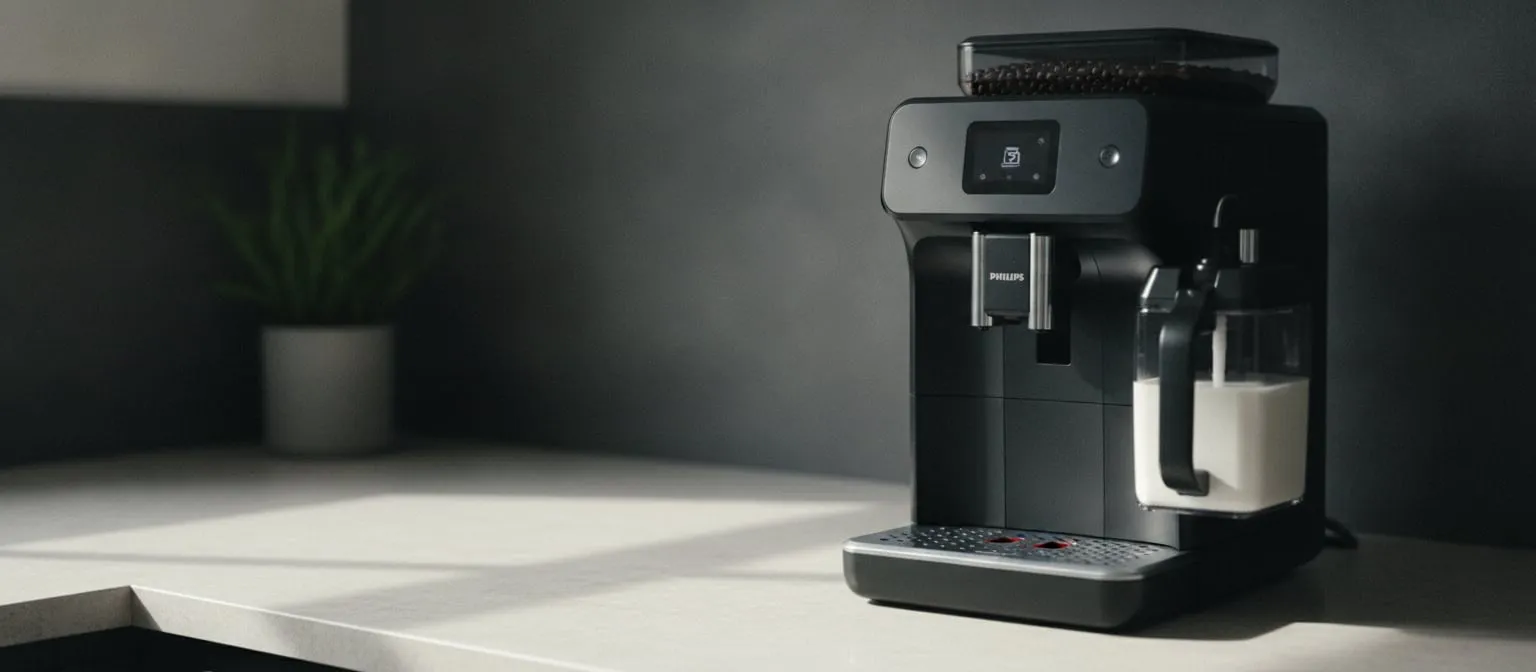
The removable brew group is the whole point of this platform. If a rinse and a re-grease is what your machine needs, we would rather teach you the five-minute version than sell you a collection.
Philips and Saeco bean-to-cup machines share brew groups, seals and several boards. We already stock those for the Saeco work, which is why a Philips job rarely waits on a part.
Offices running three or four Philips machines across floors get one visit, one parts list and one invoice rather than a separate call per machine.
On a 2200 that needs a brew group and a boiler, we will tell you the parts and labour approach what the machine cost. That conversation happens before the work, not after.
Philips builds the bean-to-cup machines that Saeco used to, and shares the parts pipeline with them. The design decision that matters for service is the removable brew group: an owner can take it out, rinse it and put it back, which is why a well-kept Philips outlasts a sealed machine of the same money. Most of what goes wrong here is maintenance that stopped happening.
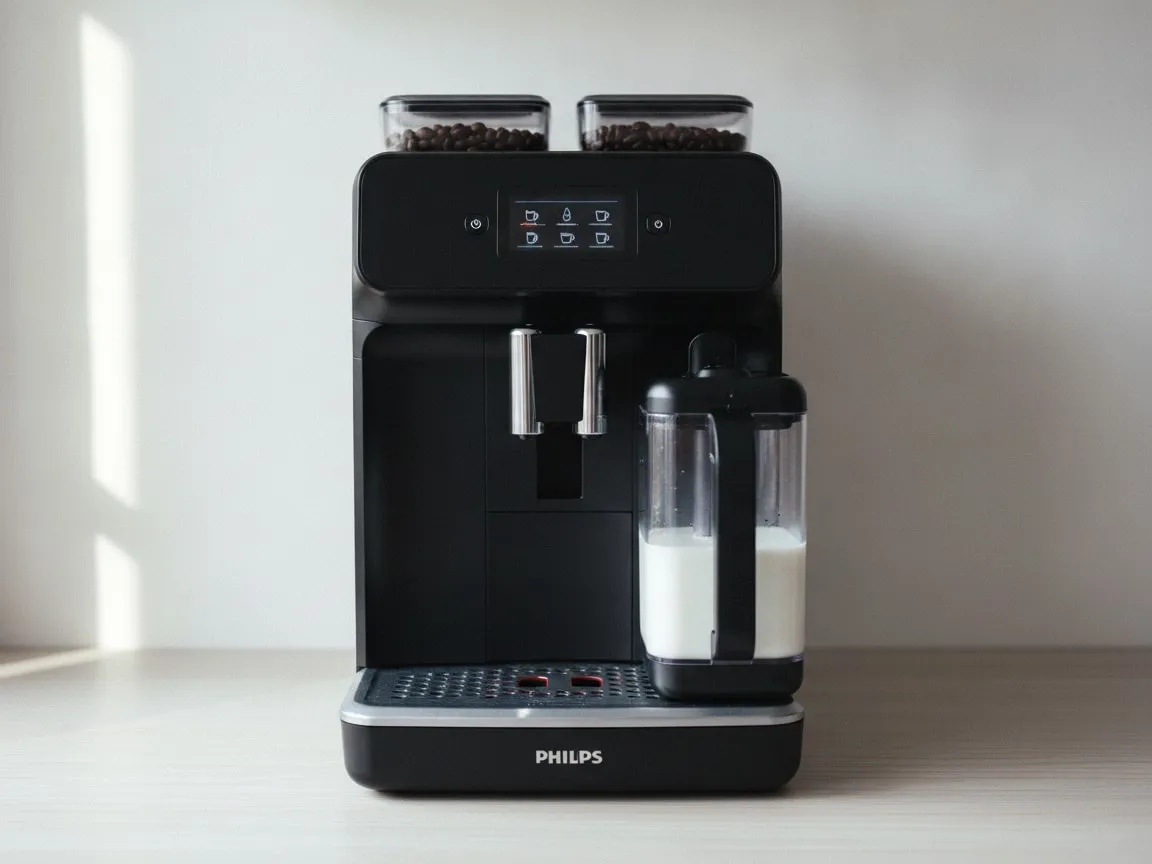
Top of the current range. Twelve drinks, colour display, LatteGo carafe, user profiles. The one most often bought for a small office rather than a kitchen.
Mid-range, LatteGo carafe, touch display. The most common Philips we are called to across LA homes.
Entry LatteGo machine. Same removable brew group as the rest of the range, simpler interface.
Classic milk frother rather than LatteGo. Mechanically the simplest of the range and the cheapest to keep going.
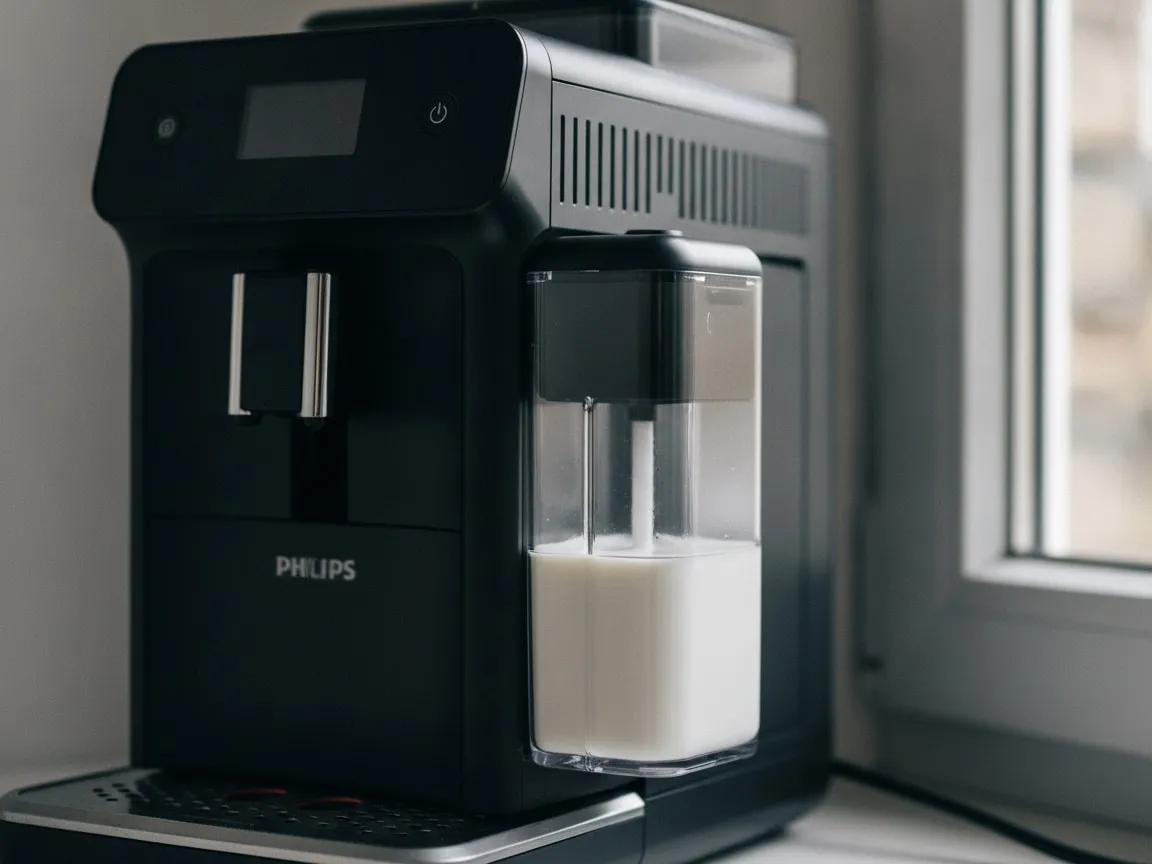
Two parts, no tubes. It is the part most often at fault and the part most often assembled wrong after cleaning.
The machine has to be in its neutral position before the group releases, and it will not be if a descale cycle was started and abandoned. Finishing the interrupted cycle is the fix. Forcing it is how the rails get damaged, and that is a part rather than a clean.
The group runs on lubricated rails. Owners are told to rinse it, not that the lubricant washes off, so a conscientious owner can end up with a stiffer group than a careless one. Strip, clean, re-grease with food-grade silicone.
The carafe is two parts that have to click fully together. A leak from the hole in the base is almost always a partial assembly, and on a new machine it is the transport clip still fitted. We check the obvious before charging for anything.
Milk protein dries into the LatteGo channel and narrows it. Because there is no tube to see through, owners believe it is clean when it is not. Full strip and soak, then a check with real milk rather than water.
Philips asks for descaling roughly every two to three months, which is more often than most owners do it and about right for LA water. Skipped cycles show up as slow flow, weak temperature and eventually a stalled descale that will not finish.
Oily beans and a fine setting pack the chute. The symptom is short, weak drinks that owners blame on the coffee. Chute cleared, burrs inspected, grind returned to a reference setting.
One flat figure with both courier legs inside it. The removable brew group is what keeps a Philips in the standard tier rather than above it.
Most Philips calls come out of house kitchens and small offices, so the dispatch pattern follows the residential grid: Philips repair in Orange County, Philips repair in San Diego, Philips repair in Inland Empire and Philips repair in Ventura County. Same technician, same rates everywhere on the grid — 25 cities across seven counties, same-day when the schedule allows.
Representative job: 4300 LatteGo in a Sherman Oaks home, owner reported weak coffee and thin foam, and had already replaced the beans twice. Found a brew group that had been rinsed faithfully and never re-greased, binding on its rails, plus a LatteGo channel narrowed with dried milk. Stripped and re-greased the group, stripped and soaked the carafe, cleared the grinder chute, ran a full descale. Total: bench time under two hours, $219 flat with collection and return. No parts.
The removable brew group is the best thing about this platform and the least understood. Philips tells owners to rinse it and does not make clear that rinsing removes the lubricant it runs on. We have opened machines where the owner did everything they were told and still ended up with a binding group. If you own one of these, rinse it monthly and ask someone to re-grease it once a year — that is most of the service life sorted.
Usually yes, if the fix costs under half a replacement and the machine has years left. The arithmetic we run by machine class, and when to buy new instead.
Six to eight years for an entry machine, twenty-plus for a prosumer one. The build, the water it drank and whether anyone serviced it set the number.
Every figure on this page is ours to stand behind — who we are and what we're licensed for.
Tell us your Philips model and what's wrong. We'll respond within the hour with a diagnostic estimate and ETA.
Three fields. We call or text back — Mon–Sat · 7am–9pm, Emergency · 24/7. Urgent? Call (424) 352-8838.