Espresso Machine Not Working? 10 Checks First
Ten checks for a semi-automatic espresso machine before you pay for a diagnostic: switches, outlet, tank, steam knob, portafilter, basket. A photo of each.
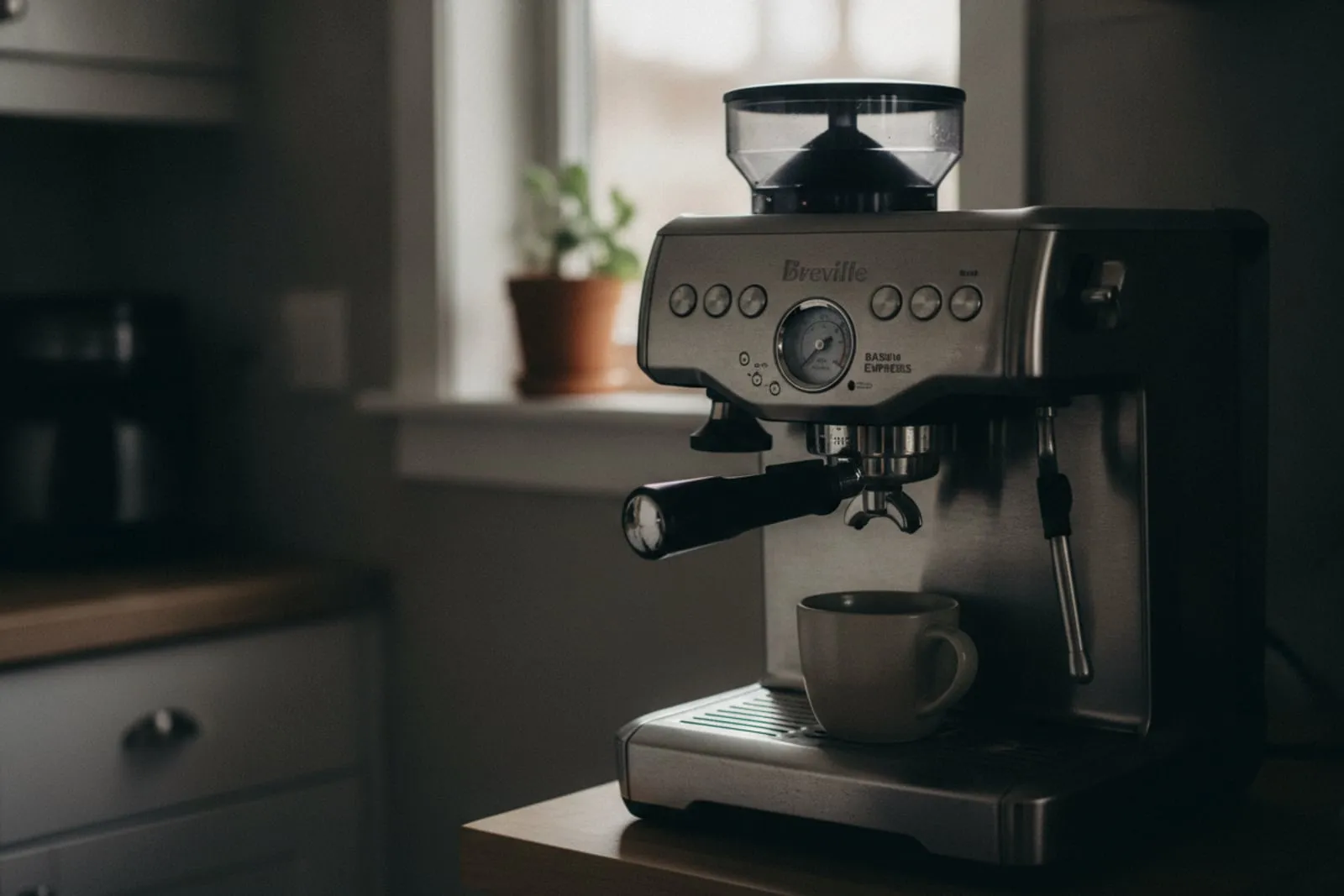
This page is for a semi-automatic: anything with a portafilter you lock in by hand, from a Breville Barista Express to a Rocket, a Lelit Bianca or a Linea Mini. If your machine grinds and brews at the press of one button, you want the super-automatic checklist instead, and a grinder that will not start has its own page.
Why it exists: in one week this October three machines came to the bench with nothing wrong. One had a heating switch nobody had pressed. One had a tank sitting on its valve instead of pushed onto it. One had a steam knob a quarter turn open. Each check below takes under a minute, needs no tools, and touches nothing inside the machine.
Find the second switch
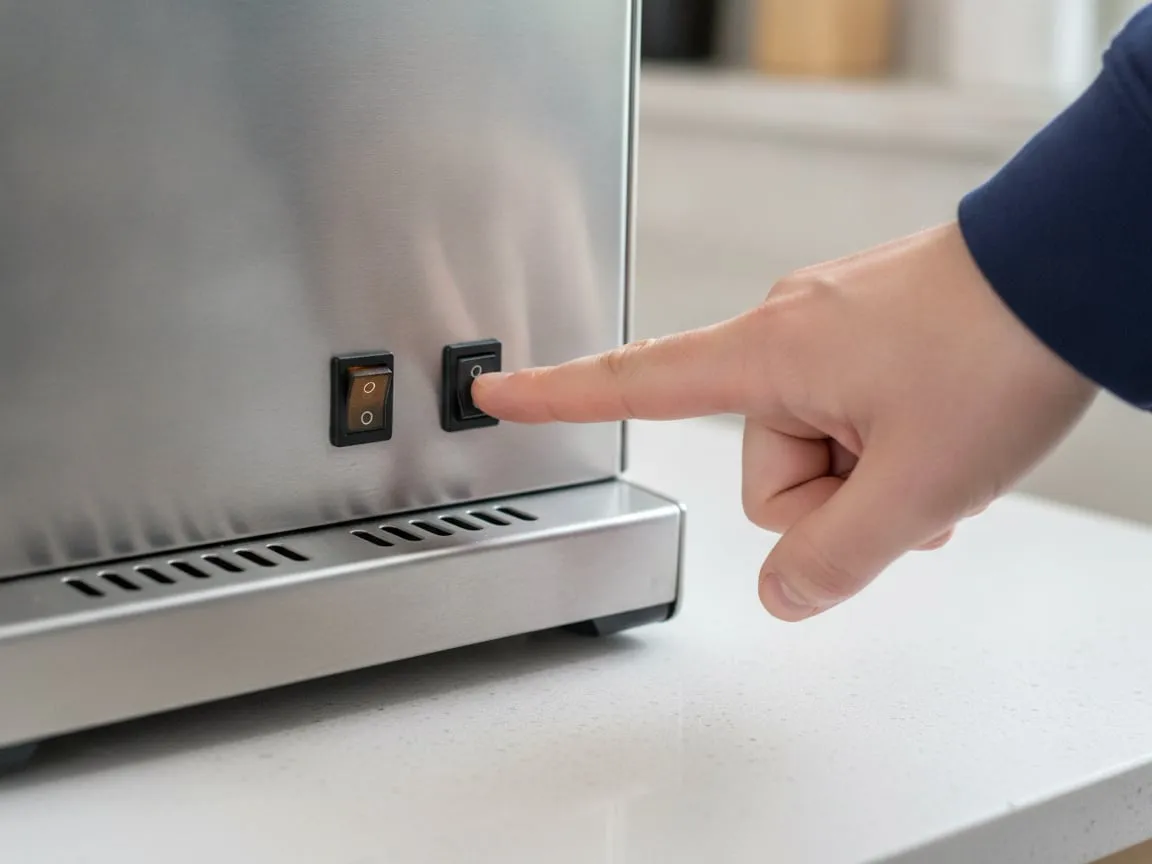
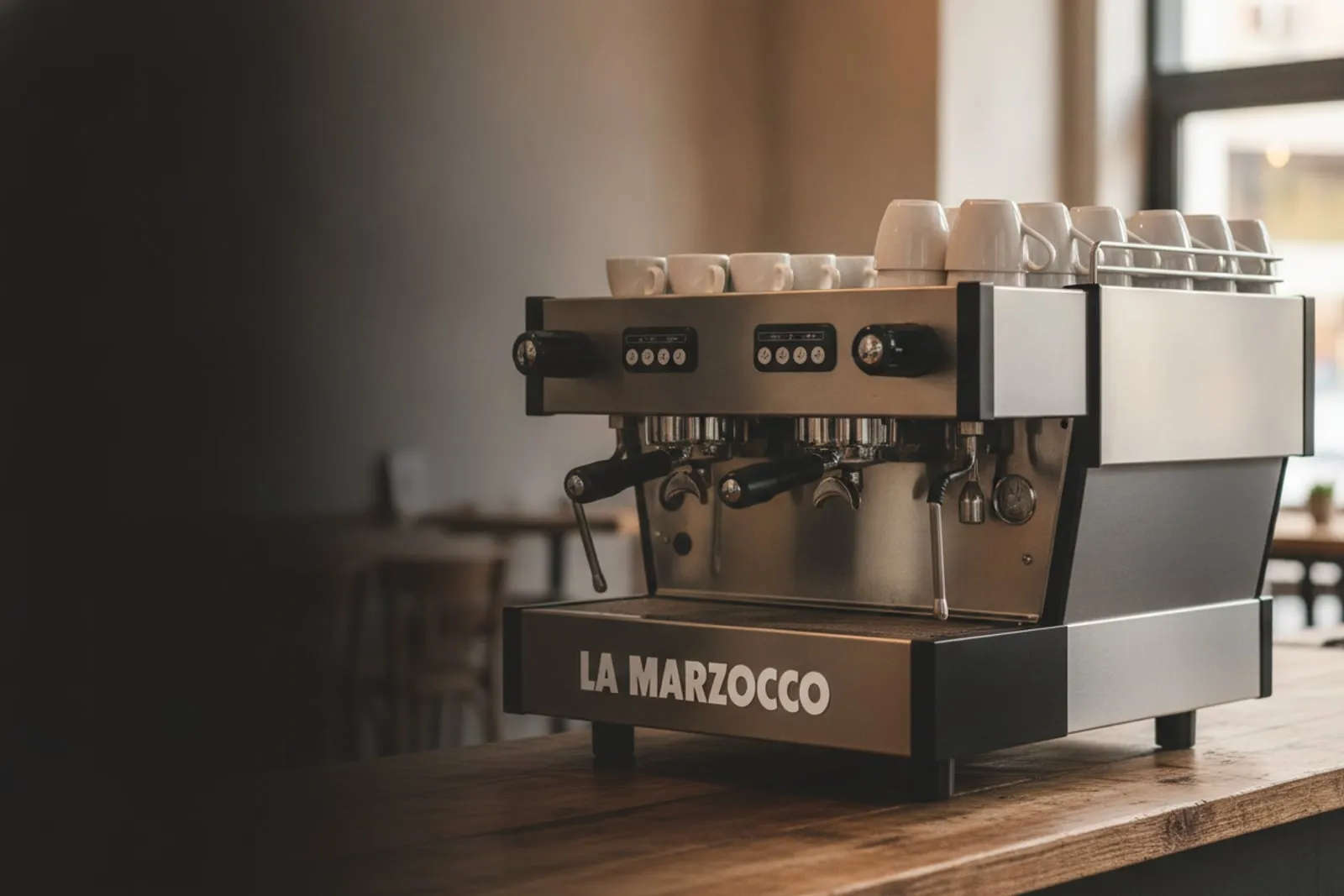
Most prosumer machines have two switches, not one. The first powers the electronics and lights up. The second powers the heating, and until it is on the machine sits there lit and cold for as long as you care to wait. On a La Marzocco the main switch has a middle position that only fills the boiler; it has to go all the way to the second stop. On a Breville with a display, look for a heating or standby icon rather than a rocker.
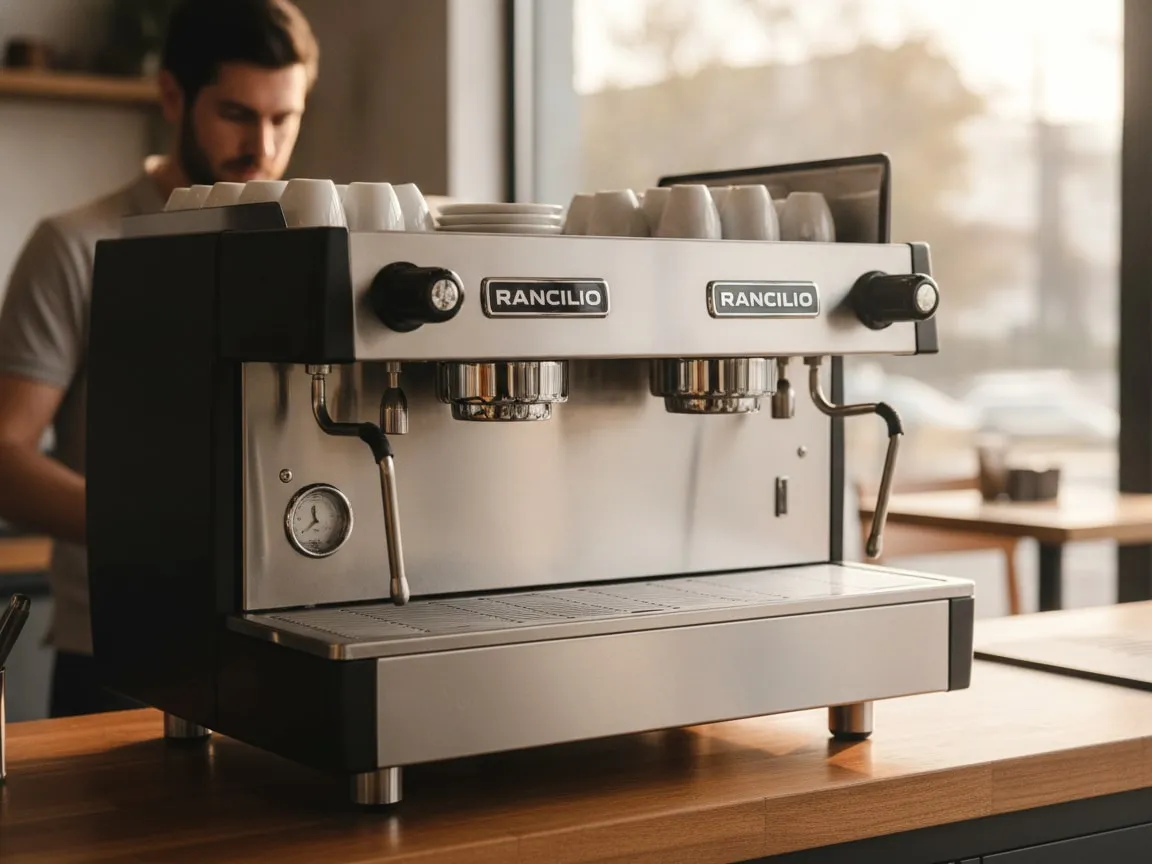
The job that started this page was a commercial machine on a boat: an electrician had reconnected it, the crew pressed the switch they knew, and the switch beside it had not been touched in three years.
Reset the outlet
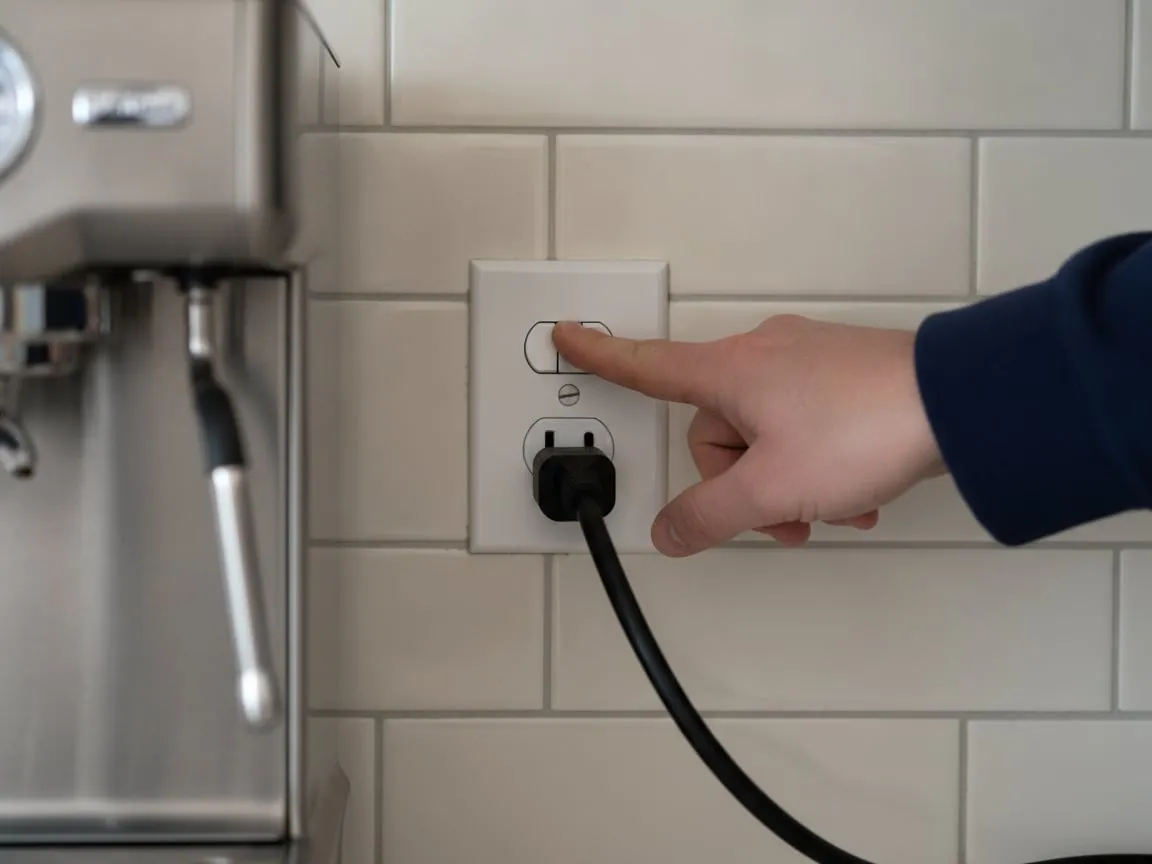
Kitchen outlets in California have a ground-fault breaker built in, with a reset button in the middle. When it trips, the button pops out, the outlet goes dead, and the machine plugged into it looks exactly like a machine with a blown board. Press the reset. If it clicks and stays in, you are done.
If it trips again within a day, stop resetting it and call us. A breaker that keeps tripping on a heating machine is usually a heating element leaking current to ground, and that is a real repair, not a nuisance.
Prove the outlet with a lamp
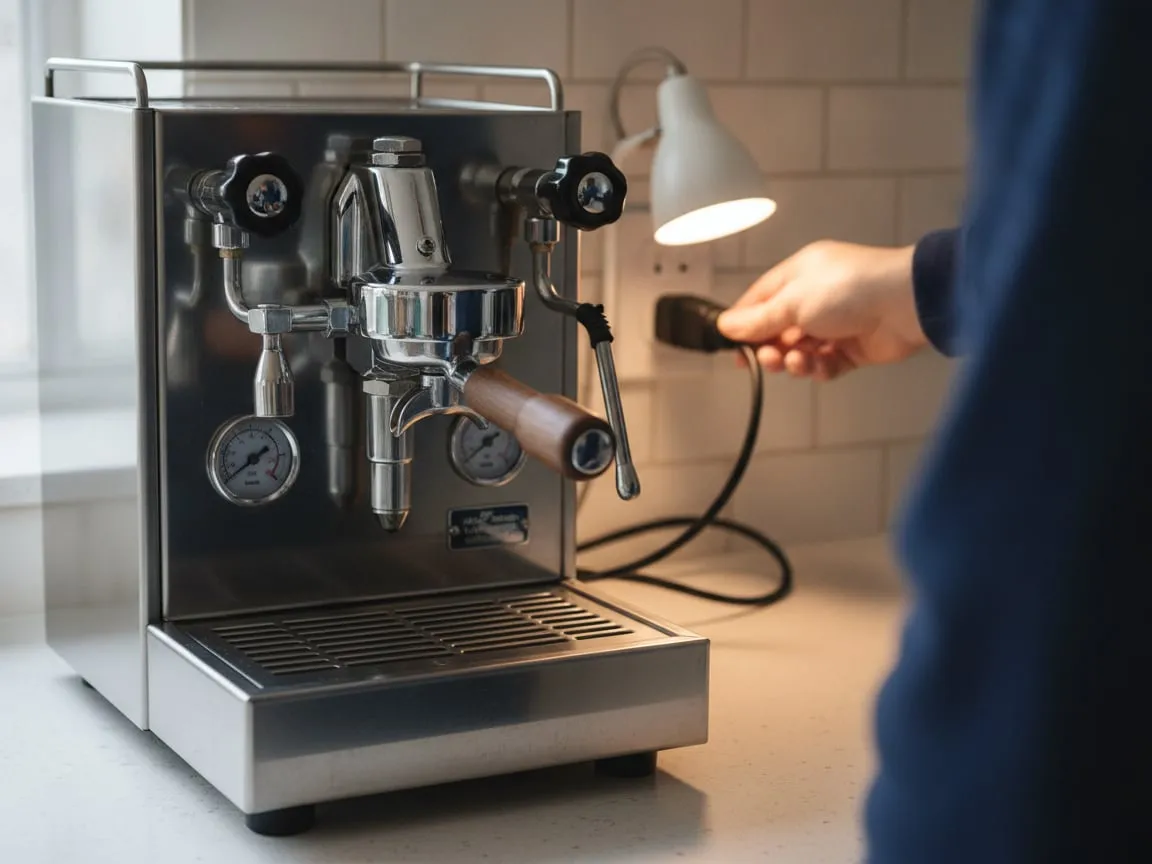
Plug a lamp or a phone charger into the same outlet. Lamp lights, machine dead: the fault is inside the machine, and the rest of this page will not fix it. Lamp dark: it is the outlet, the breaker panel, or a power strip somebody switched off, and the machine is fine. It is the first thing we check too.
Push the water tank all the way down
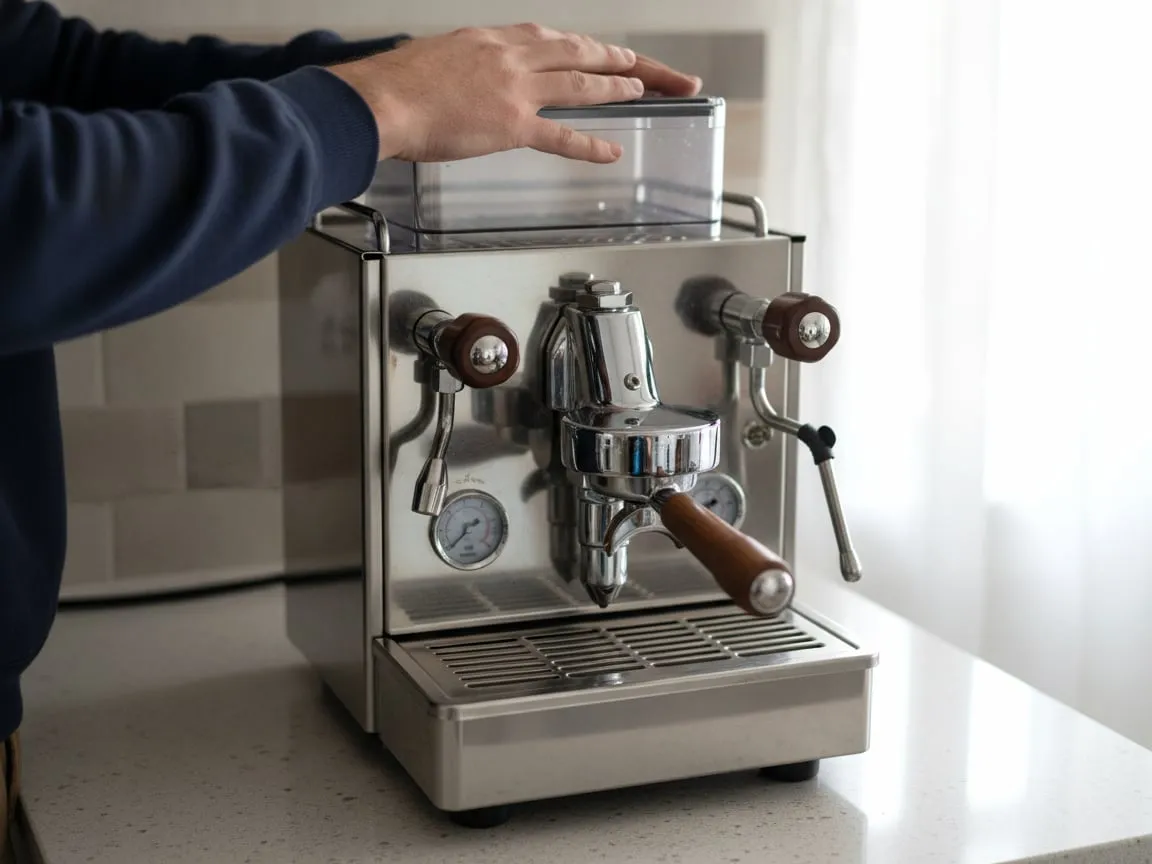
The tank does not just sit in the machine. At the bottom it presses onto a valve, or onto two metal contacts, and the machine reads “water present” only when that press is complete. Lift it out, check there is nothing under it, and push it straight down until it stops. On a Linea Mini the reservoir slides toward the back and the contacts have to touch solidly; the blue light stays on until they do.
One more tank trap. Very pure water, from a zero-mineral pitcher or a reverse-osmosis tap, is invisible to the level sensor on some machines, which then reports an empty tank while you look at a full one. Room-temperature filtered water, not distilled, is what the maker expects.
Close the steam knob
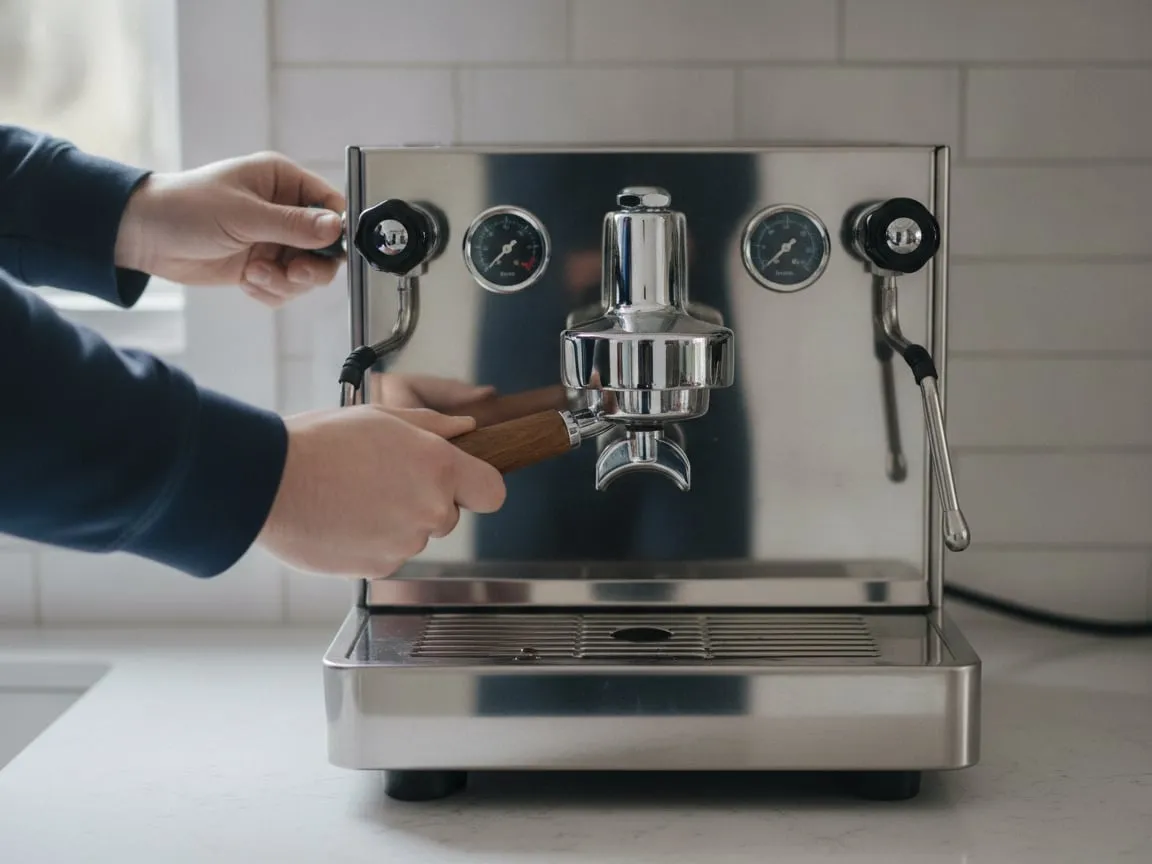
Water takes the easy path. If the steam knob or the hot-water knob is open even a little, pump water goes out of the wand instead of through the coffee, the gauge stays low and the cup stays empty. Turn both knobs closed until they stop. Firm, not forced: the seal inside is a small gasket, and cranking the knob down after every milk crushes it, which is how the wand starts dripping on its own a few months later.
Prime through the wand
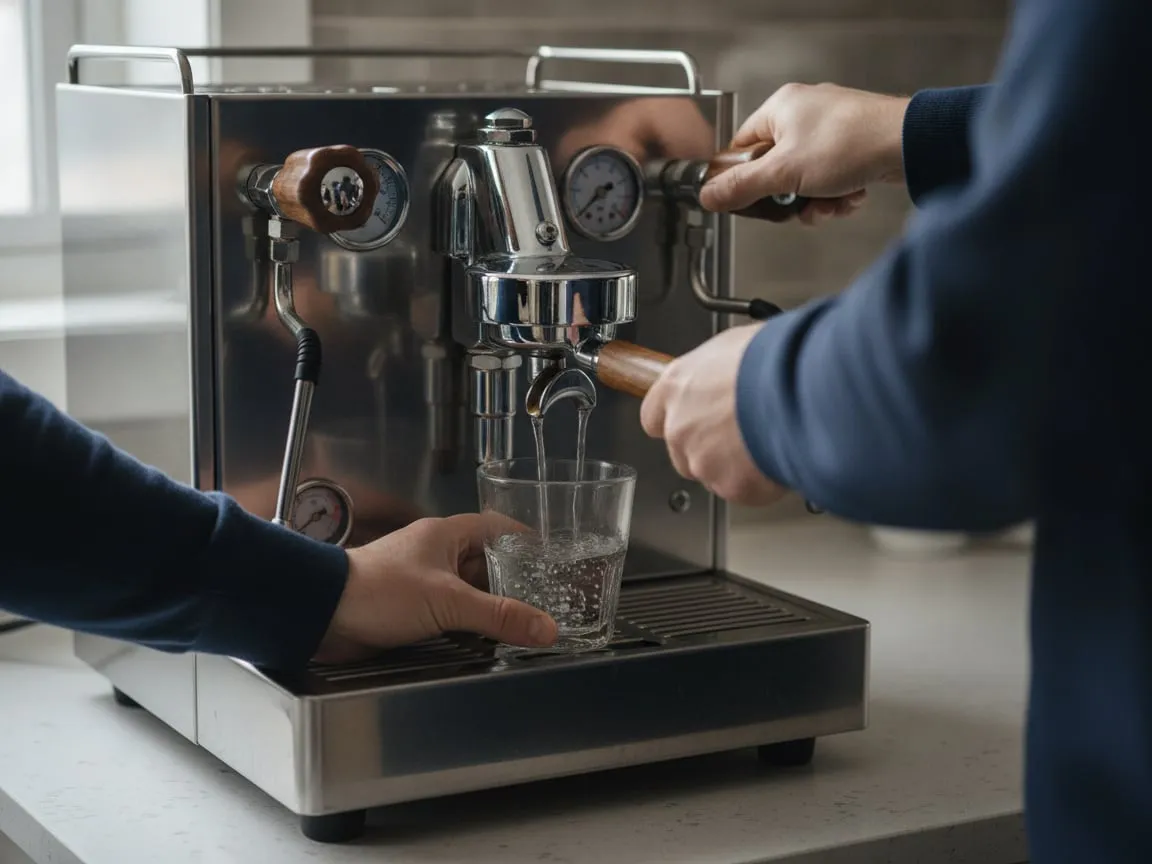
A pump that ran with an empty tank, or a machine that was moved or shipped, has air in the line. The pump cannot push air and runs loud with nothing coming out. Every maker describes the same cure: put a glass under the hot-water wand, open its knob, run the pump until water comes out in a steady stream, then close the knob and stop the pump. Usually ten to twenty seconds. A silent pump is a different problem.
Lock the portafilter to the stop
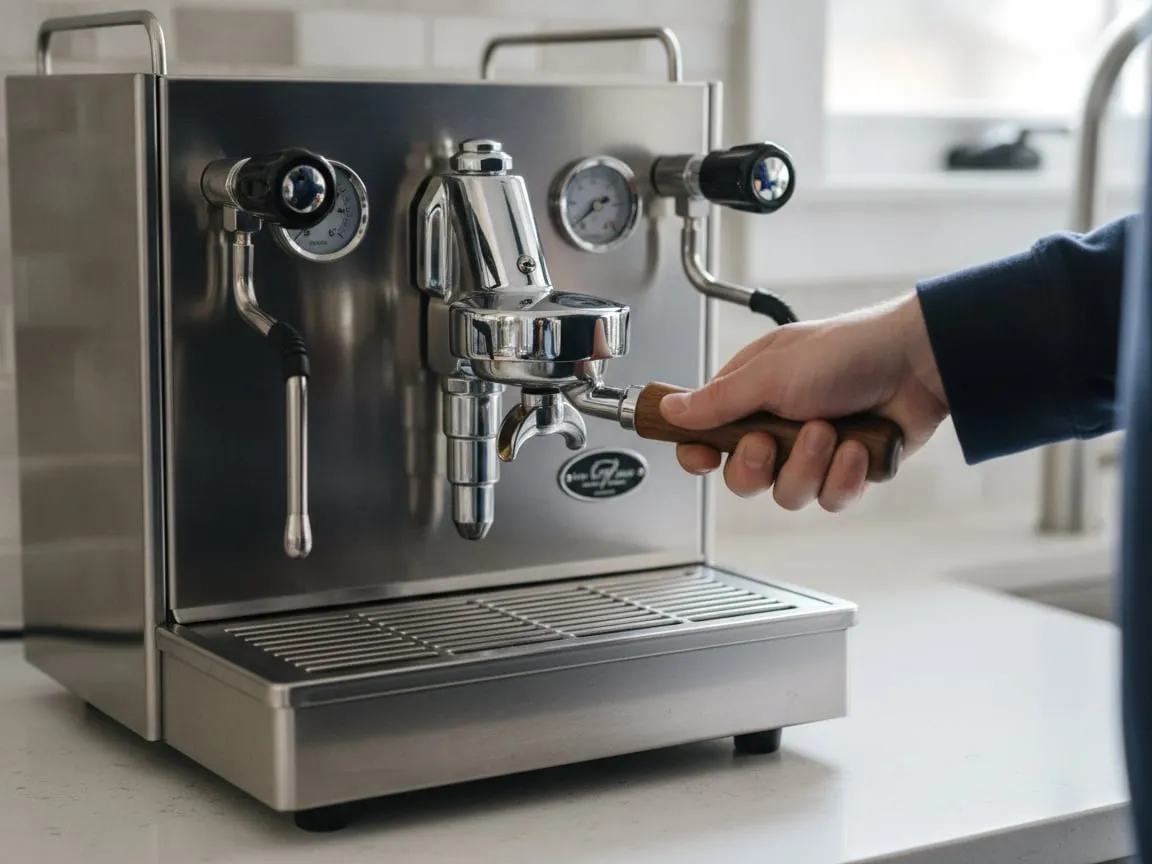
Our technician’s first note for this page was one line: people do not turn the handle far enough. A portafilter that stops short of its travel is not sealed against the group gasket. Water leaks around the edge, pressure never builds, and the shot is thin and fast or does not come at all. Turn it until it stops, which on most machines puts the handle at right angles to the front or a little past.
If it only locks with real force, or swings well past straight with no resistance, the group gasket is hard or gone: a 20-minute bench job.
Check which basket is in the portafilter
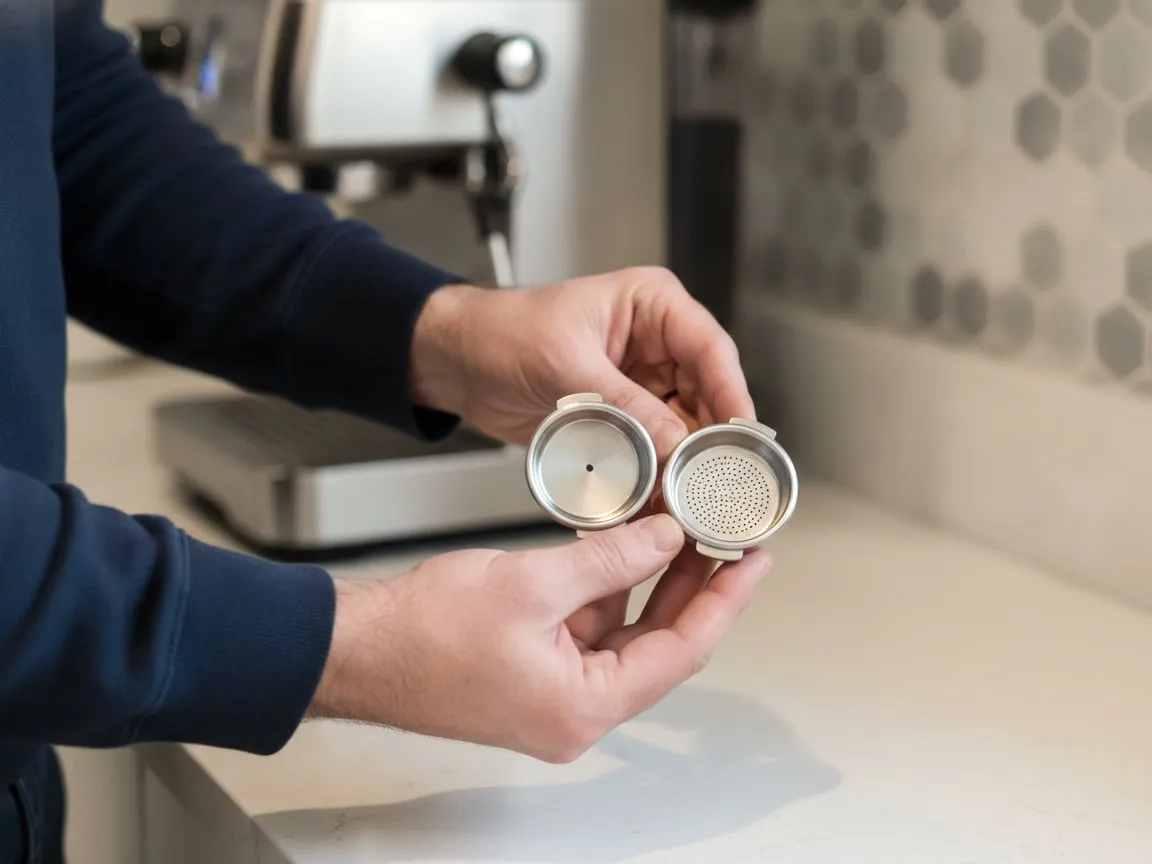
Turn the basket over. One hole in the centre of a false bottom is a pressurized basket: it builds pressure on its own and works with coffee ground at the shop. Hundreds of fine holes is a non-pressurized basket: it needs a fresh, fine grind, and with shop-ground coffee it gives a fast, pale, pressureless shot that owners describe as “the machine lost its pressure”. The machine did nothing. The basket did. Breville ships both; most E61 machines ship only the non-pressurized kind, which is why a grinder is part of the purchase.
Read the gauge during a shot
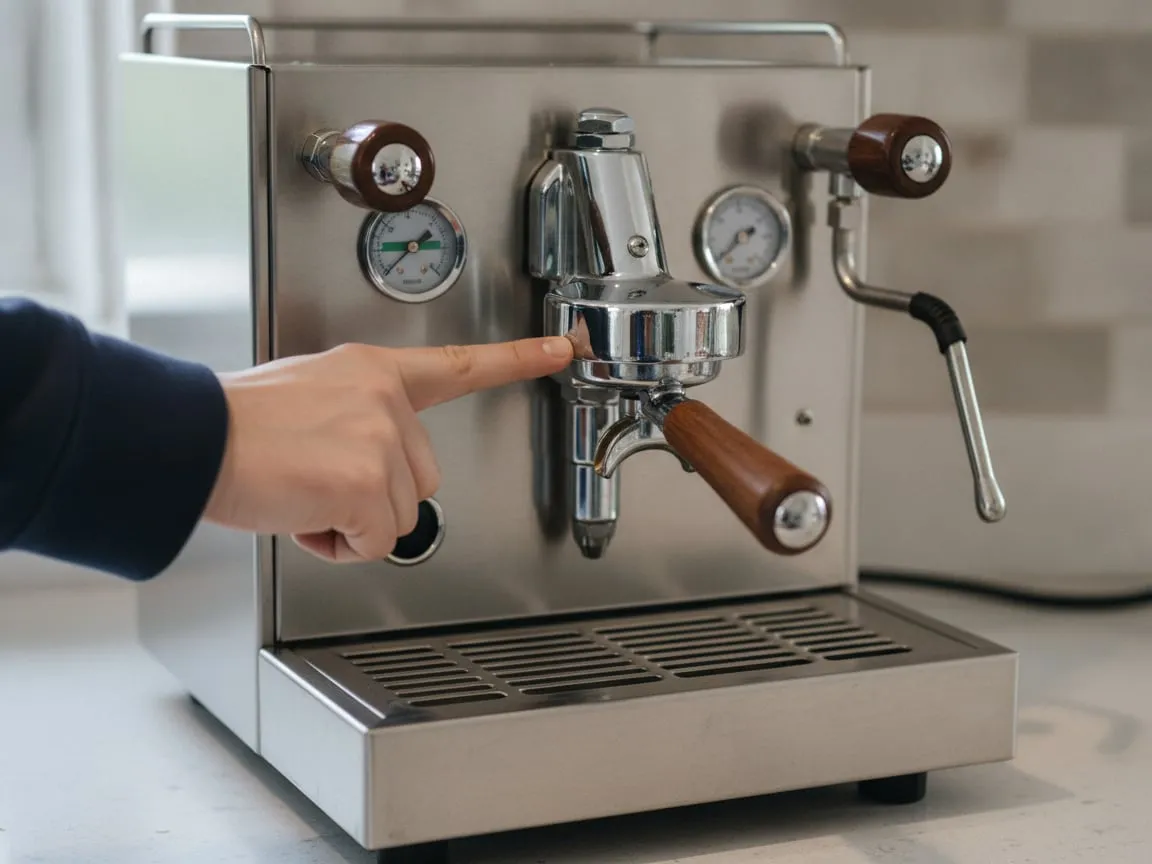
Run a shot and watch the brew gauge. The needle belongs in the middle band, around 9 bar. Pinned at the top with coffee barely dripping means the grind is too fine or the dose too big. Flat at the bottom with the pump running means water is escaping somewhere easy: steps 5, 7 and 8 again, in that order.
Clear the wand tip
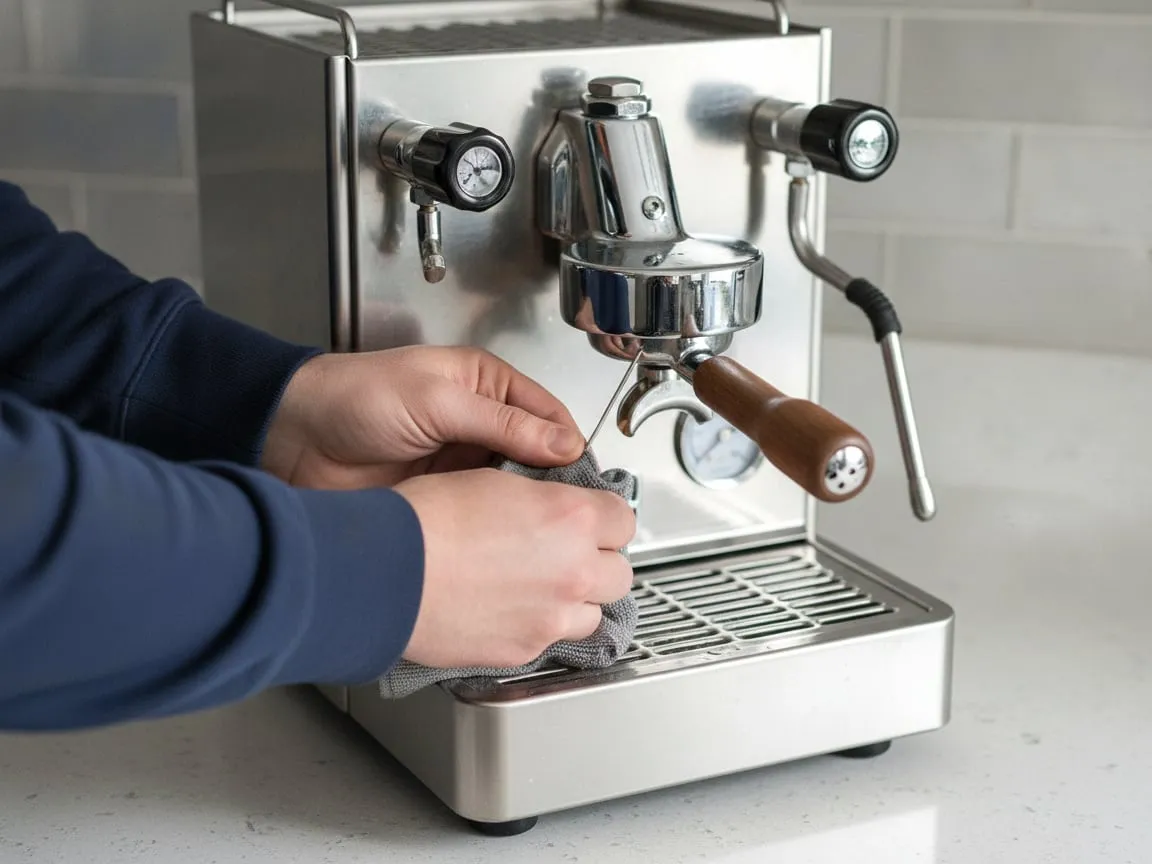
No steam from a machine that is hot is a blocked tip far more often than a boiler. Dried milk closes the four holes within days of one skipped wipe. Push the pin from the cleaning tool, or a straightened paper clip, through each hole, then open the knob over a cloth to blow the tip clear. If the wand gives water instead of steam, the machine is not up to temperature yet, or on a single-boiler machine the steam mode was not selected.
If it passed all ten
Then the fault is inside, and the honest next step is a bench diagnostic. Tell us which steps you did; it saves time on the bench. A 20-second video of what the machine does, filmed before you touch anything, is worth more than any description. The $145 diagnostic is credited in full toward the repair when you approve the estimate. The courier to and from Los Angeles is part of the fee. Book a pickup here.
Your machine just came back from us: what changed
Read this before the first shot, because the machine you got back is not the machine you sent. It is the machine you bought.
A repair ends with the machine set to the maker’s figures. Brew pressure is set to 9 bar; most machines that come in run at 11 or 12, either from the factory or from years of drift. The group screen, the jet and the valves are clean, so water moves through them faster than you remember. On a flow-control machine like a Bianca, the paddle range runs from zero to whatever the pump is set to, so after the pump is brought down the paddle feels different for the whole of its travel. None of this is a fault.
What it means at the cup: the recipe you used last week will run fast. Grind one or two steps finer and give it three or four shots. A forum thread about exactly this ends with the owner realising the old pump had been giving 6 bar for a year and the “wrong” taste was the correct one.
Power up in the right order: main switch, then the heating switch if your machine has one, then 20 to 25 minutes with the portafilter locked in. Run water through the group for three seconds before the first shot. If something seems off, film it and send it to us before adjusting anything. Thirty days of labor warranty are on the job, and a video on day two gets an answer the same day.