Test Your Coffee Water at Home
How to test the water in your espresso machine with a strip and a TDS meter in ten minutes, how to read the two numbers, and what each reading tells you to do.
Two instruments, ten minutes, and you know more about your water than the label on any bottle will tell you. A hardness strip says how much of what is in the water will become scale. A TDS meter says how much is in the water altogether. Between them they answer the only question that matters for the machine: is this water inside the band, and if not, in which direction is it out.
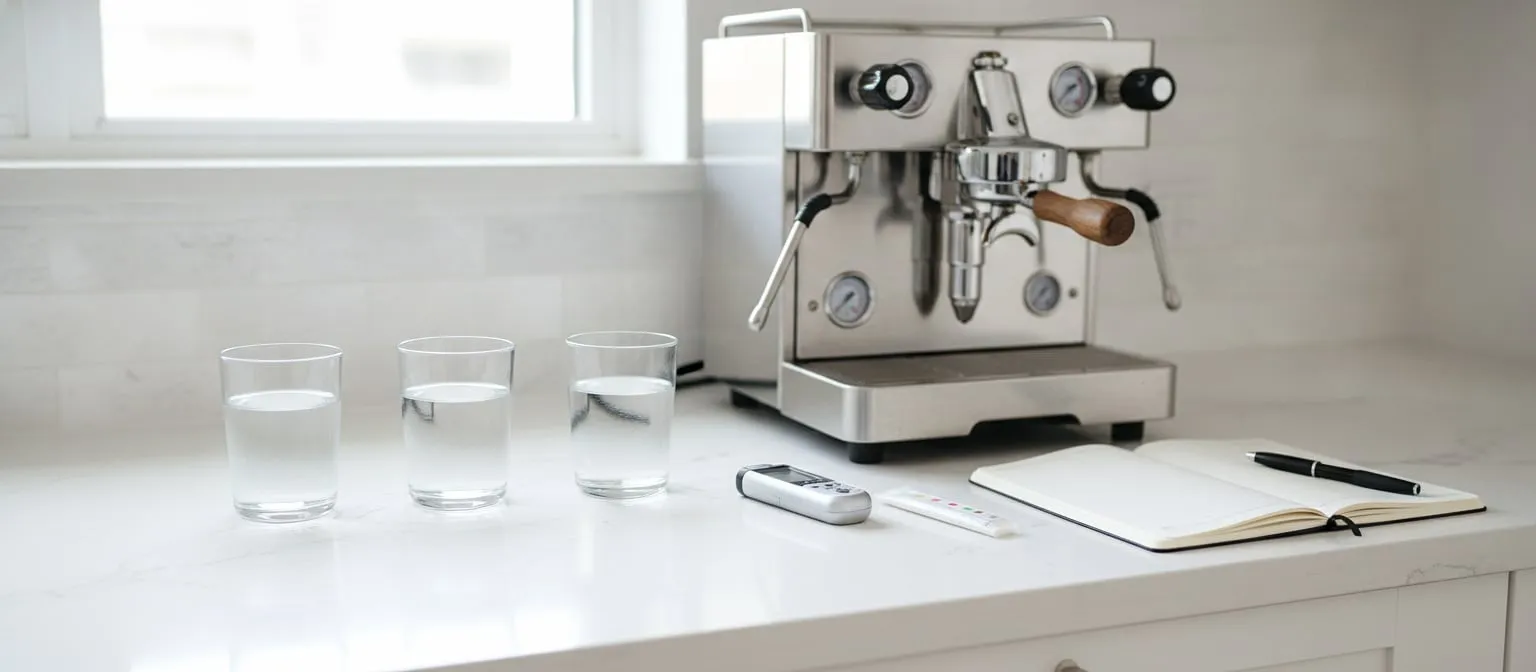
What to buy
A tube of total-hardness test strips. Aquarium and pool shops sell them, and the strip in a Breville box is the same thing. Make sure the chart reads total hardness, in grains per gallon or in parts per million as calcium carbonate, not just chlorine or pH.
A handheld TDS meter, the pen-shaped kind. Twenty dollars, runs on a button cell, reads in parts per million. It is not a laboratory instrument and it does not need to be; within ten percent is plenty.
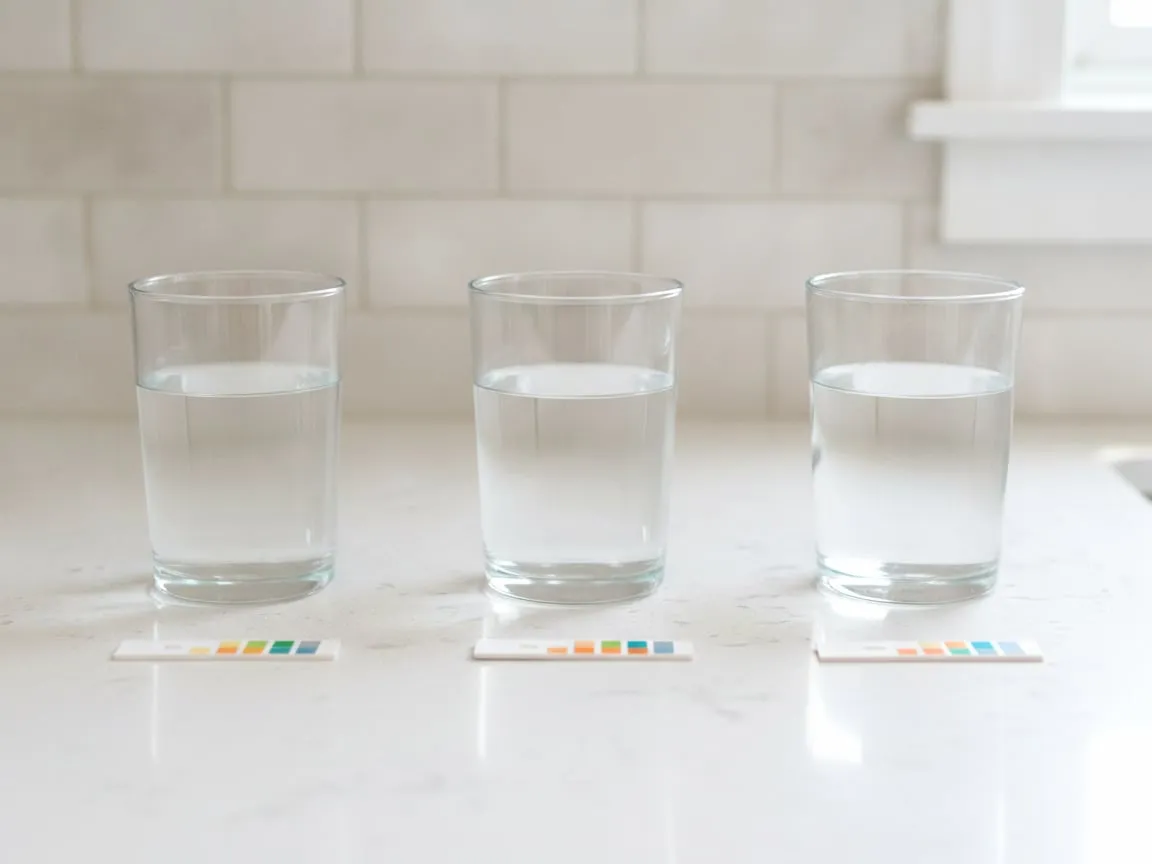
Three clean glasses, a notebook, and the water you actually use: the tap, the filtered water that goes into the tank, and if you buy bottles, a bottle.
The strip
Fill a glass from the cold tap after letting it run for twenty seconds. Dip the strip for the time on the tube, usually a second or two, shake it once, and wait the time on the tube, usually a minute. Hold it against the chart in daylight, not under a warm kitchen bulb, and read the closest color block.
Write the number down in grains per gallon. If the chart reads in parts per million, divide by 17 to get grains. Then do the same for the tank water and the bottle. Three strips, three numbers, and the picture is usually clear.
The meter
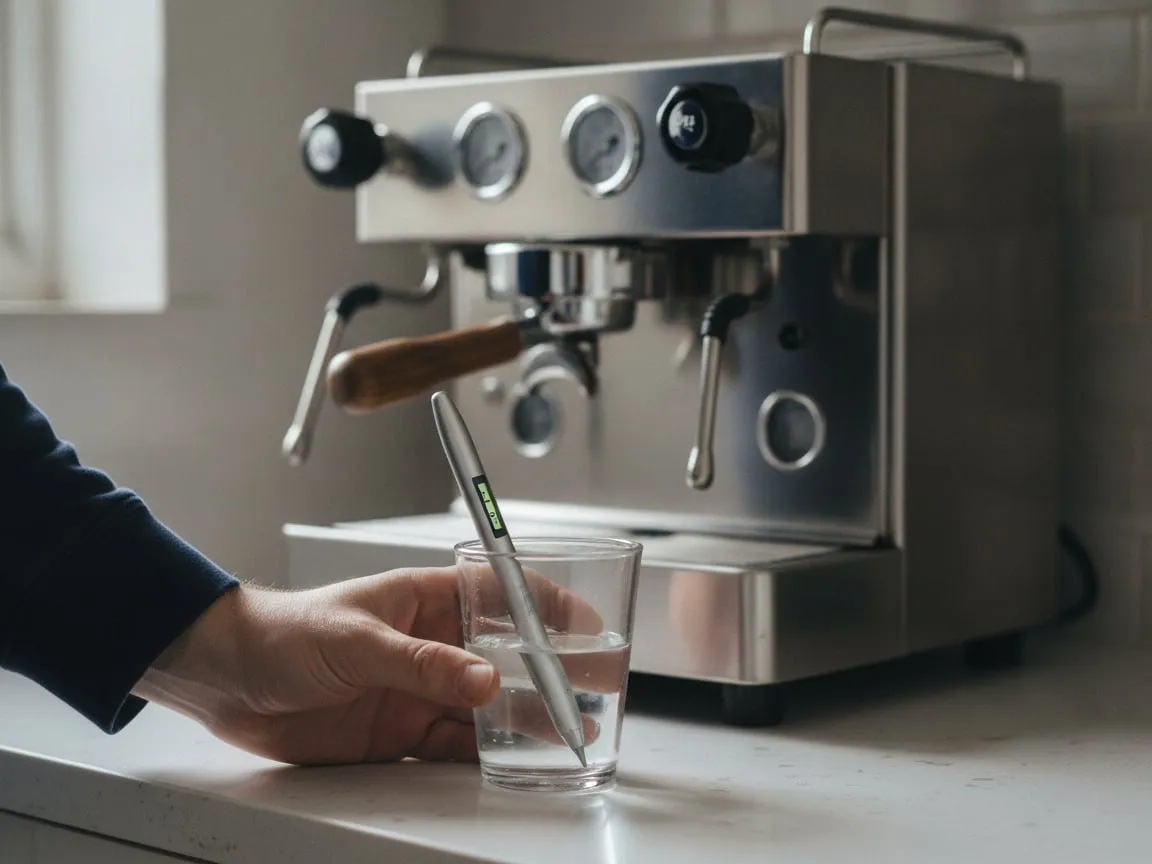
Rinse the tip, dip it into the same glass until the display settles, and write down the reading. Rinse between glasses. The meter reads everything dissolved, not just hardness, so it will always be higher than the strip converted to parts per million. The gap between them is the interesting part.
Reading the two numbers together
Strip between three and five grains, meter between 75 and 250 parts per million: the water is in the band. Whatever you are doing, keep doing it, and test again in a month.
Strip above five grains: this is the common Southern California result, and across Los Angeles the tap reads eight to sixteen. Every grain above five is scale forming faster. A tank machine wants a softening cartridge or a coffee pitcher, and on readings above ten both together; a plumbed machine wants a cartridge on the line; a house where the kettle reads the same number as the tap wants treatment. The home water page sorts the tank options.
Strip at or near zero, meter under 50: the water is nearly empty. This is distilled water, reverse osmosis, or a softener set too aggressively with the hardness gone and sodium not showing on the strip. The machine is safe from scale and the cup is thin, and several machines cannot sense this water in the tank. Blend it with tap, about one part in four, or add a remineralizing stage.
Strip low, meter high: hardness is gone but solids remain, which almost always means sodium from a household softener. The shot tastes faintly salty. The softener needs adjusting, not the machine.
Strip high and meter very high, above 400: a lot of everything, typical of groundwater in the Inland Empire and parts of Orange County. A cartridge is overwhelmed here; this is a softener job, and the test at the house will confirm it.
Testing the filter, not just the tap
The reason to test the tank water as well as the tap is that it tells you whether the cartridge is alive. Tank water that reads like the tap means the cartridge is spent, was never the softening kind, or was never installed; a carbon-only pitcher will give exactly this result. Tank water several grains below the tap means the filter is working, and the difference between the two readings over the following months shows you the real change interval for your water. The box says three months; the strip tells you whether that is true in your kitchen, and in most of our area it is not.
Testing a café line
On a bar the same two instruments answer a different question: is the cartridge under the counter still doing anything. Take three readings. The main, from a tap that is not filtered, usually the hand sink. The outlet of the filter head, from the sample port if the head has one, otherwise from the machine’s hot-water wand after a long flush. And the water in the steam boiler, by drawing a cup from the wand into a glass and letting it cool.
Main and filter outlet reading the same hardness means the cartridge is exhausted or bypassed. Outlet reading three to five grains means the bypass is set right and the resin is alive. Steam boiler water reading far above the outlet is normal, because the boiler concentrates minerals as it makes steam, but a reading that climbs week on week with the same inlet water means the boiler is overdue for a drain and refill, which is a maintenance-visit job rather than a repair.
Write the three numbers on the tape on the filter head with the date. The next person who opens the cabinet, which may be you in six months, will know whether the line is on schedule.
Reading the city report alongside
Every water utility in California publishes an annual quality report, and it is worth ten minutes. Find the line for hardness, usually given both as parts per million and as grains per gallon, and note the range rather than the average: Los Angeles publishes a spread of roughly 7 to 16 grains because the blend of aqueduct, groundwater and imported water shifts by district and by month. The county utilities to the south and east publish theirs, and the Riverside and San Bernardino figures explain a lot of what reaches our bench.
The report tells you the neighborhood. The strip tells you the tap today, after the blend changed and after the building’s pipes added their part. When the two disagree, trust the strip for the machine and the report for the trend.
When to stop testing and call
If the tap reads above fifteen grains, or above ten with a meter over 400, the cartridge is not going to carry the machine alone and the kettle and the water heater are scaling with it. That is the point where a test at the house by someone with better instruments pays for itself: hardness, dissolved solids, chloramine, pressure, and a look at where a system would go. It is the first step of our water treatment service, it is free of any obligation, and the system that follows it is quoted in writing. Send the strip photo with the request and the specialist arrives knowing what to expect.
If the readings are in the band and the machine still runs slow or weak, the water is not your problem. Start with the self-check, then the hard-water symptoms page, because scale from before the filter went in does not leave on its own.