What is your response time for a Wolf built-in coffee machine?
Average dispatch in LA County is under 4 business hours on weekdays; you get the arrival window on the call, before you hang up.
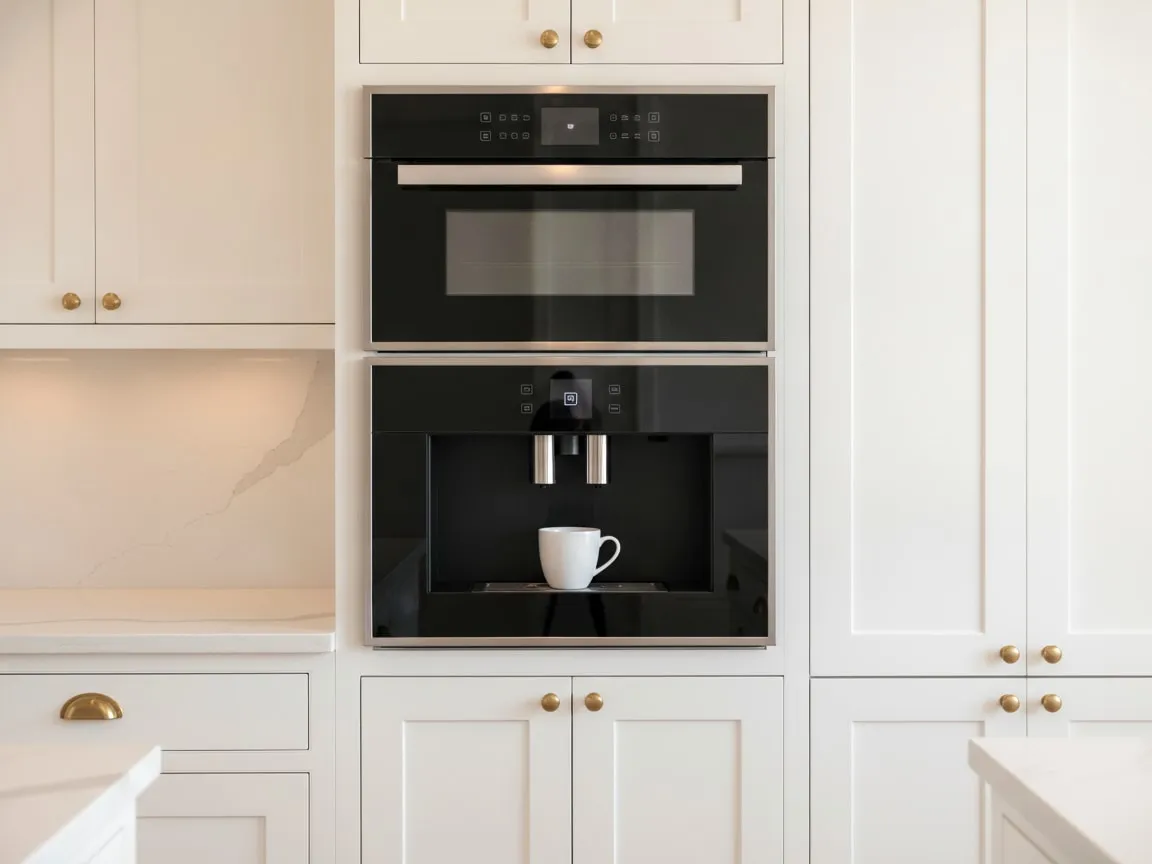
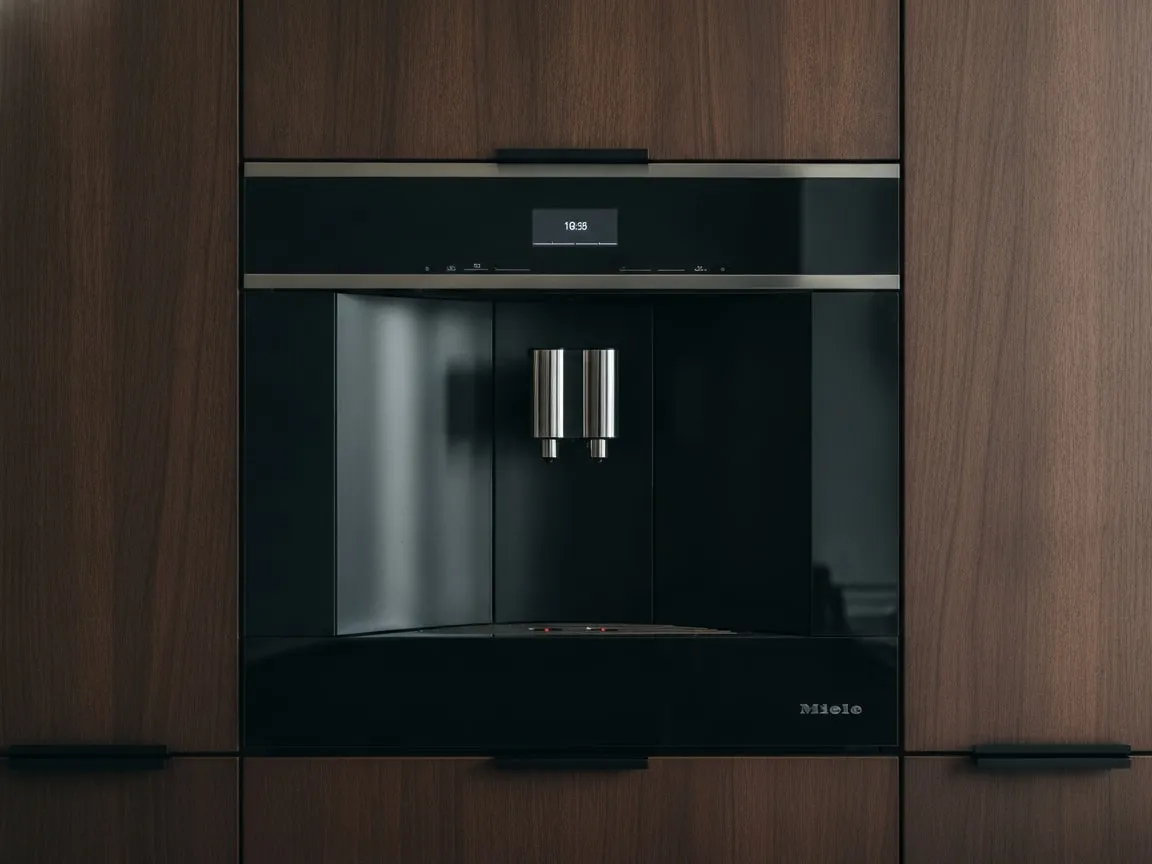
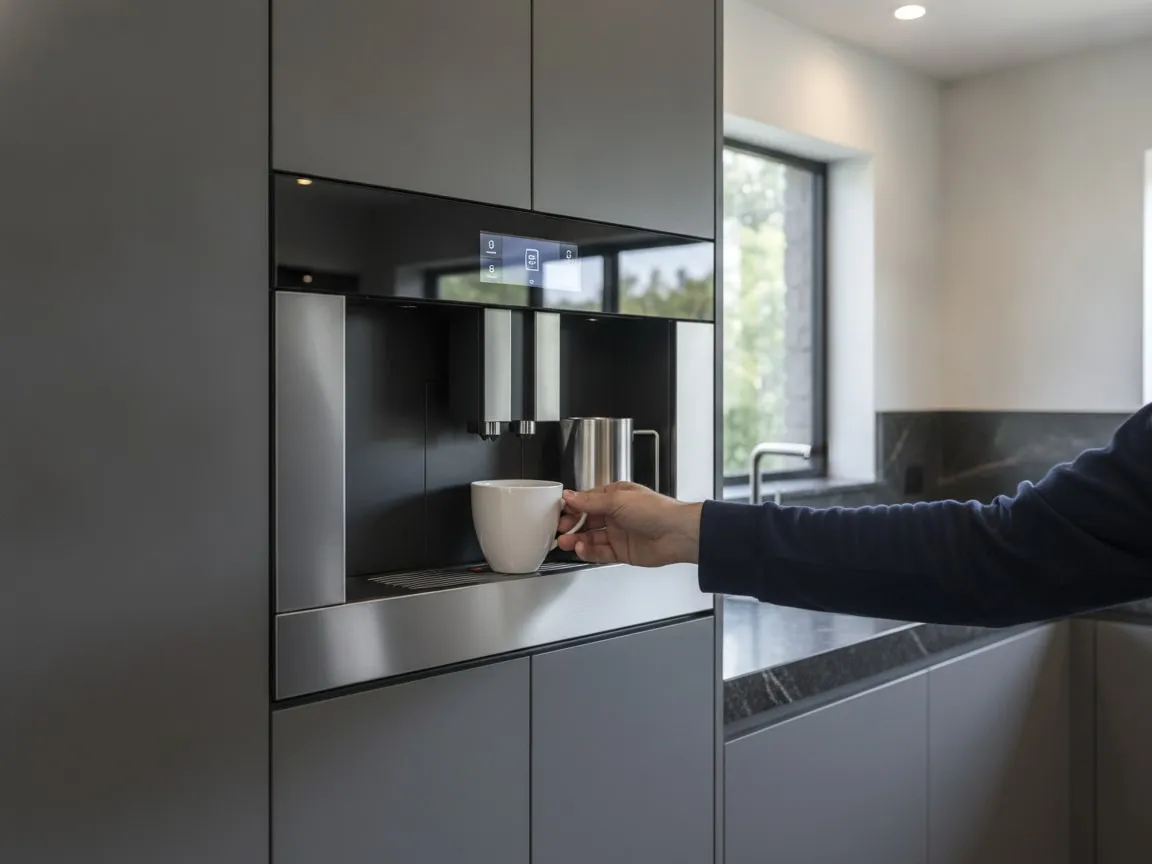
The Wolf Coffee System, the built-in from the Sub-Zero and Wolf family, serviced in the wall it was installed in. Calabasas, Hidden Hills, the Westside, coastal Orange County and San Diego.
Average dispatch in LA County is under 4 business hours on weekdays; you get the arrival window on the call, before you hang up.
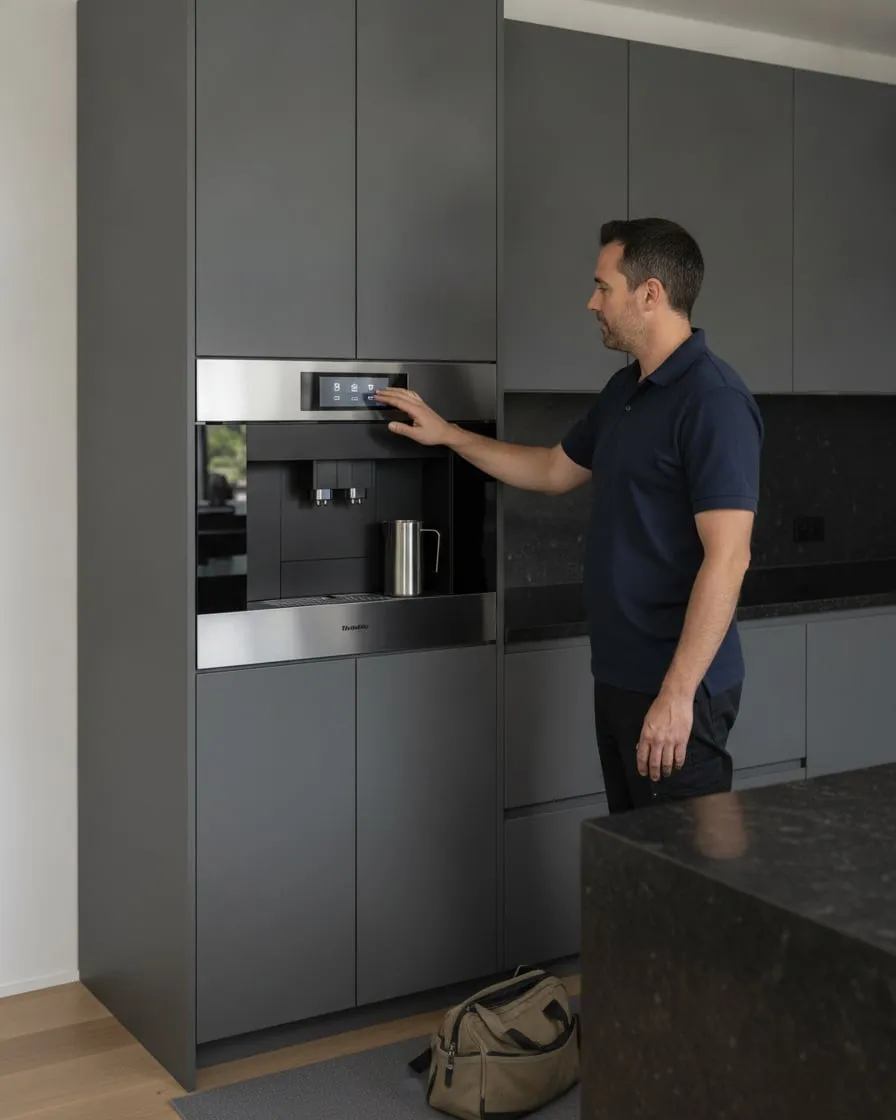
The unit travels forward on its own telescopic runners, which is how the tank and the bean container are reached in daily use. Most repairs are done with it extended. It is lifted off the runners only for work behind the chassis, by two people, onto a covered surface.
The coffee systems we see are tank-fed. If yours was installed with a water line, say so when you call, and the visit starts at the shutoff instead of at the machine.
De’Longhi-family parts, ordered against the Wolf model and serial from the rating plate. The infuser, pump, thermoblock and grinder are the parts that matter, and all of them are replaceable.
No. We are an independent service. During the factory warranty period your dealer or the manufacturer’s service line is the first call.
Because the service documents do. Reading the manufacturer’s own language is how the right part gets ordered the first time.
They are the most used mechanism on the machine and the least maintained. Every visit includes them.
A coffee system coming off its runners is an awkward load above a finished floor. It is never a one-person job in your kitchen.
Sub-Zero and Wolf have their own service network for cooking and refrigeration, and it is a good one. The coffee system is where we are useful.
The Wolf Coffee System carries the Wolf badge and the red accents, and it is built for Wolf by De’Longhi. That is public, and it is good news for the owner: De’Longhi has made more bean-to-cup mechanisms than anyone, and the inside of a Wolf is familiar to anyone who has rebuilt one. The service documents even keep De’Longhi’s own word for the brew unit, the infuser.
The thirty-inch coffee system. Wider fascia, same mechanism behind it, and a heavier lift if it ever has to come off its runners.
The current twenty-four-inch system. The one most kitchens finished in the last few years have.
The earlier coffee system and the one we are asked about most, simply because it has had the years to need work.
The infuser only releases in its rest position. After a power cut mid-cycle it is stranded, and the door that covers it will not open. We return it to rest electrically, remove it, clean and lubricate the guides and replace the seals it has worn.
The machine counts pucks; it does not weigh them. Emptying the container with the unit switched off never resets the count. If it persists with the unit on, the container switch is the fault.
Usually the grinder setting has drifted coarse, or the burrs are worn on an older EC24/S. Occasionally the infuser seal is passing water around the puck. We measure the dose before replacing anything.
The carafe lid has passages that block with dried milk. A soak does not reach them. Dismantled, cleared, and the air intake checked, since a blocked intake gives hot milk with no foam.
The runners carry the full weight of the machine every time someone refills it. Debris in the track or a bent stop makes the unit sit proud of the wall. Cleaned and adjusted on site.
The outlet is behind the unit, so nobody checks it. We extend the unit, test the outlet and the cord, and only then look at the machine’s own supply board.
Wolf coffee systems are built by De’Longhi and share their internals with the Fisher & Paykel EB24 and EB30. The service documentation uses De’Longhi’s term for the brew unit, the infuser. Parts are De’Longhi-family parts ordered against the Wolf model and serial, and knowing that is the difference between finding an infuser in a few days and being told the machine is discontinued.
How built-in service differs from every other coffee repair: built-in coffee machine repair.
California Bureau of Household Goods and Services #A49573 · Fully insured for on-site work in homes and commercial kitchens.
$145 diagnostic — a technician comes to you. It is credited in full toward the repair when you approve the estimate.
A built-in has no flat service price here. The same symptom can be twenty minutes through the front of the unit or an afternoon with it out of the column, and we will not know which until we have seen the installation. You get a written estimate before any work.
What the repair costs depends on what we find. You get a written estimate before anything is done, and you can decline it — we bring the machine back and nothing further is owed.
Wolf units mostly live on cafe bars and hospitality counters, so the dispatch pattern follows the commercial corridors: Wolf repair in Beverly Hills, Wolf repair in Santa Monica, Wolf repair in Orange County, Wolf repair in San Diego and Wolf repair in Los Angeles. Same technician, same rates everywhere on the grid — 25 cities across six counties, same-day when the schedule allows.
Representative job, not a specific customer. An EC24/S in a Hidden Hills kitchen, dead after an electrician reset a tripped breaker during other work. The unit was extended on its runners and the outlet behind it tested good. The infuser had stopped mid-stroke when the power went, and the machine was refusing to start with it out of position. Returned to rest, removed, serviced, refitted; runners cleaned and the rear stop straightened so the fascia sat flush again. About an hour and three quarters on site.
The coffee system is the one Wolf product that is not over-built for its job. It is a good domestic bean-to-cup machine in an expensive frame. Run the descale when it asks and clean the carafe after every milk drink, and it lasts. Ignore both and it fails exactly as a countertop machine would, only in a more inconvenient place.
Usually yes, if the fix costs under half a replacement and the machine has years left. The arithmetic we run by machine class, and when to buy new instead.
Six to eight years for an entry machine, twenty-plus for a prosumer one. The build, the water it drank and whether anyone serviced it set the number.
Every figure on this page is ours to stand behind — who we are and what we're licensed for.
Tell us your Wolf model and what's wrong. We'll respond within the hour with a diagnostic estimate and ETA.
Three fields. We call or text back — Mon–Sat · 7am–9pm, Emergency · 24/7. Urgent? Call (424) 352-8838.