What is your response time for a Sanremo service call?
Average dispatch in LA County is under 4 business hours on weekdays; you get the arrival window on the call, before you hang up.
Sanremo Café Racer, Opera, F18, D8, Zoe and YOU, serviced on site in the Inland Empire, Long Beach and Silver Lake. A boiler on every group, and each one checked on its own.
Average dispatch in LA County is under 4 business hours on weekdays; you get the arrival window on the call, before you hang up.
Preventive-maintenance contracts run $400–$2,800 per machine per year on a quarterly cycle, 15–25% off from 3 machines; 12-month term, 30-day cancellation.
No — a traditional machine has nothing to dial into. Diagnosis happens at the machine: pump and group pressure, boiler temperature, and the electrical checks that tell a failed element from a failed board.
Sanremo USA is in New Jersey and its parts catalogue runs through Parts Town, with Espresso Parts carrying the wear items. We order against the model and serial on the rating plate, and the ETA is written into the estimate before we order.
No. We are independent. Sanremo’s manual directs owners to an authorised dealer for spare parts, and a machine under warranty should go to Sanremo USA first. We service machines that are out of warranty, on site, and order parts through the US distributors that carry the line.
Volume, time, group temperature and pump pressure are on each group’s screen. Ten minutes there usually says which group, and often which part.
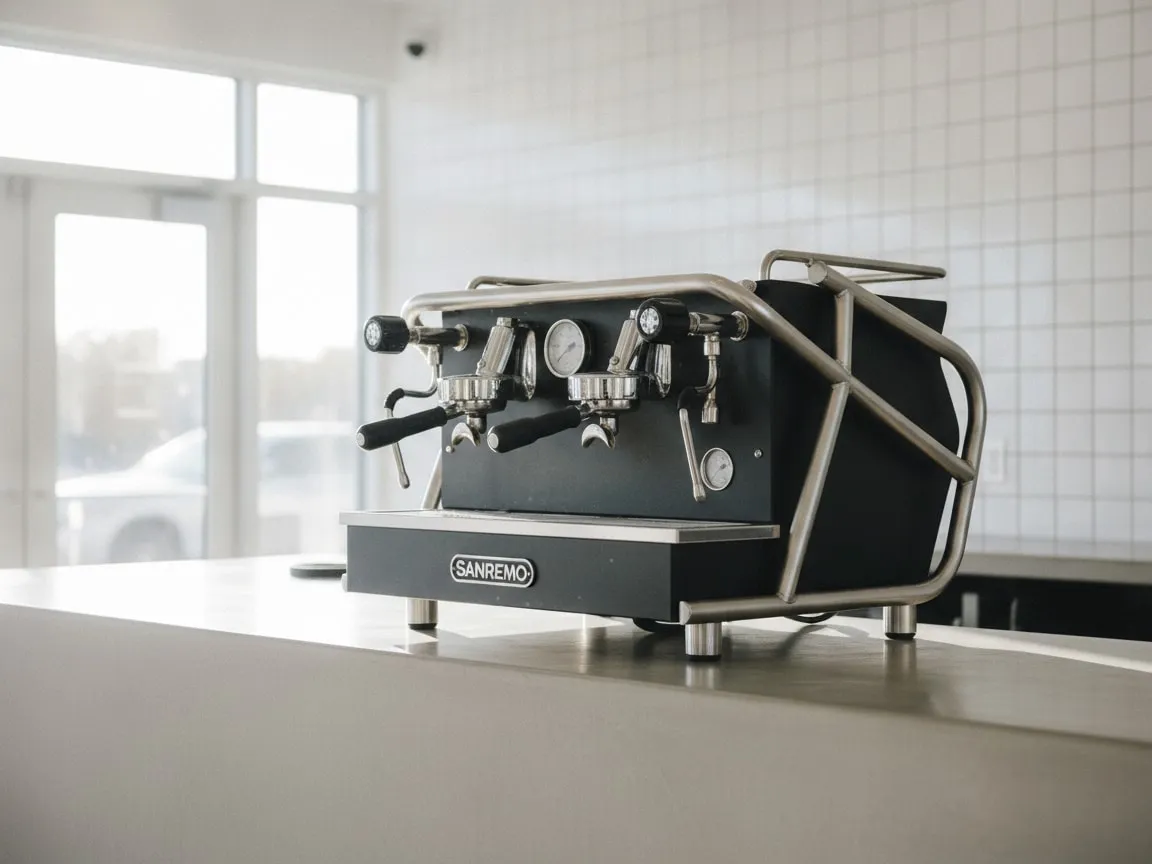
On a Café Racer the tubular side profile is unscrewed before the panel behind it, and the cup tray lifts off after. The electrical panel slides out from the front. Forcing a panel first is how these machines get scratched.
Sanremo sets a limit for supply water in its manual. We test what is coming out of your line and write the number on the estimate.
Sanremo USA is in New Jersey and its catalogue runs through Parts Town. Espresso Parts carries the wear items. Orders go against the model and serial on the rating plate.
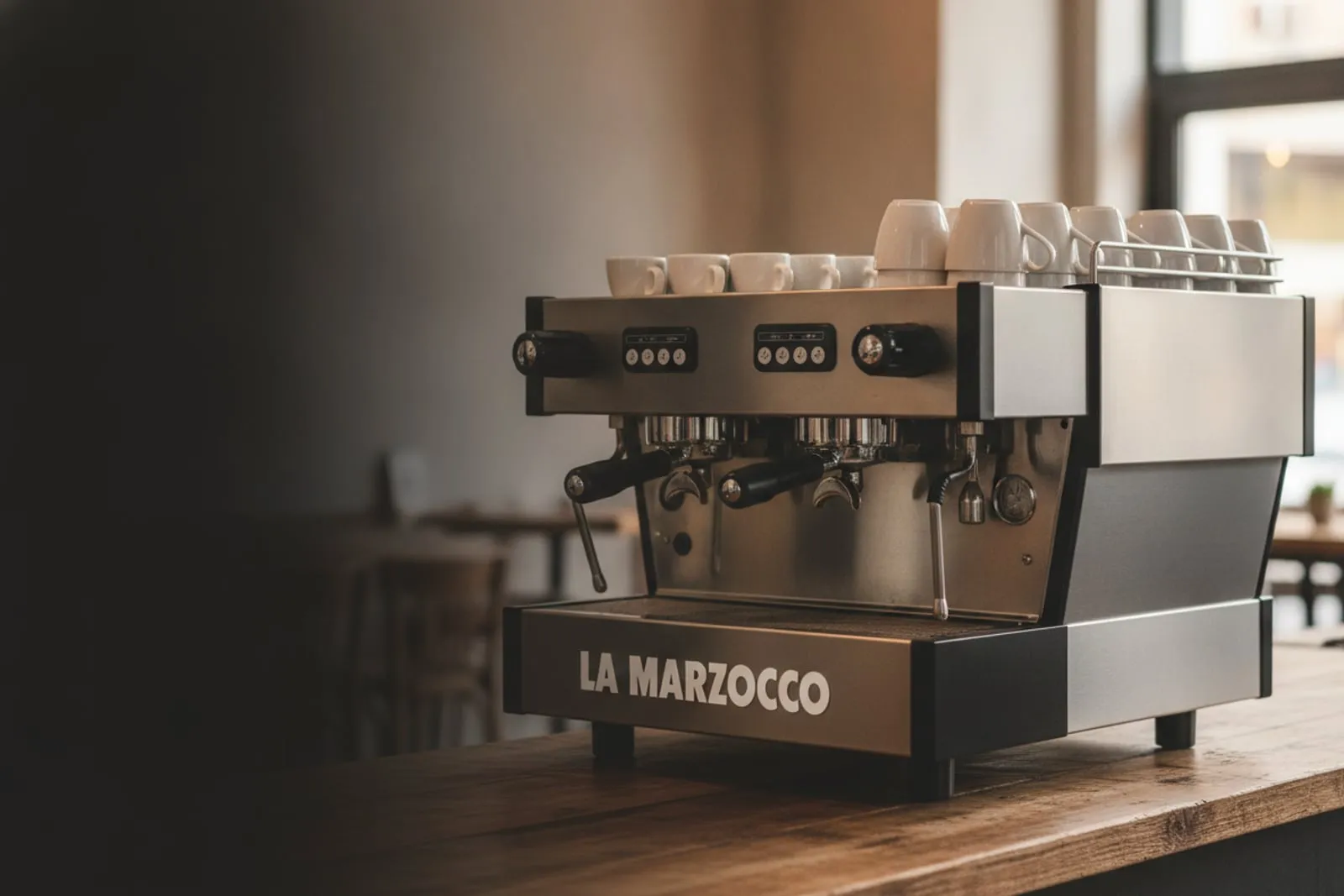
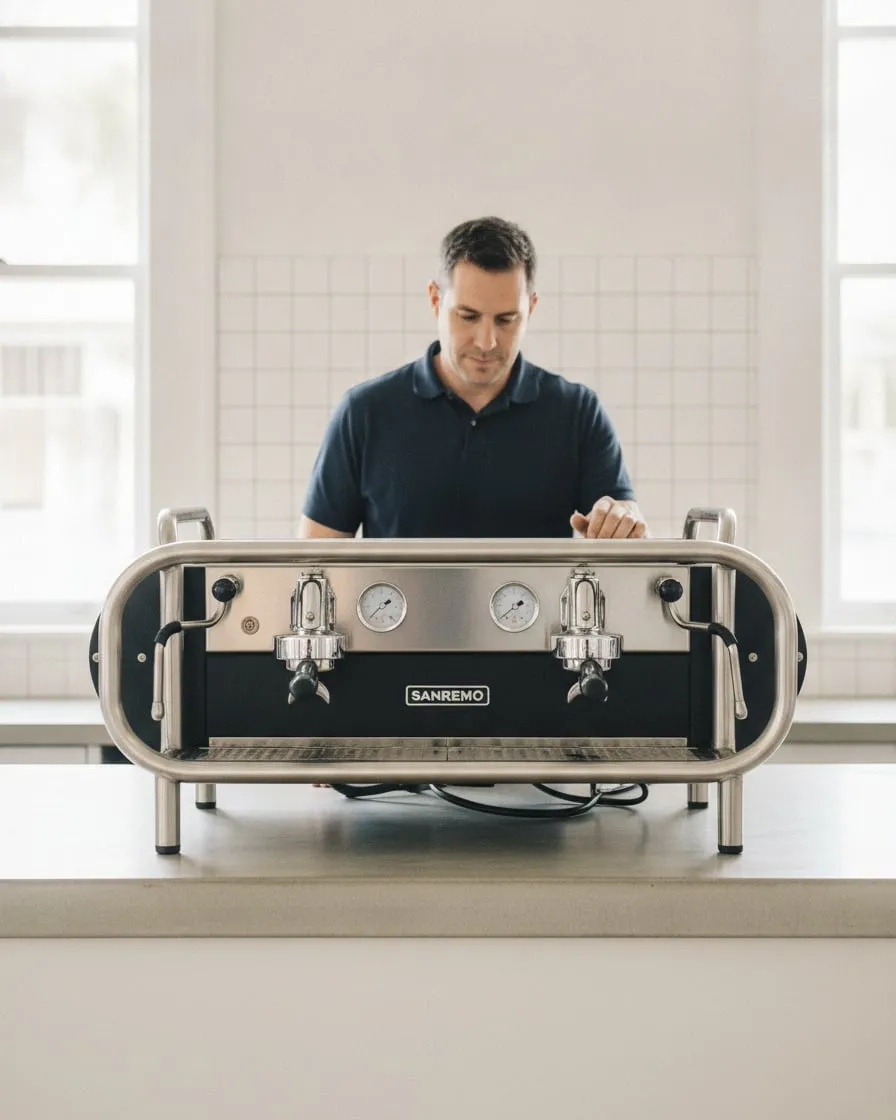
Sanremo is an Italian manufacturer, sold here through Sanremo USA in New Jersey. The Café Racer gets the attention for its exposed frame. What matters at service time is under it: a steam boiler, a pre-heating boiler and a heated group for each head, with a display on every group that shows volume, time, temperature and pump pressure. Most faults on these machines can be narrowed to one group from the front, before a single panel is removed.
Multi-boiler with PID. Steam boiler of about 8 litres on the two-group and 10 on the three-group, a 0.5 kW pre-heating boiler, and a 0.8 kW element on each group. 208–240 V; 6.9 kW on two groups, 8.1 kW on three. Rotary vane pump, inside the machine or under the counter. The Naked version has see-through sides.
Two and three groups. The CDS system controls three phases of extraction and stores pressure curves, and the wiring diagram shows a pump for each group. The most adjustable machine in the range, and the one where a setting is most often mistaken for a fault.
The F18 is a multi-boiler in two groups, three groups and a Tall version. 208–240 V, 6.32 kW or 7.2 kW, rotary vane pump, with an Autosteamer wand as an option. The F18SB is its sibling in the current range.
A single-boiler machine, in Tall and standard heights. The D8 PRO adds cold-touch steam wands. Fewer parts than the multi-boilers, and more forgiving of hard water.
The Zoe Compact is the narrow one. The Zoe Competition comes in two and three groups.
One group, 110–120 V, 1,650 W. A steam boiler of about a litre, a coffee boiler of about half a litre, and a 2.5-litre tank. Pressure profiles from 1 to 12 bar. The only Sanremo here that plugs into a wall outlet.
A worn group gasket, in Sanremo’s own troubleshooting table. The same table puts "coffee too cold" on a clogged shower screen, so gasket and screen are done together. About 40 minutes for two groups.
The volumetric doser on that group. The group display shows the millilitres delivered, so the two sides can be compared shot for shot before anything is ordered.
A clogged gigleur, the small jet that meters water into the group, or the group solenoid behind it. Scale blocks the first and sticks the second.
Two different seals. A wand that leaks with the valve shut needs the tap gasket. Water under the knob is the spindle seal. Sanremo lists them as separate faults for a reason.
Each group is heated and measured on its own. The temperature on that group’s display is compared with the others; then its probe and its 0.8 kW element are tested. The rest of the machine stays in service while that is found.
A level sensor that no longer reads. The machine raises a filling alarm once the fill has run for 120 seconds. Until then the only sign is water at the drain. Quoted once the sensor is out and can be seen.
Sanremo’s manual says it plainly: scale on a rotary pump ends in reduced pressure or a seizure. The pump is replaced. The water treatment that let it happen is the real repair.
Quoted from the single-group price. Every further group adds its own boiler to the service and its own line to the estimate.
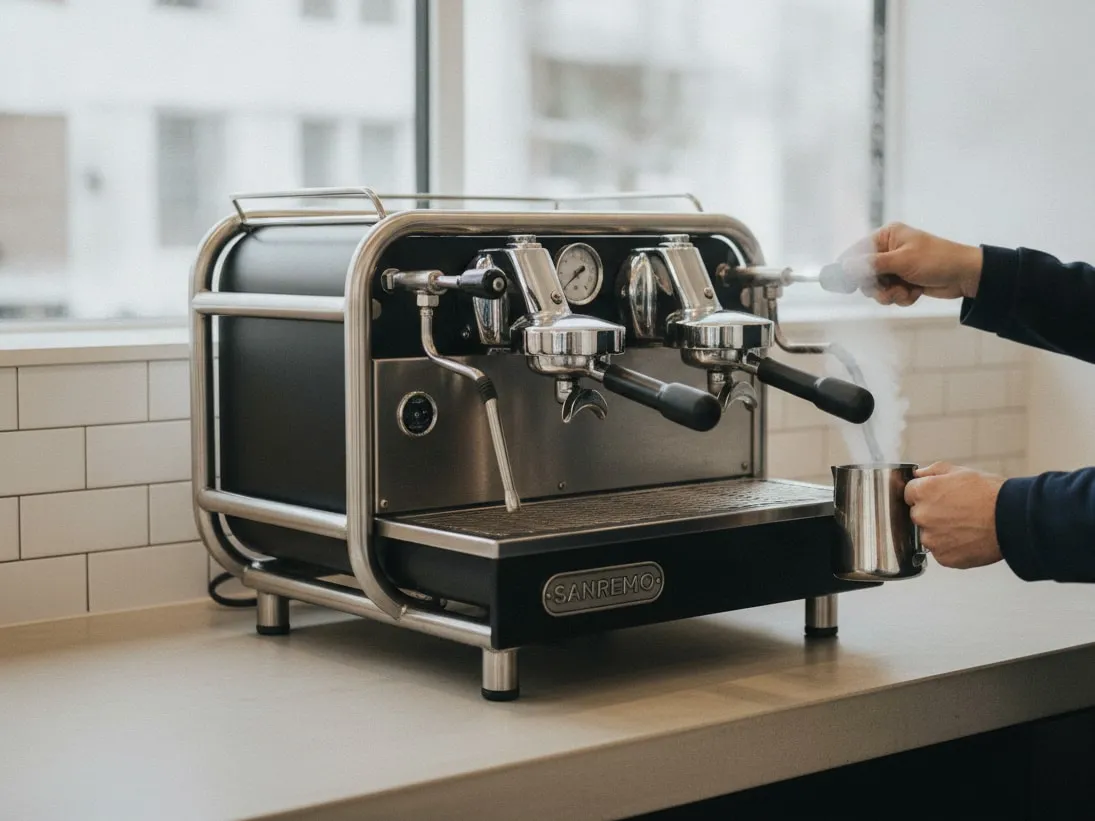
Sanremo units mostly live on cafe bars and hospitality counters, so the dispatch pattern follows the commercial corridors: Sanremo repair in Inland Empire, Sanremo repair in Long Beach and Sanremo repair in Silver Lake. Same technician, same rates everywhere on the grid — 25 cities across six counties, same-day when the schedule allows.
A typical call on a two-group Café Racer: a specialty bar reports that the right group is pouring short and the shots run fast. The visit starts at the group display, comparing delivered volume on both sides. The volumetric doser on the right group is cleaned and re-tested, and replaced if the reading still drifts. Supply water is measured before leaving. About 60 to 90 minutes. When the number comes back well over the manual’s limit, the softener cartridge is the next thing on the list.
The frame sells the Café Racer. The multi-boiler is what you maintain. Its manual asks for water at 35 to 50 parts per million and warns that scale seizes the pump. On unsoftened Southern California water that warning comes true. If you are not going to keep a softener in service, buy the single-boiler D8: it will forgive you for longer. A Café Racer on tap water is an expensive way to learn that.
Usually yes, if the fix costs under half a replacement and the machine has years left. The arithmetic we run by machine class, and when to buy new instead.
Six to eight years for an entry machine, twenty-plus for a prosumer one. The build, the water it drank and whether anyone serviced it set the number.
Every figure on this page is ours to stand behind — who we are and what we're licensed for.
Tell us your Sanremo model and what's wrong. We'll respond within the hour with a diagnostic estimate and ETA.
Three fields. We call or text back — Mon–Sat · 7am–9pm, Emergency · 24/7. Urgent? Call (424) 352-8838.