Water Filtration for a Café Espresso Machine
How the coffee line of a café is filtered: head and cartridge on the machine feed, softening or scale inhibition, sizing by gallons, when a softener belongs.
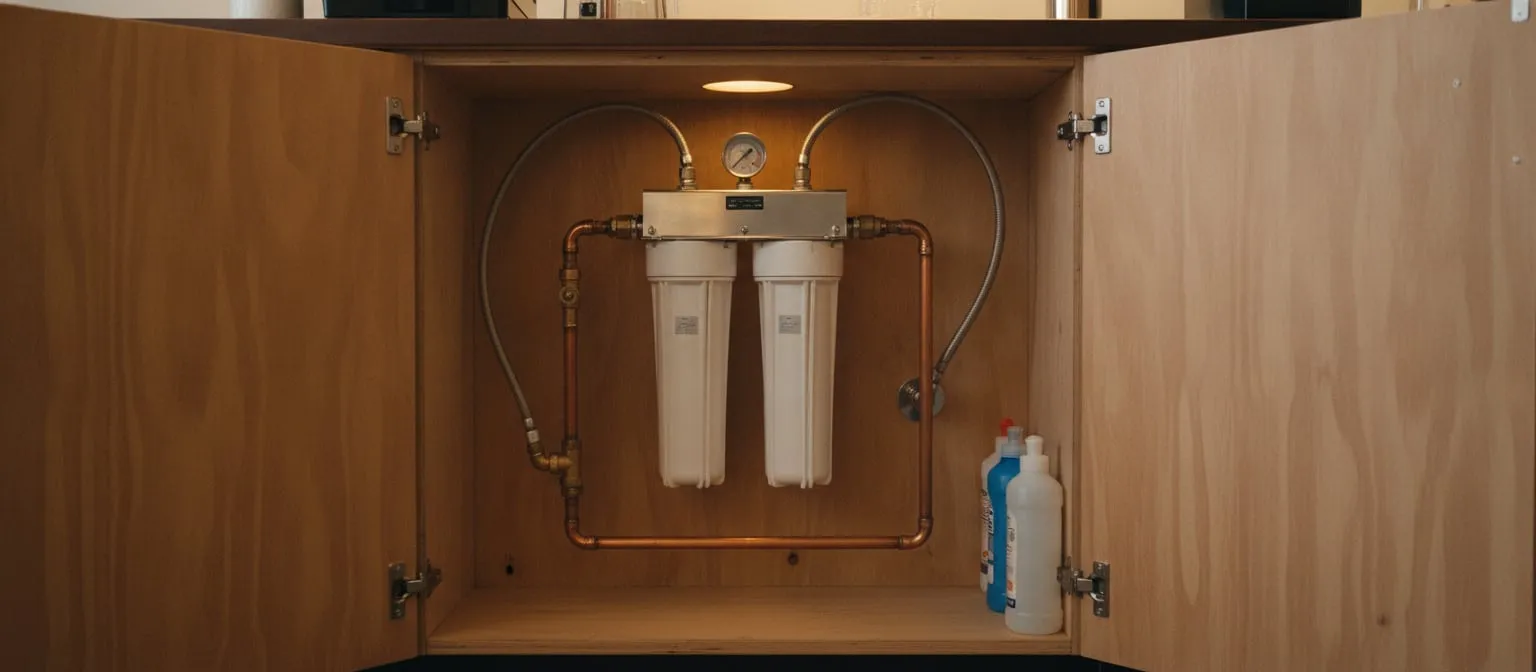
Under most café bars there is a cabinet nobody opens. Inside it is a steel head on the wall, one or two cartridges hanging from it, a gauge, and a braided hose going up through the counter to the machine. That cabinet decides how often the machine is descaled, how long the element lasts, and how the shots taste at four in the afternoon. This is how it should be set up, and how to tell when it is not.
What the coffee line is for
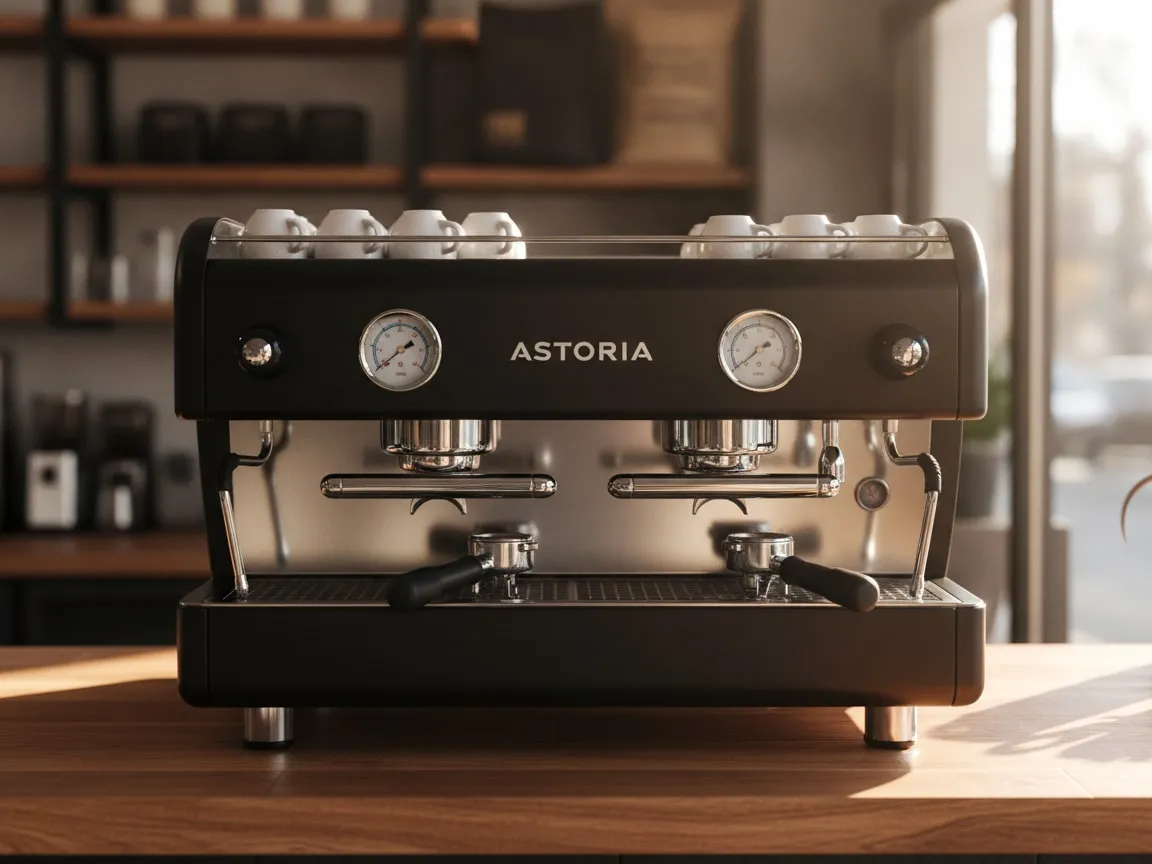
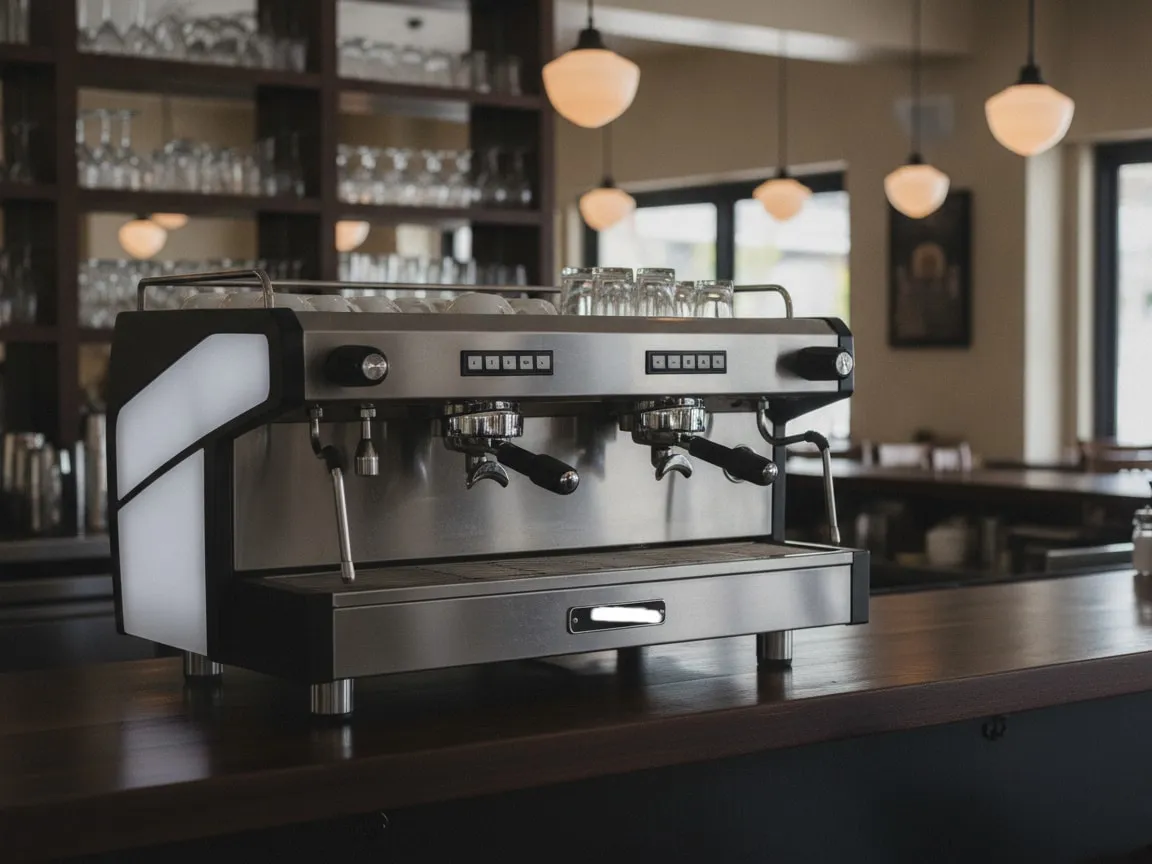
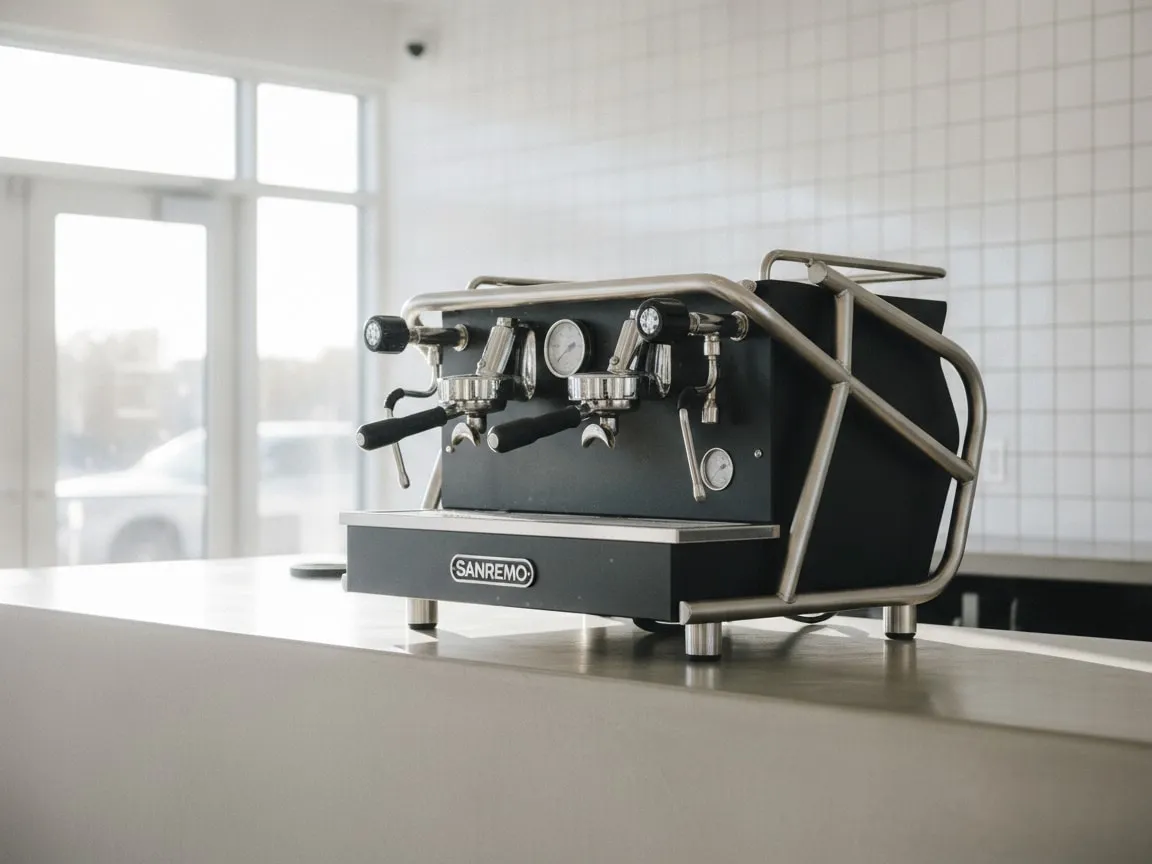
A commercial espresso machine drinks only its own water. Two things come in with it from a Southern California main: hardness, which becomes scale in the boilers, and chlorine or chloramine, which you taste. The coffee line deals with both on the machine’s own feed, sized to the machine’s own volume, independent of what the kitchen does with the rest of the building’s water.
The carbon part is simple. Activated carbon takes out chlorine and most of the chloramine and improves taste and smell. Every cartridge worth fitting has it, and it is the first stage to exhaust on a busy bar because taste and smell compounds load it continuously.
The hardness part has two schools, and they are not interchangeable.
Softening against scale inhibition
A softening cartridge holds ion-exchange resin. Calcium goes in, sodium or hydrogen comes out, and the water leaves with less hardness than it arrived with. A bypass screw on the head lets a measured fraction of raw water around the resin, so the result is not zero hardness but the three to five grains the cup wants. Set from a strip at install, checked when the cartridge changes. This is the right tool on hard water and on machines that run all day, because it removes the thing that becomes scale rather than managing it.
A scale-inhibiting cartridge leaves the calcium in the water and adds a trace of polyphosphate that keeps it from crystallizing on hot metal. The water tastes like the water. It works well up to around ten grains and on machines with a lighter duty cycle, and it fails quietly above that: the inhibitor is overwhelmed, scale forms anyway, and nobody notices because the cartridge still looks fine. On the imported water that reaches Los Angeles at 12 grains and above, inhibition alone is a bet we do not take on a two-group machine.
The third school is a remineralizing cartridge, which softens fully and then adds magnesium back in a measured dose. Bars running light roasts and competition-style programs like it because the mineral content is set rather than inherited. It costs more per gallon and it is worth it where the cup is the point.
Sizing by gallons, not by months
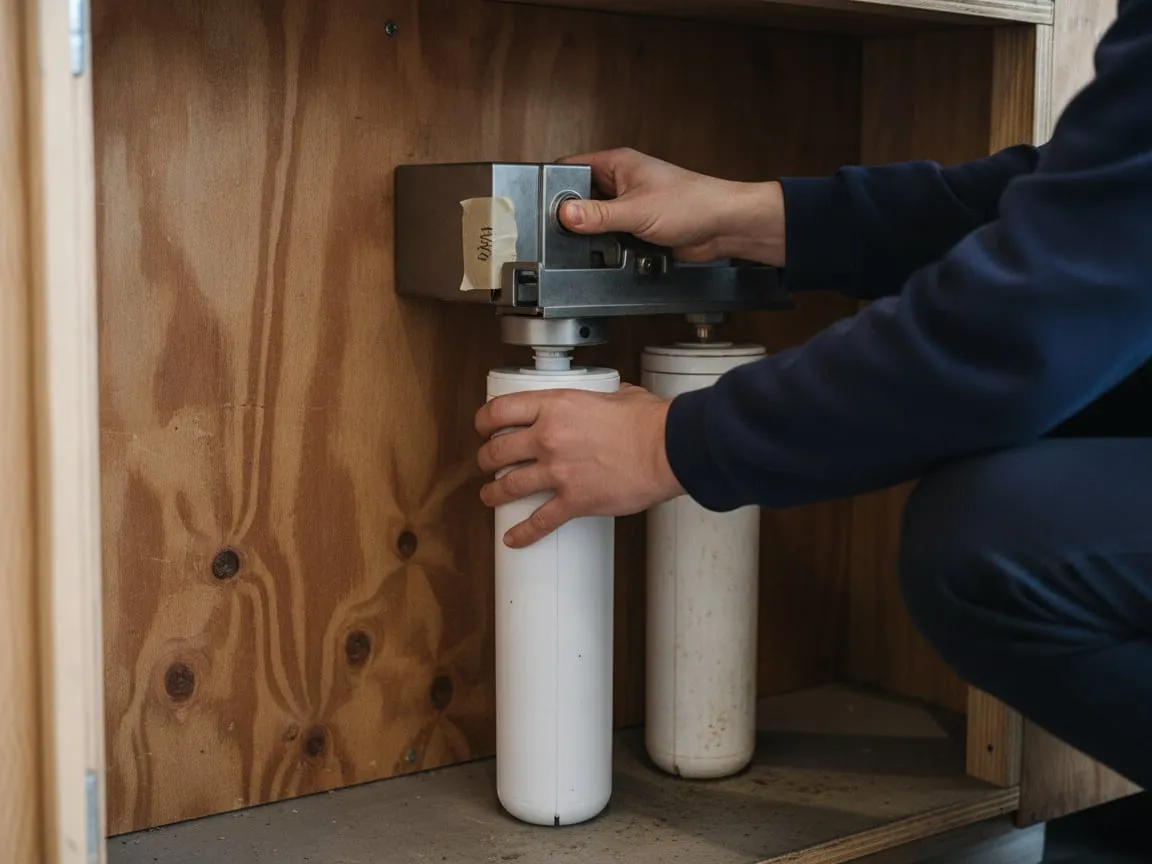
A cartridge is rated for a volume of water, and the rating is stated at a particular hardness. A common single-head commercial cartridge is rated around 9,000 gallons for chlorine and taste; its softening or inhibiting capacity falls as hardness rises, so on 15-grain water the useful life is a fraction of the headline figure. Work it from the bar: a two-group machine pulling 300 drinks a day, with rinses, steam and hot water, draws roughly 30 to 40 gallons a day. On hard water that reaches the useful capacity in six to eight months. The twelve-month change interval on the box assumes a softer supply and a quieter bar.
So the change date comes from the install date and the gallons, and both go on the head in marker. Changing by taste is changing too late: by the time the espresso tastes of chlorine, the hardness stage has been exhausted for weeks and the boiler has been taking raw water.
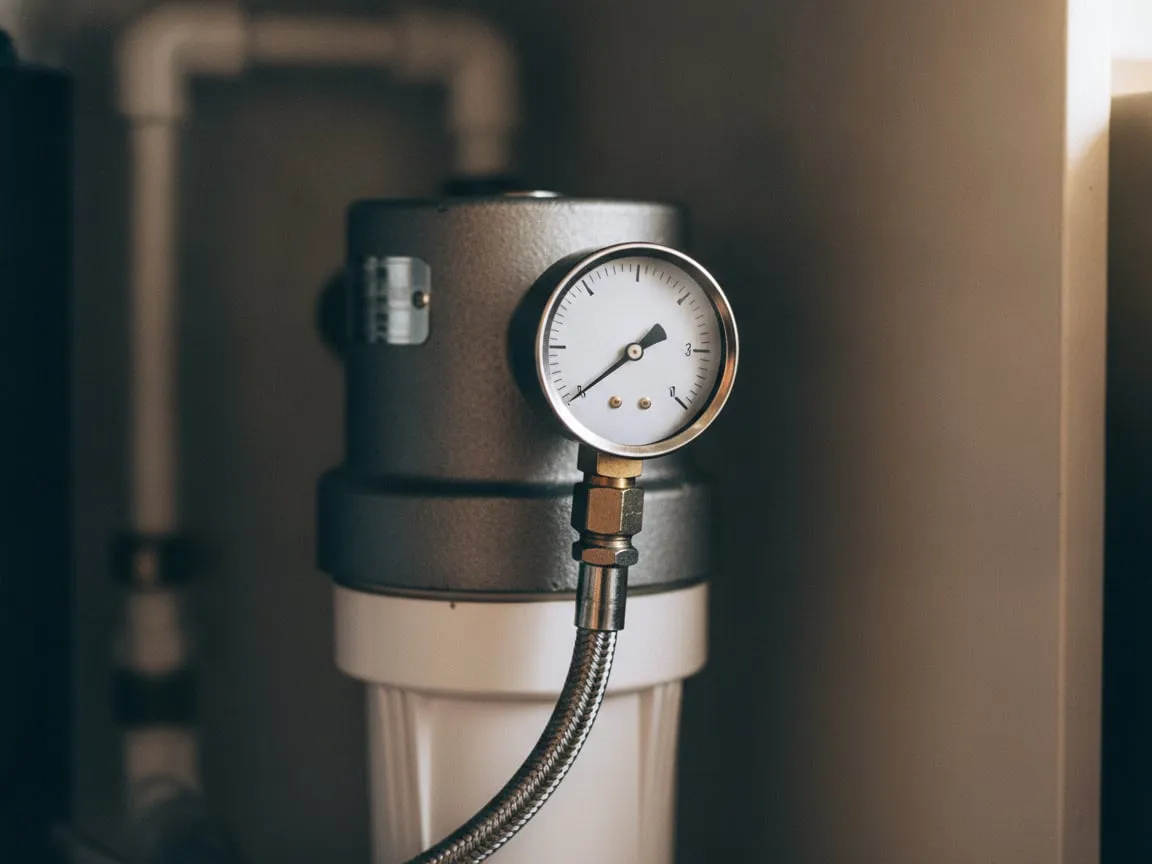
A gauge on the head helps. Pressure after the filter that sits lower month by month at the same flow means the cartridge is loading up with sediment, and the next symptom is slow shots across all groups at once.
Install details that get skipped
A shut-off valve before the head, so a cartridge change does not mean closing the building’s water. A pressure regulator where the main runs above about 60 psi, because a commercial machine’s inlet valve and a cartridge housing both prefer less, and a pressure spike at night is how a housing cracks. A check valve where the local code asks for one. The head mounted at a height where the cartridge can be twisted out without emptying the cabinet first, which sounds trivial until the change is skipped for a year because the cabinet is full. And the gauge, on the outlet side of the head, where it says something about the cartridge rather than about the main.
When the bar needs more than a cartridge
Three cases push a café past the single head.
Very hard water, above about 18 grains, which is common in the Inland Empire and in parts of San Diego County fed by Colorado River water. A cartridge there is spent in a few months and the bypass setting becomes a compromise. A small softener on the coffee line, or at the point of entry for the whole kitchen, with a carbon cartridge after it, is cheaper over a year and protects the ice machine and the dishwasher at the same time.
A kitchen with more thirsty equipment than coffee. The ice machine draws several times what the espresso machine does and scales faster, because it concentrates minerals as it freezes. A combi oven and a dishwasher add to it. One cartridge shared across all of them is the false economy we find most often: the ice machine exhausts it, the coffee line gets raw water, and the owner descales the espresso machine twice a year wondering why.
A program that wants its water set rather than inherited. Reverse osmosis followed by a blend valve or a remineralizing cartridge gives a stable mineral content whatever the main does that month. It is the most equipment and the most maintenance, and it is right for a bar whose light roasts are the reason people come.
Which case a bar is in comes out of a test at the bar: hardness, dissolved solids, chloramine, line pressure, and a count of what else drinks from the same pipe. That test is the first step of the water treatment service, and the proposal that follows it names the head, the cartridge and the interval in writing.
What the machine tells you when the line is wrong
Slow shots on every group at the same time, with the grind unchanged, is a filter loading up or a jet scaling, not a grinder problem. Steam that takes longer to recover between drinks is a scaled element in the steam boiler. A level probe that overfills or underfills the boiler is wearing scale. A drip from the group between shots is a valve seat that will not close on a flake. Any of these on a machine under two years old means the coffee line was never right for the water, and fixing the line comes before fixing the machine, or the repair is a loan.
The hard-water guide walks the symptoms in the order they appear. The best water guide has the target numbers and what each one does in the cup.
Our part of it
We service the machines, so we see what the water did to them, and we now specify and install the line that stops it. A test at the bar, a written proposal with the head, the cartridge and the change interval, installation by our water team with a three-month warranty on the installation, and the cartridge change folded into the quarterly visit for cafés on a maintenance contract. For a bar that is about to install a machine, the test before the plumber closes the wall is the cheapest hour of the whole build-out. Ask for it here.