Best Water for an Espresso Machine
What water an espresso machine actually wants, in numbers you can test for, what comes out of a Southern California tap instead, and what to do about the gap.
The best water for an espresso machine is not a brand of bottle. It is a range of numbers: between 75 and 250 parts per million of dissolved solids, three to five grains of hardness, a little alkalinity, no chlorine. Water inside that range makes a sweet, clear shot and leaves the boiler alone. Water outside it does one of two things to the machine, and in Southern California it is almost always the first one.
This page gives the numbers, says what the tap delivers across our service area, and tells you how to close the gap for the machine you own. It is the page we send a customer to after a descale, because without it we will see the same machine again in a year.
The numbers, and what each one does
Dissolved solids, measured as TDS, is everything in the water that is not water: calcium, magnesium, sodium, bicarbonate, a little of everything the pipe passed through. The Specialty Coffee Association puts the target at 150 parts per million with an acceptable band from 75 to 250. Below the band the coffee tastes thin and the water starts to pull metal out of the boiler. Above it the water cannot dissolve as much from the coffee and the cup goes dull.
Hardness is the part of TDS that is calcium and magnesium, and it is the part that becomes scale. One grain per gallon is about 17 parts per million as calcium carbonate. The target is four grains; one to five is the band. Every grain above that is scale forming faster, and at ten grains the element in a thermoblock machine is coated in a season.
Alkalinity is the water’s resistance to a change in acidity. Around 40 parts per million is right; much more and it buffers the acids that make coffee bright, so the shot tastes flat even when everything else is correct. Chlorine and chloramine should be zero. They do not hurt the machine much, but you taste them, and chloramine in particular survives boiling.
Sodium is worth a line because of what softeners do: a softener swaps calcium for sodium. Below about 30 parts per million nobody notices. A badly set softener on very hard water can push it past 100, and that you taste as a faint salinity in the cup.
What comes out of the tap here
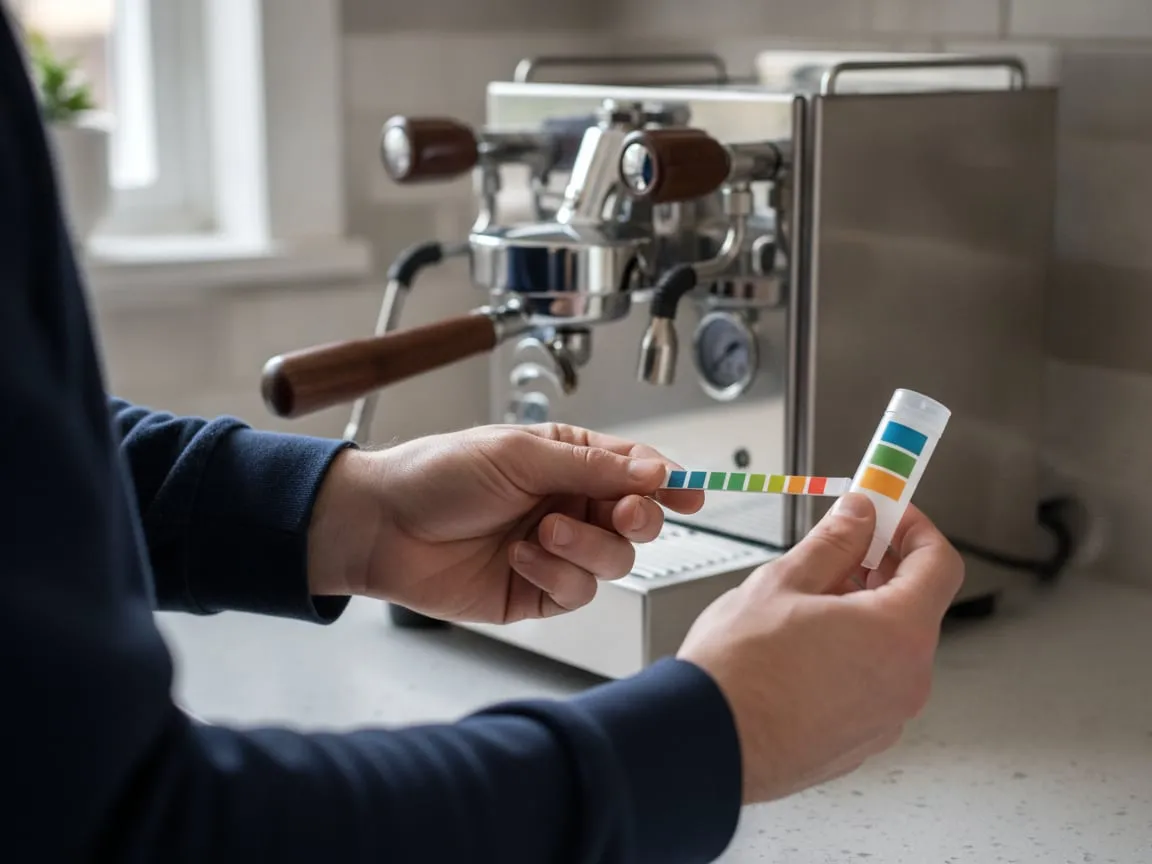
Southern California water is hard, and it is hard in different ways depending on where the pipe starts. Los Angeles blends three sources: the Los Angeles Aqueduct from the Eastern Sierra, which is the softest; groundwater from the San Fernando basin, which is hard; and imported water from the Colorado River and the State Water Project through the Metropolitan Water District, which is the hardest. The blend changes by season and by district, which is why a strip in Silver Lake and a strip in Westchester read differently in the same week. Across the city the published range runs roughly 7 to 16 grains.
Orange County draws about three quarters of its supply from the groundwater basin under the county, topped up with imported water. It tends to sit in the 10 to 16 grain range. The Inland Empire is groundwater country and the hardest water we see: 15 grains is ordinary, 20 and above is not rare in Riverside and San Bernardino. San Diego County imports most of what it drinks, largely Colorado River water, which arrives around 15 grains before any local treatment. Ventura and Santa Barbara run on local groundwater and Lake Cachuma, both at the hard end.
None of that is in the espresso range. The softest common tap in our area is still above the top of the band, and the typical one is two to four times the target hardness. That is why LA County keeps a bench busy with scale, and why a machine from a soft-water city that moves here starts behaving differently within months.
What the gap does to the machine
Scale is calcium carbonate coming out of solution where the water is hottest, and it builds in order. The heating element first, because it is the hottest surface in the machine. A coated element runs hotter to deliver the same water temperature, which shortens its life and, on a thermoblock, can trip the thermal fuse. Then the narrow places: the group jet, the flow meter paddle, the needle valve on a flow-profiling machine, the solenoid seat. A valve that cannot close seals with a drip. A jet that is half closed gives a slow, channeling shot that the owner blames on the grinder.
Then the sensors. A level probe in a steam boiler reads through the water; a probe wearing a jacket of scale reads wrong, and the boiler overfills or runs dry. The float in a tank glues itself down. A super-automatic reports a brew-unit fault that is, underneath, a water problem.
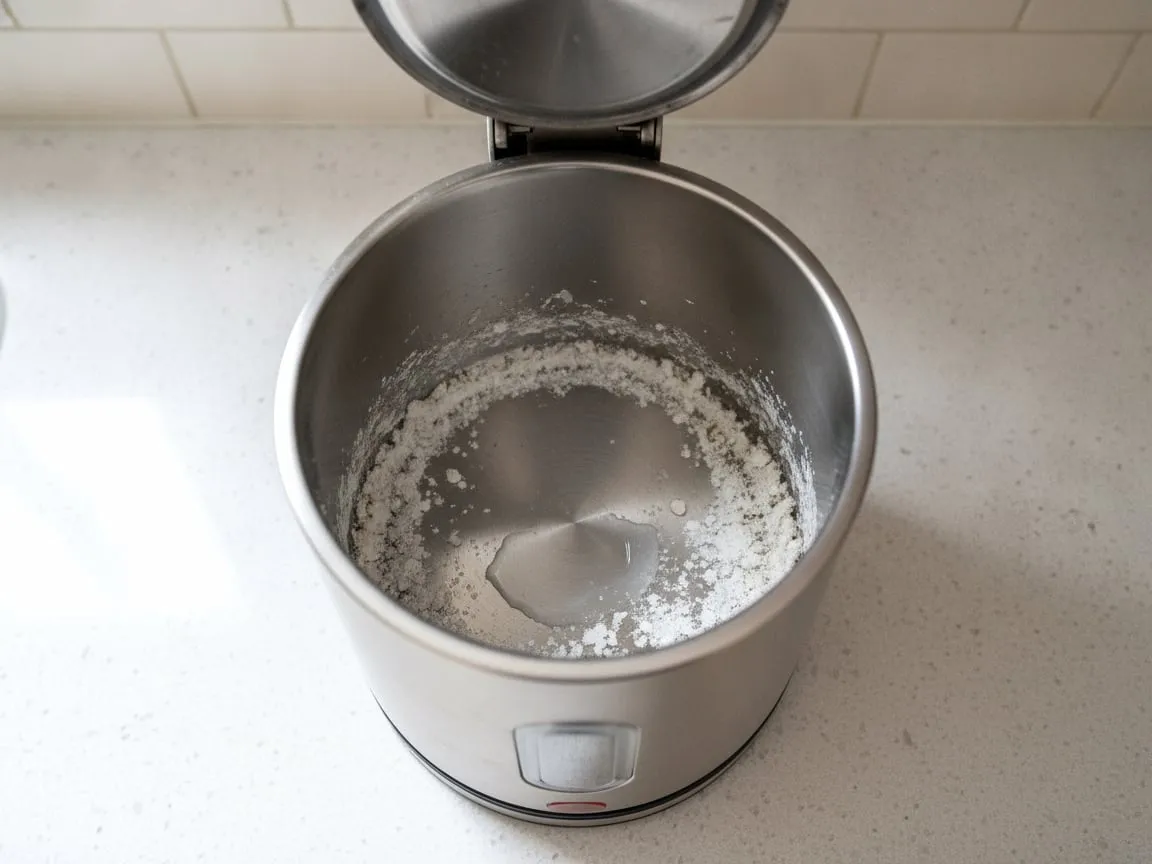
The order matters because it tells you what a descale can and cannot fix. Dissolving scale off an element and out of a boiler works. Dissolving it out of a flow meter or a needle valve sometimes works and sometimes moves a flake to a worse place. By the time a machine shows the symptoms on the hard-water page, the cheap fix was six months ago.
Closing the gap, by machine
For a tank machine at home, the answer is a cartridge in the tank or a pitcher on the counter, and the water filter guide names the type for each brand. Both are softening resin: they trade calcium for sodium or hydrogen before the water reaches the pump. On water around eight grains they bring it into the band. On fifteen-grain water they help but do not get there, and the cartridge is spent in weeks rather than the months on the box.
For a plumbed-in machine, at home or on a bar, a cartridge on the line does the same job at a scale that lasts: a head on the supply, a softening or scale-inhibiting cartridge with carbon in it, sized to the volume of water the machine drinks. The café filtration guide covers sizing and the service interval.
For a house where everything scales, the espresso machine is the smallest problem. A point-of-entry softener, with carbon in front of it, brings every tap into range, and the machine then runs on what it was designed for. That is a water treatment job, and the first step is a test at the address rather than a guess from a page.
What we do not recommend
Distilled water or straight reverse osmosis water in the tank. It is in the band for hardness, at zero, and far below it for everything else. The cup is thin, the water is slightly aggressive to brass, and the capacitive level sensors in several machines cannot see it. If RO is already under the sink, cut it with tap water, roughly a quarter tap, or fit a remineralizing cartridge after it. We specify that configuration regularly and it works well.
Softened water from a household softener that was never set up. A softener delivers what its valve is told to deliver. One set for a very hard supply and never adjusted can hand the machine water with no hardness at all and a lot of sodium, and the shot tastes of it. The fix is a service call to the softener, not a new machine.
Guessing. A strip costs less than a coffee and takes a minute. Test the tap, test the filtered water, and you know whether the cartridge is doing its job or whether the house needs treatment. Everything else on this page follows from that one reading.