01
Cleaning before parts
Ditting wants the grinding mechanism cleaned every 2 to 5 days. A grinder that has gone two years without it gets that done first, because half the symptoms leave with the old coffee.
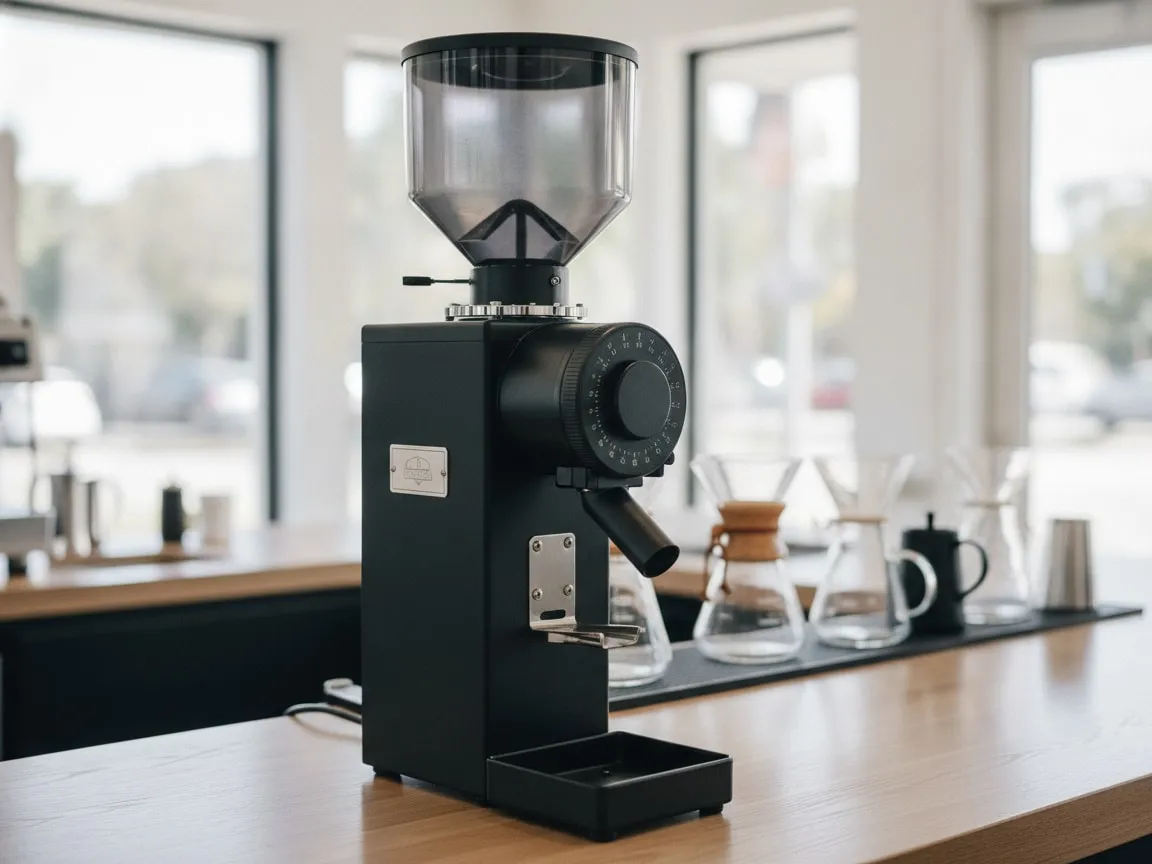
Ditting 807, 807 Lab Sweet, 1203 and 1403 shop grinders, and the 804 and KR models before them. The courier run covers Downtown LA, Ventura and San Diego, and a grinder goes home cleaned out, zeroed and tested on a full bag.
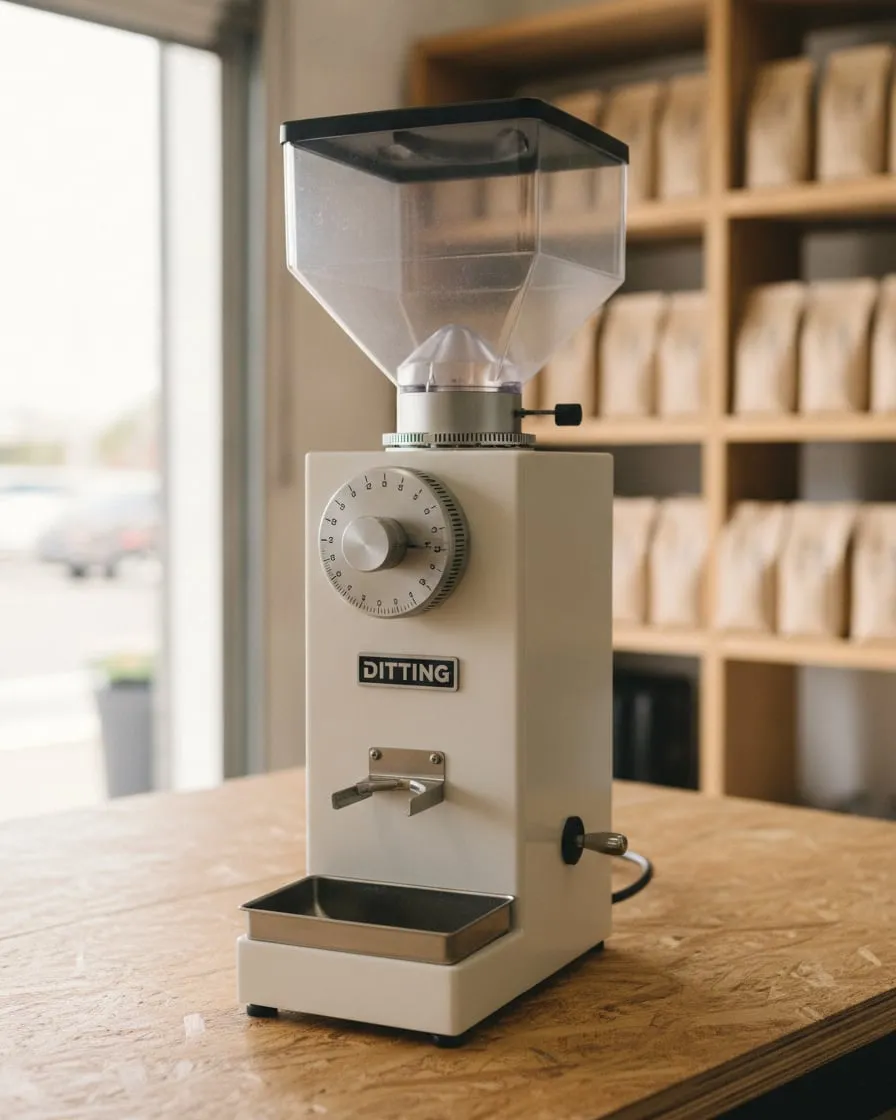
Ditting wants the grinding mechanism cleaned every 2 to 5 days. A grinder that has gone two years without it gets that done first, because half the symptoms leave with the old coffee.
With the motor running, to the chirp, then back. On a 1203 the gap at the carrier wings is checked as well. A dial that reads 1 at true zero is the only dial worth reading.
Clamp, springs, knocker, flapper, transition tube. They touch every bag that leaves the shop and they fail long before the burrs.
Ditting and Mahlkönig share a US office and a parts store. Part numbers come from Ditting’s own spare parts list, and the order goes in against the model plate.
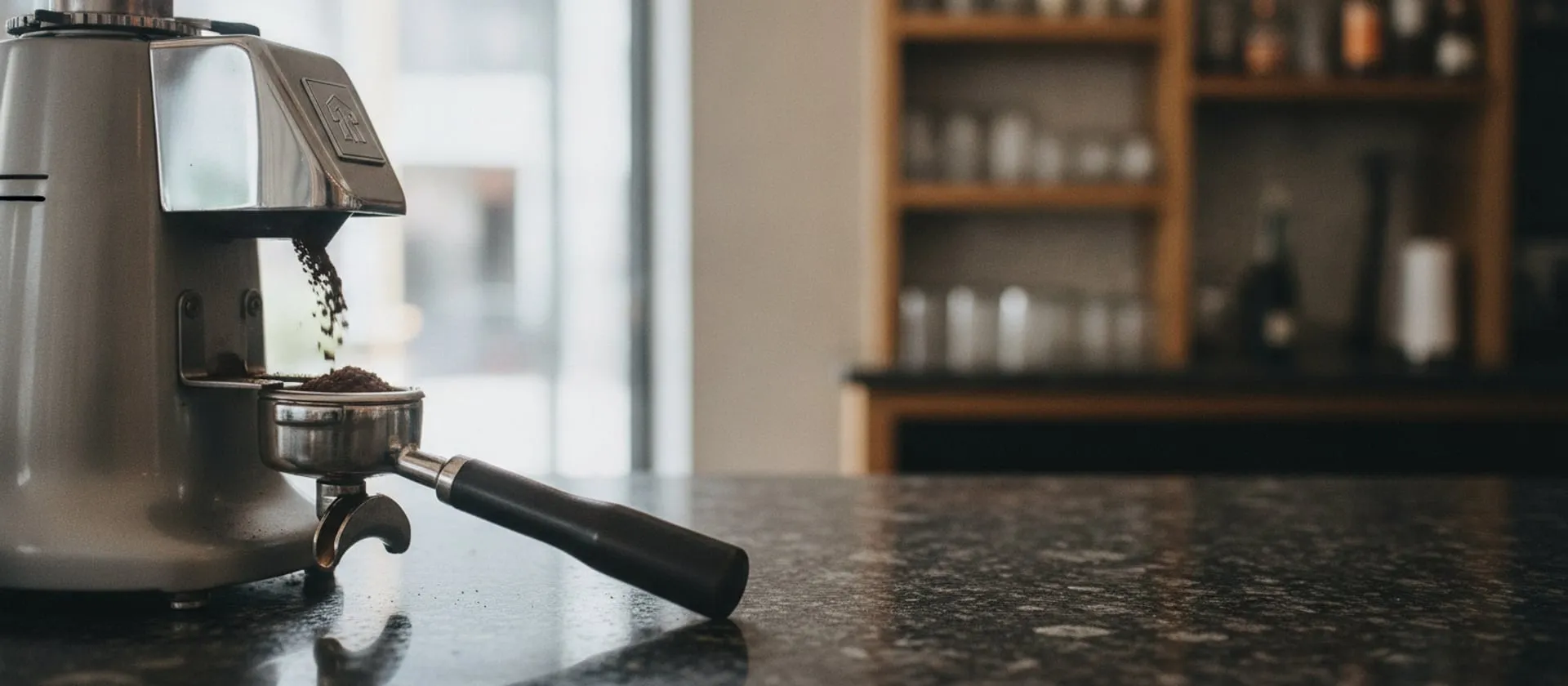
Ditting has built shop grinders in Switzerland since 1928. It merged with Mahlkönig in 2008 to form Hemro Group, and in the US it is sold and supported from the same Seattle office. A Ditting is a retail grinder: a whole bag goes in the top and comes out ground at the bottom, a few times an hour, for years. Its burrs outlast almost everything else in the shop. What wears is everything the bag and the operator touch.
80 mm special steel burrs, 500 W, 7.5 grams a second, 17.4 kg. The 807 grinds into a bag and the Filter version into a brew basket. Ditting rates the burr set at about 3,000 kg.
80 mm premium cast steel burrs, 700 W, 9 grams a second. The one on cupping tables and filter bars. Burr set rated at about 2,500 kg.
120 mm special steel burrs, single-phase, 23 grams a second, 38 kg. Ditting rates the burrs at 10 to 15 tons of coffee. KR versions have a manual bag clamp and a shaker. KFA versions clamp and start automatically.
140 mm burrs on a three-phase motor, 38 kg, or 47 kg for the Industrial with its 10 kg hopper. It needs a three-phase supply to be tested, so it is serviced where it is wired in.
180 mm burrs, 5,500 W, 300 kg an hour, 240 kg. It does not travel. A technician comes to the roastery.
No longer sold, and still on plenty of counters. Mahlkönig USA lists more than sixty Ditting spare parts.
The manual lists three causes: a clogged spout, a setting that is too fine, or a foreign object. On a 1203 the manual adds a rule: reduce the grinding degree only while the grinder is running. Going finer at rest packs the burrs. The chamber and spout are stripped and cleared.
The thermal overcurrent breaker, or the motor protector behind it. The 807 is rated for 180 seconds on and 300 seconds off, and for 48 kg in an eight-hour day. A shop that grinds wholesale orders back to back on an 807 is past both. A breaker that trips on one bag is a fault.
A faulty start button, in Ditting’s own fault table. The switch is tested and replaced.
The capacitors on a 1203 are 80 µF, and they age. A sluggish start is the early sign. The contactor and the terminals are checked at the same time, because a loose terminal gives the same symptom.
The felt ring round the rotating burr carrier hardens and splits. Fines fall into the base, and the carrier starts to drag. The ring is a service part.
A torn transition tube between the grinding chamber and the spout, a broken knocker handle, or tired clamp springs. A dirty flapper does the same on an 807 and takes the dose accuracy with it.
Check the zero point before the burrs: the 807 set is rated for about 3,000 kg, and a dial can lose its zero in an afternoon. Zero is set with the motor running: the burrs are brought together until they just chirp, backed off, and the dial is refitted at 1.
A shop grinder is priced like any other grinder on its own. Bag-end parts and burrs are separate lines, and most services need neither.
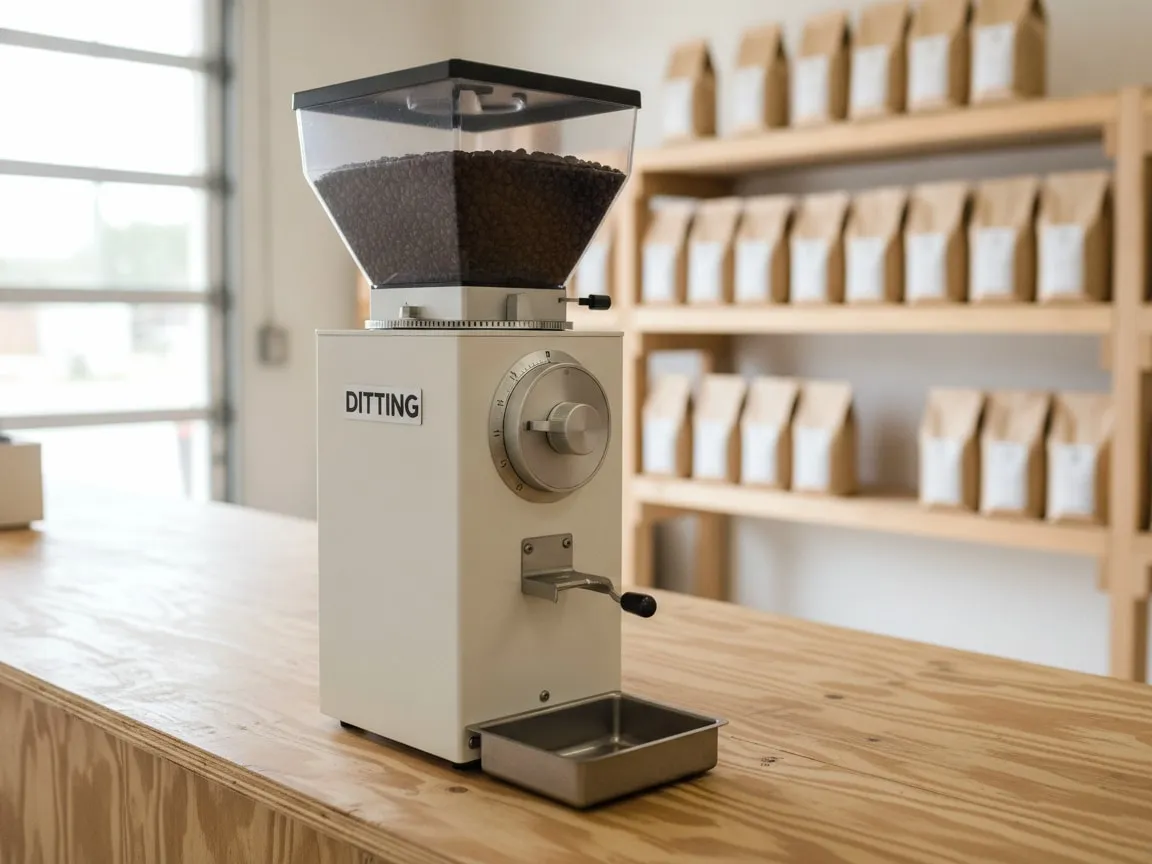
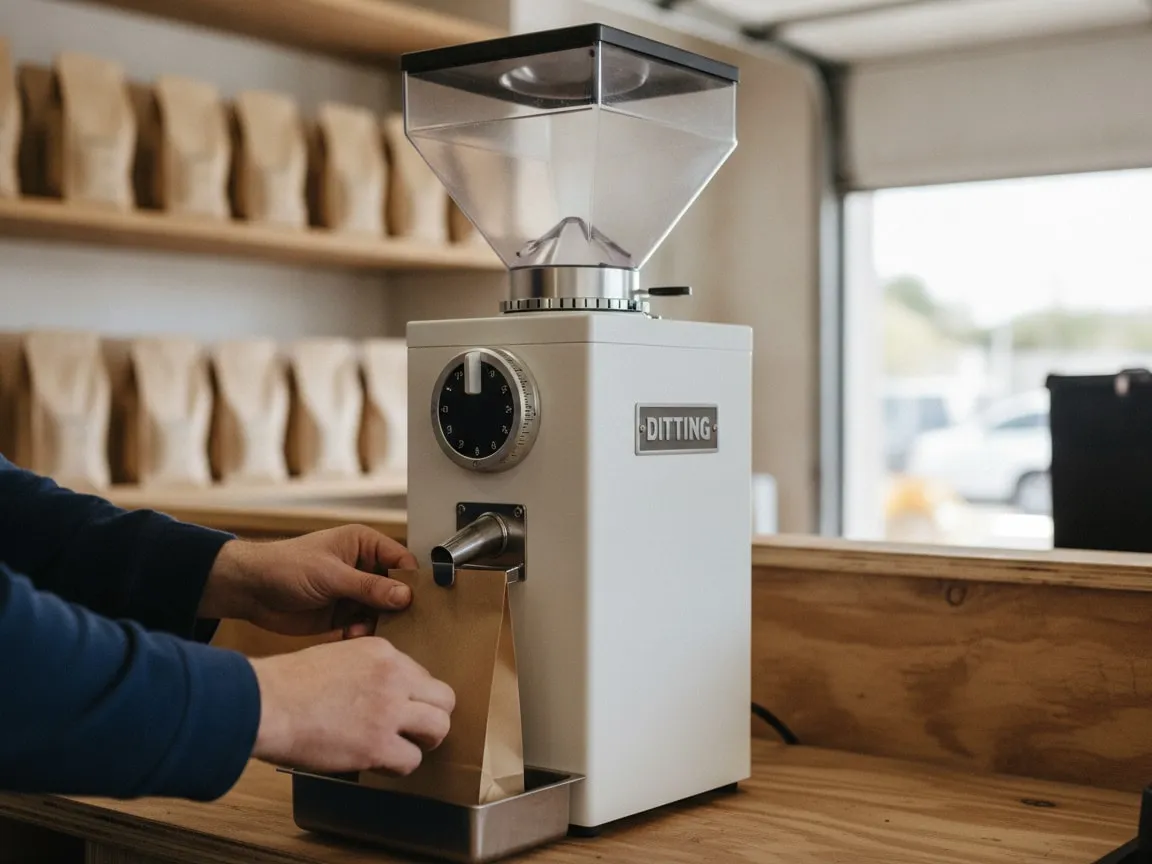
A Ditting grinder is collected by courier or serviced where it stands, and the coverage is the same for both: Ditting repair in DTLA, Ditting repair in Ventura County and Ditting repair in San Diego. Same prices in every one of them — 25 cities across six counties.
A typical call on an 807 at a roaster’s retail counter: customers say the filter grind is coarser than last year, and the shop wants new burrs. The burrs are measured and they are fine. The kilograms through them are nowhere near 3,000. The dial is the problem: it reads 1 with the burrs still apart. The chamber is cleaned, zero is reset to the chirp, the flapper is replaced and a full bag is ground and checked. Roughly 75 minutes on the bench.
A Ditting almost never needs burrs, and it is the first thing people ask for. The 1203 set is rated at 10 to 15 tons and lists at $599.99. Most retail counters will sell the business before they wear that out. What a shop grinder needs is the cleaning the manual asks for every 2 to 5 days, and a zero point checked once a year. Both cost less than a burr set you did not need.
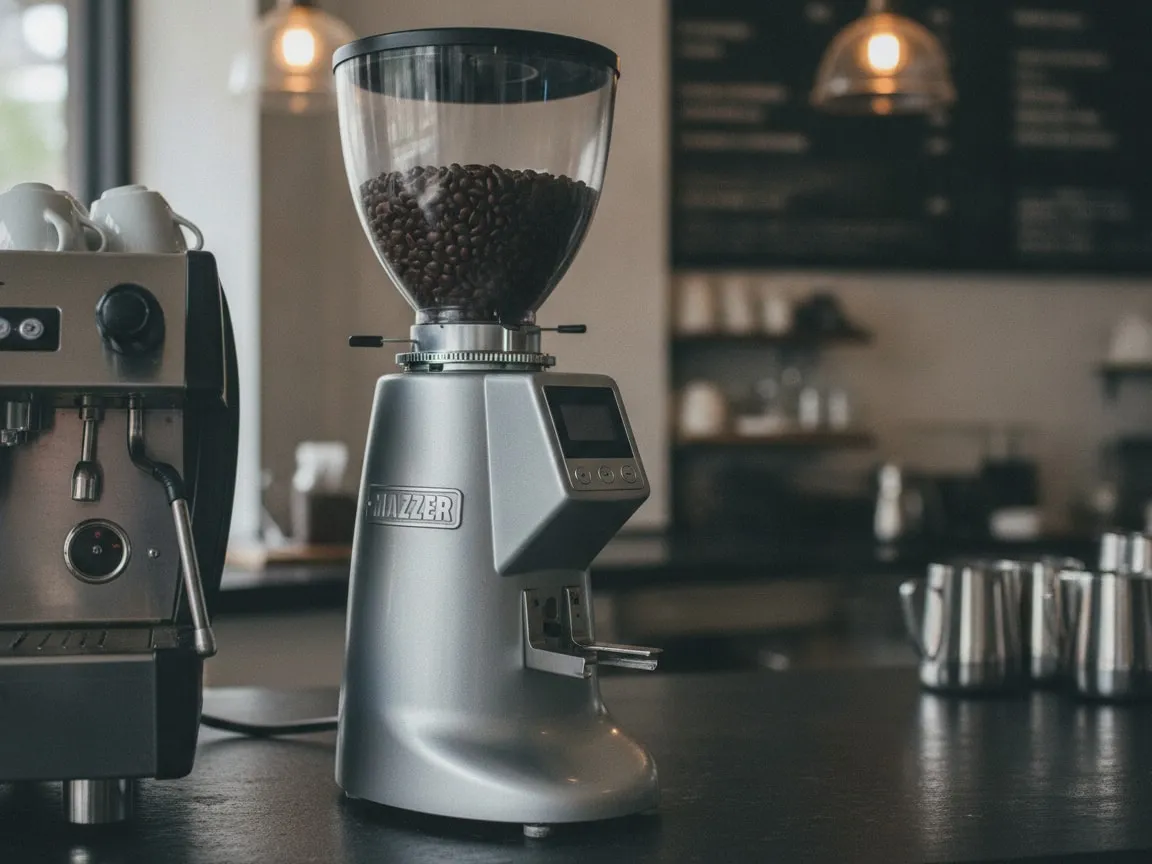
Burr life is published in kilograms, not years: 400 kg for a Mazzer Super Jolly, 6,000 kg for an EK43. How to tell worn from dirty, and who should do it.
Usually yes, if the fix costs under half a replacement and the machine has years left. The arithmetic we run by machine class, and when to buy new instead.
Six to eight years for an entry machine, twenty-plus for a prosumer one. The build, the water it drank and whether anyone serviced it set the number.
Every figure on this page is ours to stand behind — who we are and what we're licensed for.
Tell us your Ditting model and what's wrong. We'll respond within the hour with a diagnostic estimate and ETA.
Three fields. We call or text back — Mon–Sat · 7am–9pm, Emergency · 24/7. Urgent? Call (424) 352-8838.