Coffee Grinder Burr Replacement — Is It Time?
Burr life is published in kilograms, not years: 400 kg for a Mazzer Super Jolly, 6,000 kg for an EK43. How to tell worn from dirty, and who should do it.
Burrs wear by the weight of coffee that passes through them, not by age, and the maker of your grinder has published the weight. Find that figure, work out how much you grind in a week, and the question answers itself. For most grinders the answer is later than the internet says. For one very common cafe grinder it is much sooner.
The second half of the question is who does the work. On a home grinder, you. On a commercial grinder the burrs are the easy part, and what follows them is not.
The figure is in kilograms
These are the makers’ own numbers, read off their documents in October 2026.
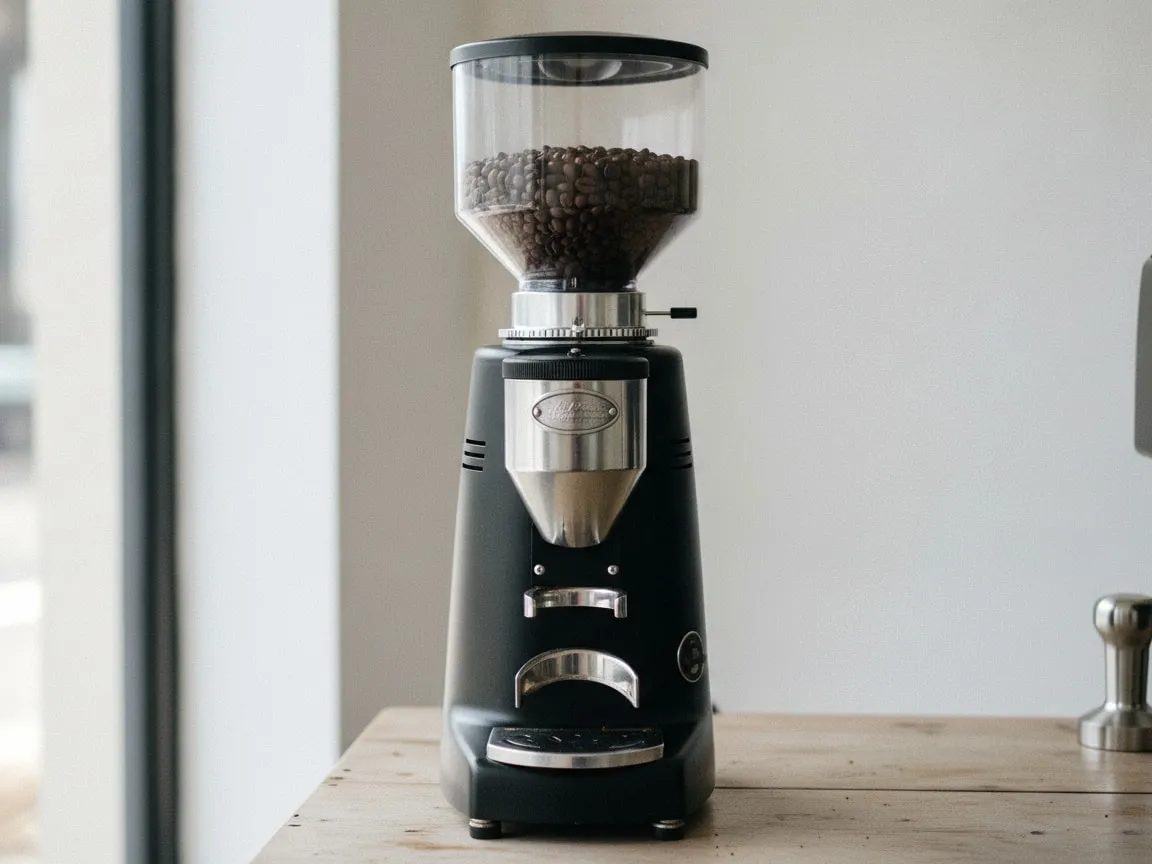
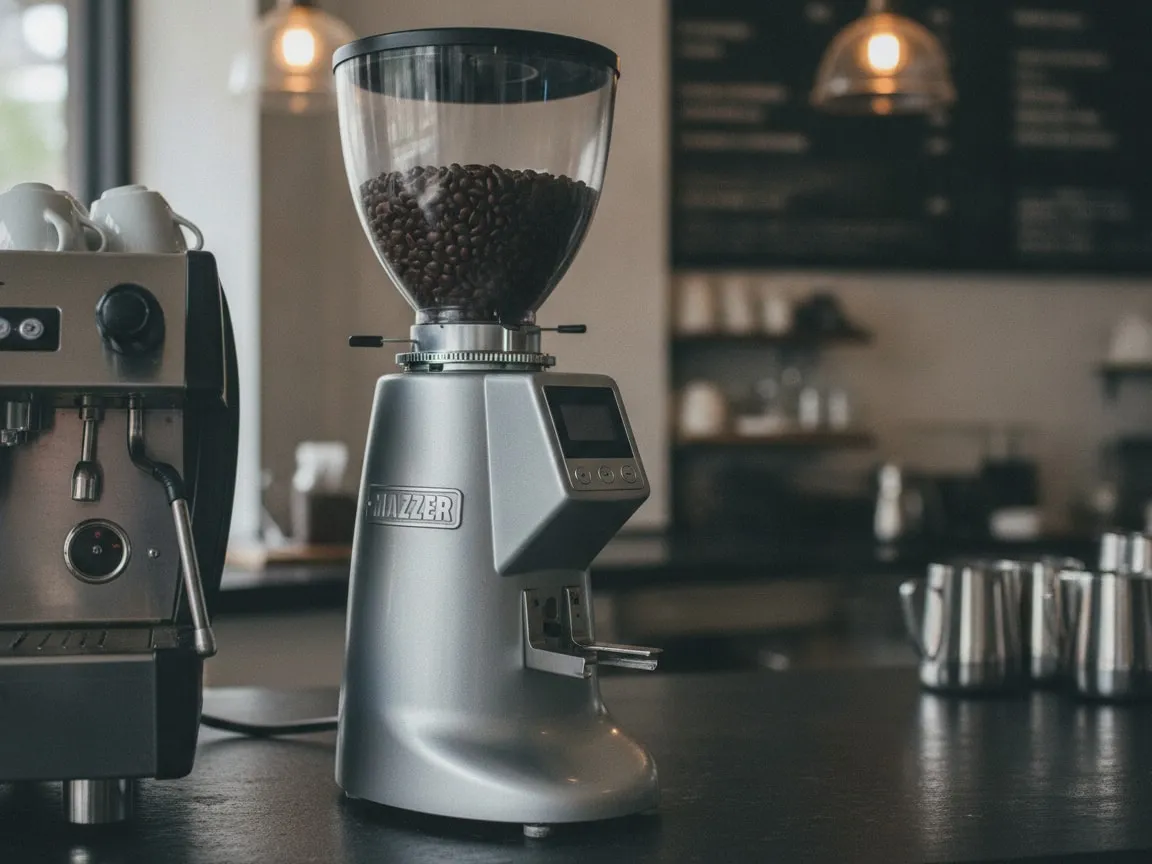
- Mazzer Super Jolly, 64 mm flat: 400 kg. The titanium version of that set: 1,200 kg.
- Mazzer Major, 83 mm flat: 600 kg. The slower Major VP on its own burr set: 1,200 kg.
- Mazzer Robur, 71 mm conical: 800 to 1,000 kg.
- Mahlkönig E65, 65 mm: about 800 kg on the parts page, around 700 kg in the manual.
- Mahlkönig E80, 80 mm special steel: about 1,500 kg.
- Mahlkönig EK43, 98 mm cast steel: about 6,000 kg.
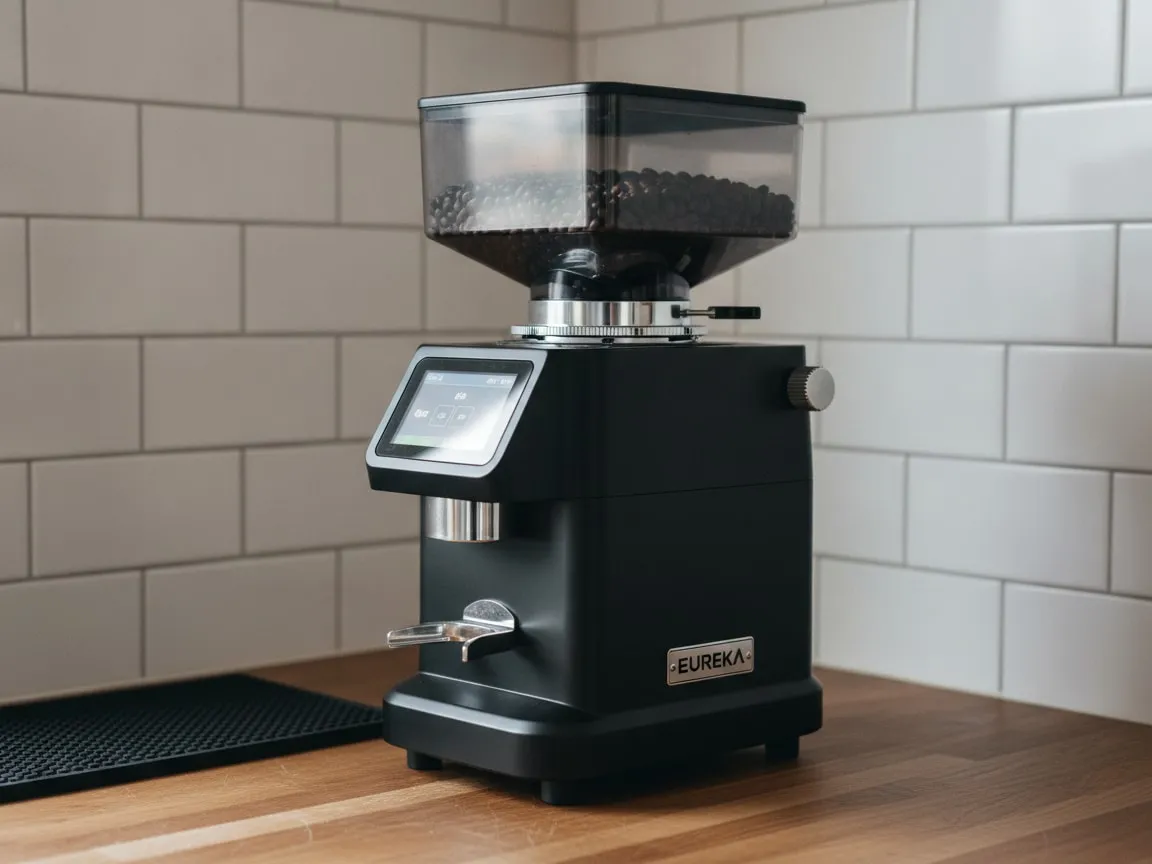
- Eureka Atom, 75 mm hardened steel: 600 kg, with a check at 500.
- Fiorenzato F64 EVO, 64 mm: 600 kg standard, and five times that for the coated Dark-T set.
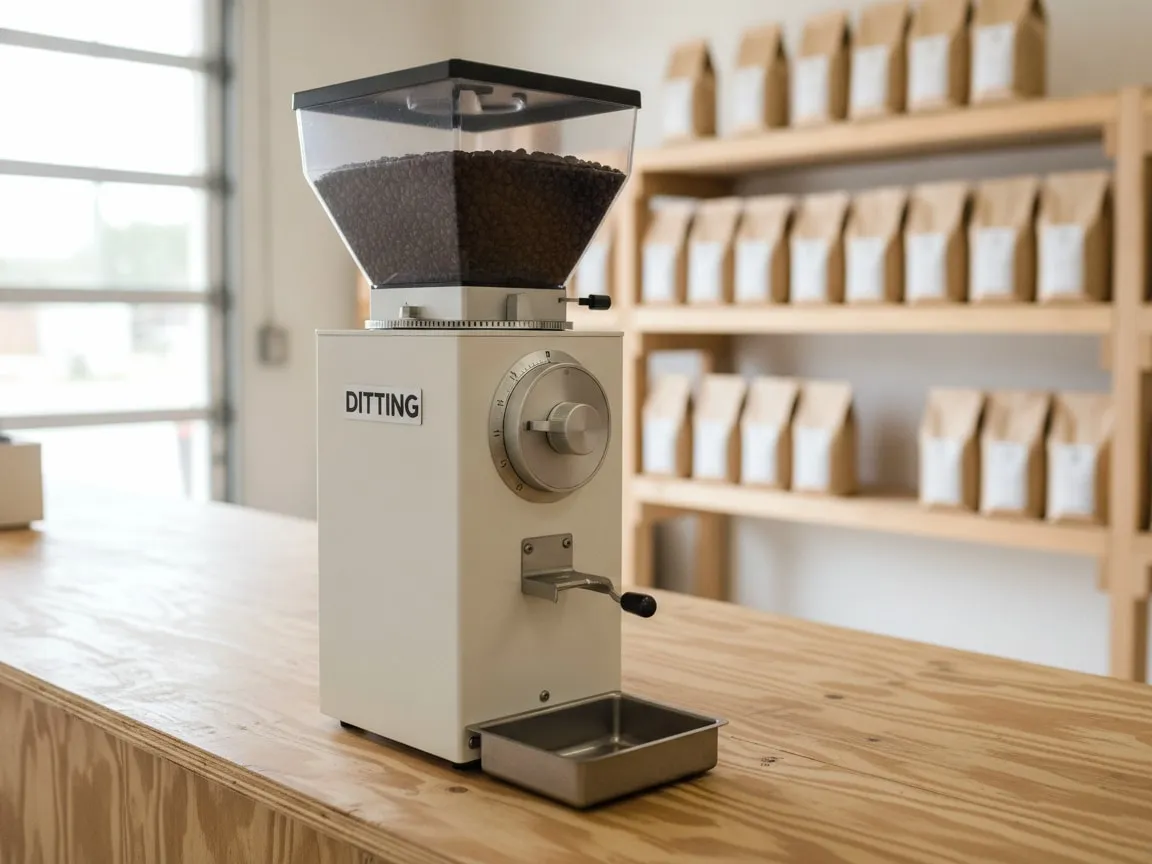
- Ditting 807, 80 mm: about 3,000 kg.
- Baratza: no figure per model. Its support manager has put steel burrs at around 500 pounds of coffee and ceramic ones at 750.
Now the arithmetic. A cafe that goes through 10 kg a week on a Super Jolly reaches 400 kg in forty weeks. The same cafe on a Major VP gets 120 weeks from a set. A roastery grinding 20 kg of retail bags a week on an EK43 needs 300 weeks, which is almost six years.
At home the numbers stop mattering. Two double shots a day is roughly 13 kg a year. A Super Jolly set at that rate lasts thirty years.
Where the 800-pound rule comes from
You will read that burrs are done after 800 to 1,000 pounds. That is the Super Jolly figure. Four hundred kilograms is 880 pounds, a parts distributor printed the conversion, and it has been repeated ever since as if it applied to every grinder.
It is right for a 64 mm steel set in a busy cafe. Applied to an EK43 it has you replacing burrs at less than a tenth of their rated life. Applied to a titanium set it is wrong by a factor of three. No manufacturer endorses one number for all burrs, and Mazzer’s own list runs from 300 kg to 1,800.
So the rule is not a rule. Look up your set.
Worn, or only dirty
Blunt burrs crush more than they cut. Mahlkönig describes what follows: the grounds clump, the grinder draws more power and runs hotter, and grinding fine enough for espresso gets harder. Baratza’s version is shorter: the grind slows down, or the fines go up. On a bar you see it as creep. The dose takes a second longer than it did in spring, and the setting has moved finer a notch at a time without anyone deciding to move it.
Every one of those symptoms has another cause.
Packed oil and fines. Old coffee builds up on the burr faces and in the outlet until it behaves like wear. This is the common one. A grinder that has never been opened is dirty before it is worn.
A different coffee. Baratza’s technician says it directly: more fines or a slower grind does not by itself mean worn burrs. A darker roast, an older bag or a new origin moves the grind.
Weather. Dry air makes static and scatter. Humid air makes grounds stick. Neither is inside the grinder.
A stone. One chipped tooth cuts differently from the rest of the ring. The grinder gets loud and inconsistent overnight, which wear never does.
Burrs that do not sit parallel. One side of the ring cuts and the other side rubs. It comes from a dirty seat under the burr, or from a carrier knocked out of true. Mazzer warns specifically against hammering out seized burr screws for that reason.
A broken holder, on a Baratza. The ring burr holder in an Encore or a Virtuoso is designed to break when a stone goes through. Baratza calls it the number one issue on those grinders, and it is not the burrs.
The test that separates all of these from wear is the arithmetic above. If the grinder is at a third of its figure, it is not worn. Clean it.
A home grinder: do it yourself
This is the part where a repair shop talks itself out of work.
Baratza sells burrs, motors and boards direct to owners and runs a repair service of its own. The company’s line is “Don’t Dump It, Fix It”, and it means it. A cone burr for an Encore costs about what two bags of good coffee cost, and Baratza publishes the steps for fitting it. If you own a Baratza, start with Baratza.
Breville sells a burr assembly for the Smart Grinder Pro and for the grinder built into the Barista Express family, and the upper burr is removable by design. Breville lists no lower burr, so if the lower one is damaged the conversation changes.
A Eureka Mignon opens from the top, and because the adjustment moves the lower burr, the setting is still there when the upper one goes back. Eureka’s manual puts replacement at about 250 kg, which at home is a decade or more.
What you are doing on any of these is unscrewing a part and fitting its replacement. Take a photo before you start, clean the seat the burr sits on, and do not force a screw.
A commercial grinder: the burrs are the easy part
Three or four screws hold each burr. That is not where the time goes.
The seat has to be clean. Mahlkönig’s manual has the burr carrier vacuumed until it is completely clean, and the flange and screw holes cleaned with a wire brush. Mazzer says the burr holder must be fully cleaned. A new burr on a film of old coffee sits a fraction of a millimeter out, and that fraction is the whole difference between a grinder that can be dialed in and one that cannot.
The screws are tightened a little at a time, alternating, and never forced. Mazzer’s wording is that the burr-securing screws must never be overtightened.
Then zero. With new burrs the point where they touch has moved, so it is found again. On a Mahlkönig E65 the adjustment is turned finer until the burrs can be heard, then back until the sound stops. The manual then calls for the Disc Distance Detector to be calibrated. On a Ditting it is done with the motor running. On a grinder that doses by weight, the scale in the fork is calibrated as well.
Last, the grinder is set on coffee. The first doses are discarded. Mazzer says not to brew with them. Then it is dialed in on the coffee the bar actually uses, and checked again after a day or two of service.
Done properly on a doserless espresso grinder that is one to two hours. Done badly it is a set of new burrs in a grinder that is worse than before.
What it costs with us
Our grinder service is a flat $129 standalone / $89 add-on. It covers the burrs coming out, being measured and cleaned, the chamber and chute cleared, the adjustment thread serviced and the grinder set to a reference dose on your coffee. A burr set is a part. It goes on the estimate only if the old one measures out.
For a single job the published ranges on our Fiorenzato page are the reference: burr replacement on a 64 or 83 mm flat set $180-$320, clearing a packed chute $150-$230, and setting the grind reference after a burr change $150-$225. Bigger sets cost more as parts, so for a 98 mm or an 80 mm set the estimate names the part and its price.
$145 diagnostic — includes pickup from your address and return delivery. It is credited in full toward the repair when you approve the estimate.A grinder on its own is collected by courier and returned, or a technician comes to it, from Downtown LA out to Ventura and San Diego. The route, and the list of grinders, is on the coffee grinder repair page. Four makers have pages with their own burr figures and fault lists: Mahlkönig, Mazzer, Eureka and Ditting. Every other figure we charge is on pricing.
When not to replace them
Typical call, the way it usually goes. A cafe with an EK43 that is three years old asks for new burrs because the filter coffee has gone dull. The shop grinds about 15 kg a week on it. That is roughly 2,300 kg, against a set rated for about 6,000. On the bench the chamber is packed and the zero point has drifted. Cleaned, zeroed, set on their coffee. The burrs stay in.
The reverse happens on small espresso grinders. A 64 mm set in a busy bar is past its figure inside a year, nobody has counted, and the shop is shopping for a new espresso machine to fix a problem that a burr set would have fixed.
So count. Write the date on a piece of tape inside the hopper lid when the burrs go in. Know your weekly order. The maker has done the rest of the sum for you.